
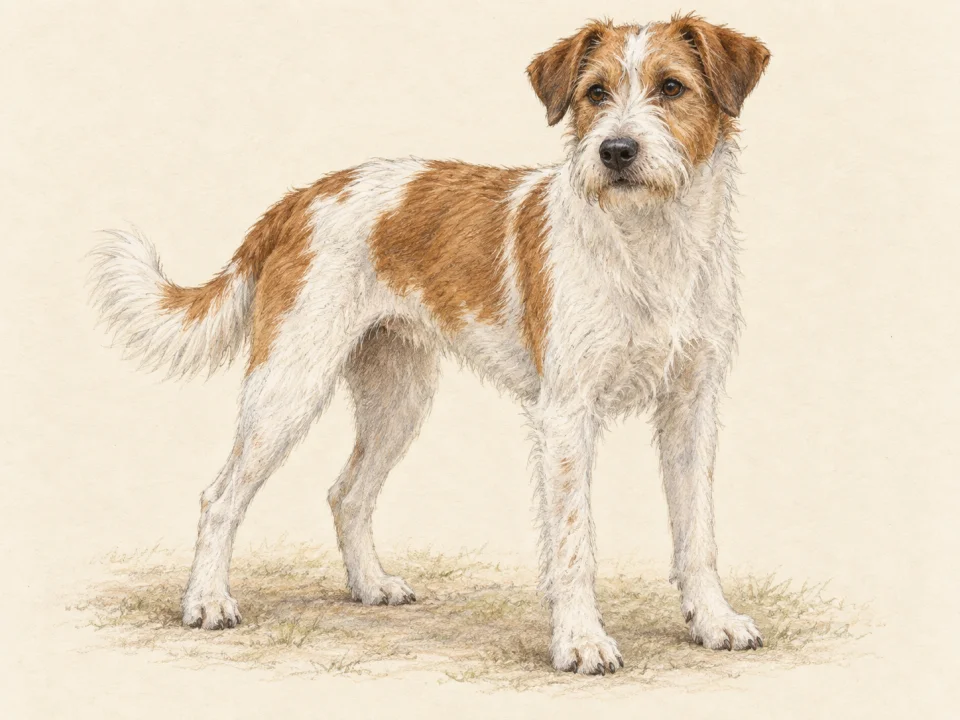
A smooth face can be entirely typical
The FCI distinguishes two coat varieties. The rough coat has a beard; the smooth coat does not, although it can have longer hair and feathering away from the face. Both have a short, soft undercoat. This matters when planning grooming: do not transfer instructions for maintaining a wiry, bearded dog unchanged to a smooth-coated individual. Ask for a demonstration suited to the actual coat and make comfortable handling part of the routine. The FCI places the breed among companion dogs and describes some reserve with strangers. Let a new dog approach at its own pace rather than requiring it to greet every visitor because it is a companion breed.[1]
Cracked, thickened pads deserve more than a cosmetic response
A 2014 genetic study in Kromfohrlanders and Irish Terriers linked hereditary footpad hyperkeratosis to a FAM83G variant. The researchers described hardening pads, protrusions and cracks, with affected dogs sometimes avoiding uneven ground or becoming lame. These observations explain why an owner should take changes in paw comfort seriously, but they are not a way to diagnose every rough pad from a photograph. Ask for the named genetic report when discussing a litter and have a veterinarian explain its meaning. If a dog develops pad changes or altered walking, arrange an examination rather than assuming a balm or extra exercise will solve it. Note when the change began and which surfaces seem uncomfortable without deliberately making the dog walk on them again. Genetic information and assessment of a current problem serve different purposes.[3]
Make closeness useful in training without relying on it outdoors
AKC describes a sensitive dog that enjoys being near its person and can learn tricks and activities. Use that interest for small, rewarding learning opportunities, allowing time for the dog to understand a new task. Its reputation for attachment should not become a claim that it cannot run off or get frightened. Secure access to the outside and develop familiar handling routines even when the dog usually stays nearby. For prospective owners, an ordinary visit with an adult dog can be more informative than a performance: observe how it settles, responds to unfamiliar people and accepts routine care, while respecting its space.[2]
Frequently asked questions
Does every Kromfohrlander have a beard?
No. The FCI recognizes a rough-coated variety with a beard and a smooth-coated variety without one. Smooth does not mean every part of the body has very short hair.
Source [1]Is hereditary footpad hyperkeratosis only a change in appearance?
No. The published study describes hardened, cracked pads and possible discomfort or lameness. Seek veterinary assessment for pad changes or walking difficulties; appearance alone cannot confirm their cause.
Source [2]FAQ sources
Sources & methodology
Breed-level measurements and comparison scores provide context. They do not predict an individual dog's health, behaviour or suitability. Open the original publisher pages below to verify the facts and compare any later updates.
- FCI — Kromfohrländer standard No. 192 ↗Reference 1 · reviewed 2026-09-27
- American Kennel Club — Kromfohrlander ↗Reference 2 · reviewed 2026-09-27
- Drögemüller and colleagues — FAM83G and hereditary footpad hyperkeratosis, PLOS Genetics, 2014 ↗Reference 3 · reviewed 2026-09-27
Make it about your dog
Build a profile around your dog's age, experiences and everyday needs.
Meet your dog →Explore local care