
Ask what this particular hound has been bred and trained to do
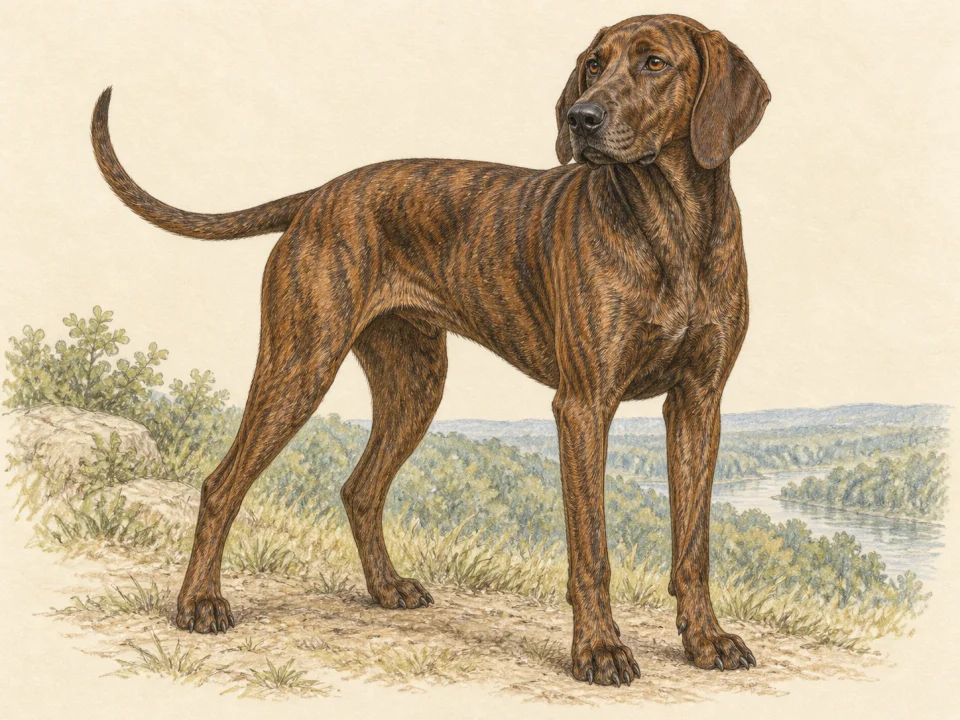
The breed standard describes a hound traditionally used to bring large game to bay or tree. It also notes differences in disposition among strains, including those used for large game and those bred as coonhounds. This is a useful reason to ask specific questions rather than assuming every Plott will fit the same household. Has the dog lived indoors, worked with other dogs or encountered the animals already in your home? What does a normal day look like, and what behavior appears when that routine changes? Meet the dog in more than one ordinary situation when possible. The answers help you plan introductions and activity; they do not remove the need for supervision. A history of hunting ability is not proof of suitability as a household guard dog, and a calm meeting is not a guarantee about behavior around prey.[2]
Provide outdoor work while keeping control of the route
AKC recommends leashed walks because of the Plott’s strong prey drive. Choose outings that allow appropriate exercise and investigation without relying on the dog to ignore an animal across a road. Before a new walker takes over, explain likely distractions, how the equipment fits and where you can change direction safely. Add brief, engaging training so the outing is more than a contest over the leash. Keep a realistic backup arrangement for days when the usual person is unavailable; an athletic dog’s needs do not disappear on a busy workday. The coat is comparatively straightforward to maintain with brushing, but include an ear and foot check after outdoor activity. Ask your veterinarian to demonstrate appropriate ear care rather than treating discomfort with an unchosen product. Record persistent changes for assessment instead of dismissing them as the price of being a working hound.[1]
Frequently asked questions
Are all Plott Hounds brindle?
No. The AKC standard prefers brindle but also accepts solid black and describes other color patterns, including occasional buckskin dogs. Coat color alone cannot establish a dog’s ancestry.
Source [1]Which state has the Plott Hound as its official dog?
North Carolina adopted the Plott Hound as its state dog in 1989. Its association with the state reflects its local breeding history.
Source [2]Will every Plott have the same temperament?
No. The standard itself notes variation among strains. Ask about the individual’s background and observe its behavior rather than treating a breed description as a promise about your future dog.
Source [1]FAQ sources
- American Kennel Club — Official Plott standard ↗FAQ reference 1
- North Carolina Government and Heritage Library — State dog ↗FAQ reference 2
Sources & methodology
Breed-level measurements and comparison scores provide context. They do not predict an individual dog's health, behaviour or suitability. Open the original publisher pages below to verify the facts and compare any later updates.
- American Kennel Club — Plott Hound ↗Reference 1 · reviewed 2026-09-27
- American Kennel Club — Official Plott standard ↗Reference 2 · reviewed 2026-09-27
- North Carolina Government and Heritage Library — State dog ↗Reference 3 · reviewed 2026-09-27
Make it about your dog
Build a profile around your dog's age, experiences and everyday needs.
Meet your dog →Explore local care