
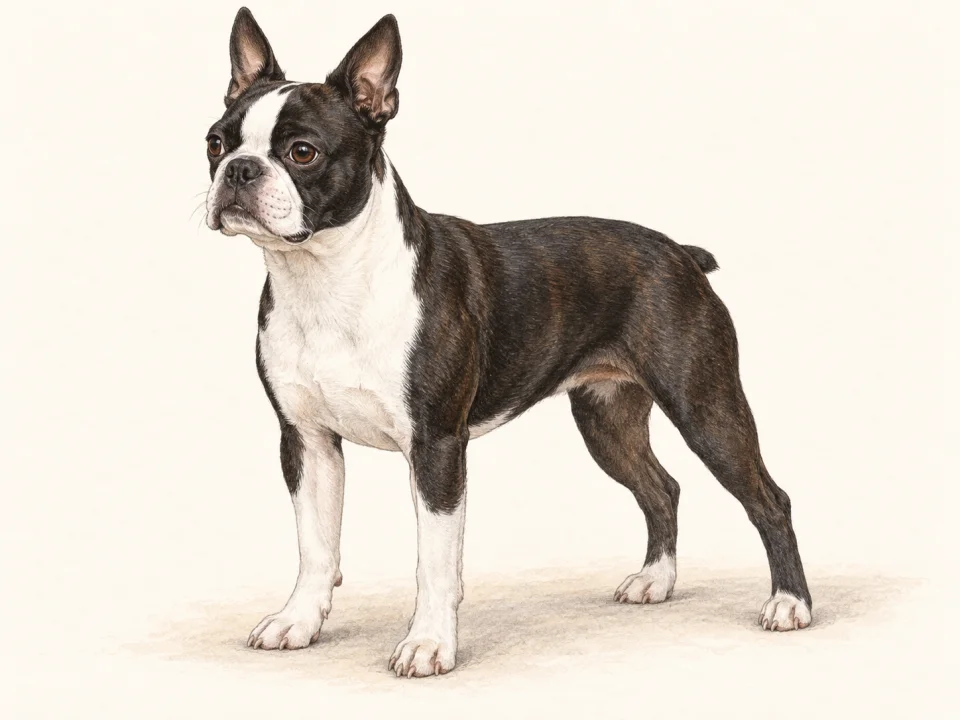
Compact dimensions do not define one activity level
AKC lists the Boston at 10–12 inches and 12–25 pounds. The source notes variation in exercise needs between individuals, so a single timetable will not suit every dog. Observe comfort during suitable walks and play rather than measuring success by distance alone. Choose equipment from actual measurements and keep body condition separate from the impression made by a sturdy little frame.[1]
Account for heat and humidity before the outing
The short muzzle can make breathing more difficult in excessive heat or humidity. Plan conditions and intensity conservatively and do not push through visible breathing difficulty because the dog still wants to play. Seek veterinary guidance about the individual’s limitations. A cheerful temperament or previous easy walk is not evidence that every weather condition or strenuous activity will be safe.[1]
Check the eyes without improvising treatment
AKC emphasizes daily observation of the prominent eyes for redness or irritation. Teach gentle handling and avoid play situations where the face repeatedly meets rough objects. A painful-looking eye or a new change needs veterinary assessment rather than assuming it is harmless dust. Do not use a breed page as a reason to try medication or delay advice.[1]
Play together instead of counting yard access
The cited guidance notes that a Boston left outside may simply wait for its person. Join a suitable game or short learning activity and watch how the dog responds. Offer rest between sessions and adapt the routine when conditions change. Household engagement matters; a secure yard provides space but is not proof that useful exercise or companionship has occurred.[1]
Keep training clear and the care routine complete
Use short positive lessons for waiting, returning attention and accepting a brief check. Introduce new people and settings gradually rather than overwhelming a sensitive individual. Weekly brushing generally manages the fine coat, which still sheds somewhat. Add regular nail, ear and dental care so an easy grooming appearance does not lead to overlooking less visible responsibilities.[1]
Request documented eye, knee and hearing assessments
AKC lists a lifespan reference of 11–13 years and recommends patella and eye evaluations plus BAER hearing testing. Ask for results identifying the tested dogs and dates. A puppy appearing bright and responsive is not the same as documented screening. Those records also do not replace individual assessment of breathing, exercise tolerance or a new health concern.[1]
Frequently asked questions
Do all Boston Terriers need the same amount of exercise?
No. The cited guidance describes individual variation. Match activity to age, health, breathing comfort and conditions rather than following one fixed distance.
Source [1]Why do heat and humidity matter for a Boston Terrier?
Its short muzzle can make breathing more difficult in those conditions. Adjust activity and seek veterinary guidance about individual limitations rather than pushing through breathing difficulty.
Source [1]How often should a Boston’s eyes be checked?
AKC recommends daily observation for redness or irritation. Pain or a new change warrants veterinary advice rather than an improvised treatment.
Source [1]What hearing record should I request from a breeder?
Ask for BAER testing documentation, alongside patella and eye evaluations. A response to household sounds does not substitute for a formal hearing assessment.
Source [1]FAQ sources
Sources & methodology
Breed-level measurements and comparison scores provide context. They do not predict an individual dog's health, behaviour or suitability. Open the original publisher pages below to verify the facts and compare any later updates.
- American Kennel Club — Boston Terrier breed and care guidance ↗Reference 1 · reviewed 2026-09-27
Make it about your dog
Build a profile around your dog's age, experiences and everyday needs.
Meet your dog →Explore local care