
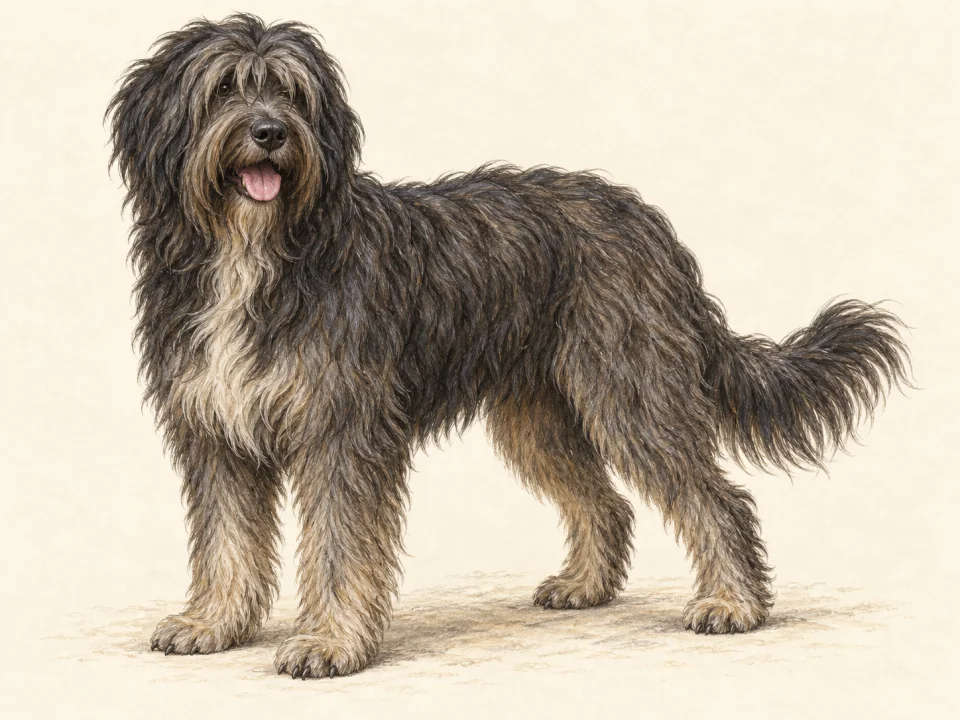
Long hair does not mean a woolly undercoat
The FCI standard describes straight or slightly wavy hair with a somewhat harsh, goat-like texture, including a beard and eyebrows that should not cover the eyes. It specifically excludes a woolly undercoat. Tell a groomer the breed and show the actual coat rather than requesting the same procedure used for a superficially similar shaggy dog. Have them demonstrate how to check long hair around the feet and work through tangles comfortably. At home, inspect the beard after eating and check for material caught in the coat after a walk. Note changes in handling tolerance instead of pulling harder when the dog resists. Long hair can hide a sore area, so seek help if grooming becomes painful or the skin looks irritated.[1]
Give the working dog something to learn with you
AKC describes a devoted, lively herder and suggests walks, play and activities such as obedience, rally or agility. A companion does not need livestock to participate in a useful routine, but activity should involve more than being left to watch the boundary all day. Choose a manageable skill, reward progress and include time to settle afterward. When visitors arrive, give the dog space to observe and make introductions without crowding or forced handling. Discuss the actual dog’s response to strangers with the breeder or rescue before planning a busy household. If interest in movement becomes difficult to manage, reduce the immediate opportunity to rehearse it and seek qualified help. The breed’s history explains why attention and activity matter; it does not make chasing people or animals an acceptable substitute for supervised exercise.[2]
Frequently asked questions
Why is the Portuguese Sheepdog sometimes called a monkey dog?
The FCI standard links the local nickname to its appearance and mannerisms. It is a nickname, not a separate breed or a training classification.
Source [1]Does a Portuguese Sheepdog have a dense undercoat like every shaggy herding dog?
No. The FCI standard describes long hair without undercoat or woolliness. Choose grooming for this coat rather than assuming all long-haired sheepdogs have the same structure.
Source [1]Can a Portuguese Sheepdog have an active companion life without livestock?
Yes. AKC lists shared activities such as walks, play, obedience, rally and agility. Plan suitable daily engagement and rest for the individual rather than expecting it to invent its own work.
Source [2]FAQ sources
- Fédération Cynologique Internationale — Portuguese Sheepdog standard ↗FAQ reference 1
- American Kennel Club — Portuguese Sheepdog care ↗FAQ reference 2
Sources & methodology
Breed-level measurements and comparison scores provide context. They do not predict an individual dog's health, behaviour or suitability. Open the original publisher pages below to verify the facts and compare any later updates.
- Fédération Cynologique Internationale — Portuguese Sheepdog standard ↗Reference 1 · reviewed 2026-09-27
- American Kennel Club — Portuguese Sheepdog care ↗Reference 2 · reviewed 2026-09-27
Make it about your dog
Build a profile around your dog's age, experiences and everyday needs.
Meet your dog →Explore local care