
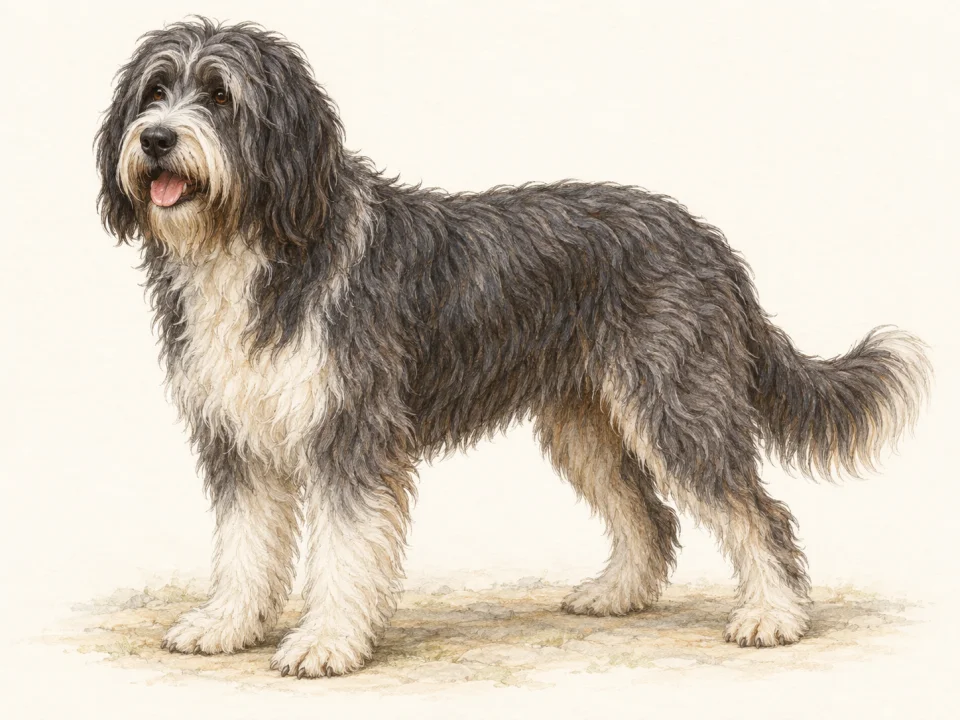
Start with the Azorean farm-dog role
This breed comes from Terceira Island in Portugal’s Azores and combines cattle work with farm watchfulness. AKC references males at 20.5–22 inches and 55–60 pounds, females at 19–21 inches and 46–57 pounds. A medium frame does not imply modest engagement needs. Ask about the individual’s daily routine and background rather than choosing only for its rustic appearance.[1]
Turn working interest into an appropriate task
Plan physical activity and mental work every day, matched to age and condition. A non-farm home can provide suitable reward-based learning and shared activities, but should not allow wildlife or children to become substitute livestock. Pick tasks with clear beginnings and endings. The useful question is who provides this engagement during a normal workweek, not whether a garden is available.[1]
Manage enthusiastic play with other dogs
The source describes vocal, earnest play and herding tendencies that other dogs may find overwhelming. Supervise interactions and offer breaks before one participant becomes uncomfortable. Choose compatible play partners and allow separate rest. An enthusiastic approach is not proof that both dogs are enjoying the encounter; watch each animal rather than assuming the breed’s intent settles the question.[1]
Build containment around observed behavior
A close bond with the owner does not guarantee reliable recall or prevent escape. Use secure boundaries, check for climbing opportunities and keep control outside enclosed spaces. Teach returning for a reward in easy conditions before increasing distractions. Carers should understand the gate and visitor routine so security does not depend on the presence of the person the dog knows best.[1]
Keep the shaggy coat comfortable and vision clear
Regular brushing removes debris and helps prevent matting; agree on a practical home routine with a groomer familiar with the coat. Check around the beard and equipment contact points, and ensure hair does not obstruct vision. Include dewclaws, nails, ears and teeth in care sessions. A natural-looking outline is not an excuse to leave painful tangles untouched.[1]
Ask about the actual hip and genetic records
AKC lists a lifespan reference of 12–14 years. Its health discussion describes PennHIP use and mentions MDR1 and CDDY findings, although the formal panel is empty. Request identifiable results and veterinary interpretation rather than inferring consequences from a gene name alone. Reports of few problems cannot prove an individual is risk-free or replace current advice about screening and care.[1]
Frequently asked questions
Where does the Barbado da Terceira come from?
It comes from Terceira Island in the Azores, Portugal, where its background includes cattle and farm work.
Source [1]Does its attachment to the owner make recall training unnecessary?
No. A strong bond is not a guarantee of recall under distraction. Teach the skill and maintain secure boundaries and control outside enclosed areas.
Source [1]Can a Barbado’s enthusiastic play overwhelm other dogs?
It can. The cited guidance describes vocal play and herding tendencies, so supervise, allow breaks and assess whether both dogs are comfortable.
Source [1]What should I do with a breeder’s MDR1 or CDDY result?
Request the identifiable report and ask a veterinarian to interpret it alongside family history and other records. A gene name alone is not an individual diagnosis or a complete care plan.
Source [1]FAQ sources
Sources & methodology
Breed-level measurements and comparison scores provide context. They do not predict an individual dog's health, behaviour or suitability. Open the original publisher pages below to verify the facts and compare any later updates.
- American Kennel Club — Barbado da Terceira breed and care guidance ↗Reference 1 · reviewed 2026-09-27
Make it about your dog
Build a profile around your dog's age, experiences and everyday needs.
Meet your dog →Explore local care