
Start with the working history
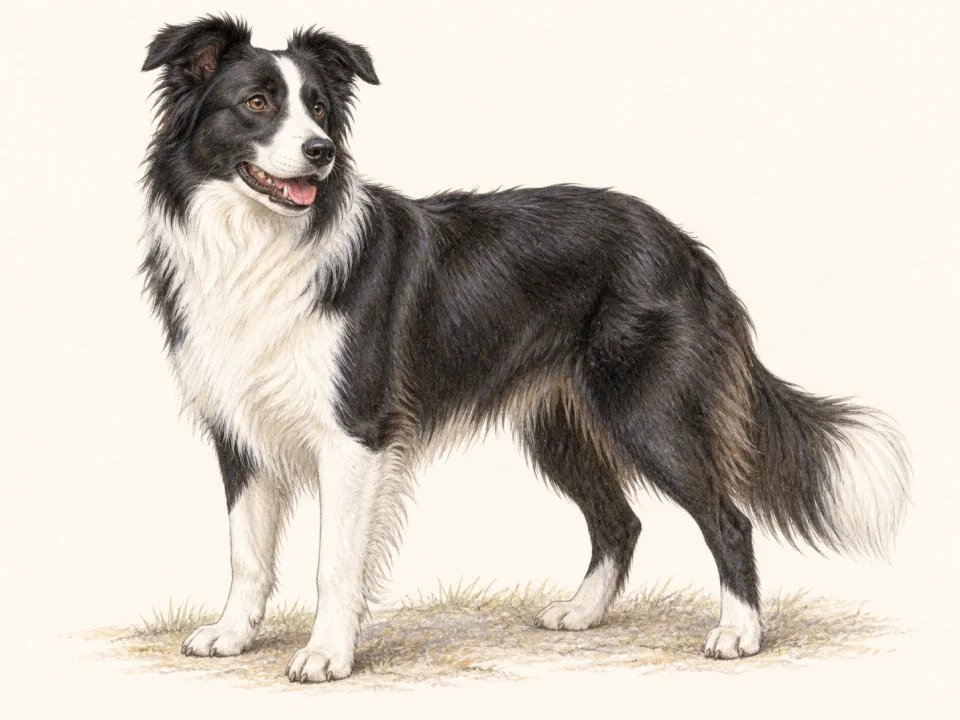
Border Collies were developed to manage livestock and make decisions while working. AKC describes a high-energy, highly trainable dog that does best with a job. Plan meaningful activity and rest rather than expecting intelligence alone to make daily life easy.[1]
Pair physical activity with thinking
A long walk is only one kind of outlet. AKC recommends substantial daily exercise alongside mental stimulation. Sniffing, learning household skills and structured dog sports can each contribute, but the individual dog’s age, health and recovery should set the level.[1]
Teach an off-switch as carefully as action
Create a predictable resting area and protect uninterrupted sleep. Alternate demanding activity with calm routines, and avoid turning every waking moment into high-speed play. A dog who cannot settle may need a review of health, environment and the overall activity pattern.
Plan for herding behaviour around movement
AKC notes that herding instincts can influence behaviour around children, people and other animals. Supervise interactions, prevent rehearsals that worry or chase others, and ask a qualified reward-based professional for an individual plan when needed.[1]
Make socialisation positive and gradual
AKC describes some Border Collies as reserved with strangers and recommends early positive exposure. Socialisation should build safe choices, not force contact. Let the dog observe at a workable distance and reward calm engagement.[1]
Read the dog instead of guessing affection
RSPCA advises watching the whole body and noticing changes in behaviour. Relaxed posture and voluntary approach can support an interaction; turning away, tension or withdrawal asks for space. A wagging tail by itself is not a complete interpretation.[2]
Care for both rough and smooth coats
AKC describes rough and smooth double coats and recommends regular brushing, with more frequent care during seasonal shedding. Check ears, nails and skin during calm handling and ask a groomer or veterinarian about any changes.[1]
Choose for the life you can sustain
Write down the time available for exercise, training, grooming, supervision and quiet companionship across an ordinary week. Meet adult dogs as well as puppies and ask about verified health screening. A very clever dog still needs a household whose routine fits the individual.
Frequently asked questions
How can you tell whether a Border Collie is comfortable with you?
Look at the whole dog and the context. RSPCA describes relaxed posture, natural ears and eyes, and voluntary engagement as useful signs; allow space if the dog looks worried or moves away.
Source [1]What is the most difficult age for a Border Collie?
There is no single difficult age that applies to every dog. Adolescence can change attention and behaviour, while pain or a sudden change at any age needs veterinary advice. Plan for the individual rather than a fixed timetable.
Source [2]Do Border Collies like strangers?
AKC says the breed can be social with early positive exposure but may be reserved around strangers. Do not force a greeting; observe the individual dog’s body language and choice.
Source [2]Do Border Collies choose a favourite person?
Some individuals may seek one person more often, but a breed label cannot predict a fixed bond. Build trust through consistent care, safe choices and shared activity, and watch the dog’s behaviour in each relationship.
Source [1]FAQ sources
- RSPCA — understanding dog body language ↗FAQ reference 1
- American Kennel Club — is a Border Collie right for you? ↗FAQ reference 2
Sources & methodology
Breed-level measurements and comparison scores provide context. They do not predict an individual dog's health, behaviour or suitability. Open the original publisher pages below to verify the facts and compare any later updates.
- American Kennel Club — is a Border Collie right for you? ↗Reference 1 · reviewed 2026-09-09
- RSPCA — understanding dog body language ↗Reference 2 · reviewed 2026-09-09
Make it about your dog
Build a profile around your dog's age, experiences and everyday needs.
Meet your dog →Explore local care