
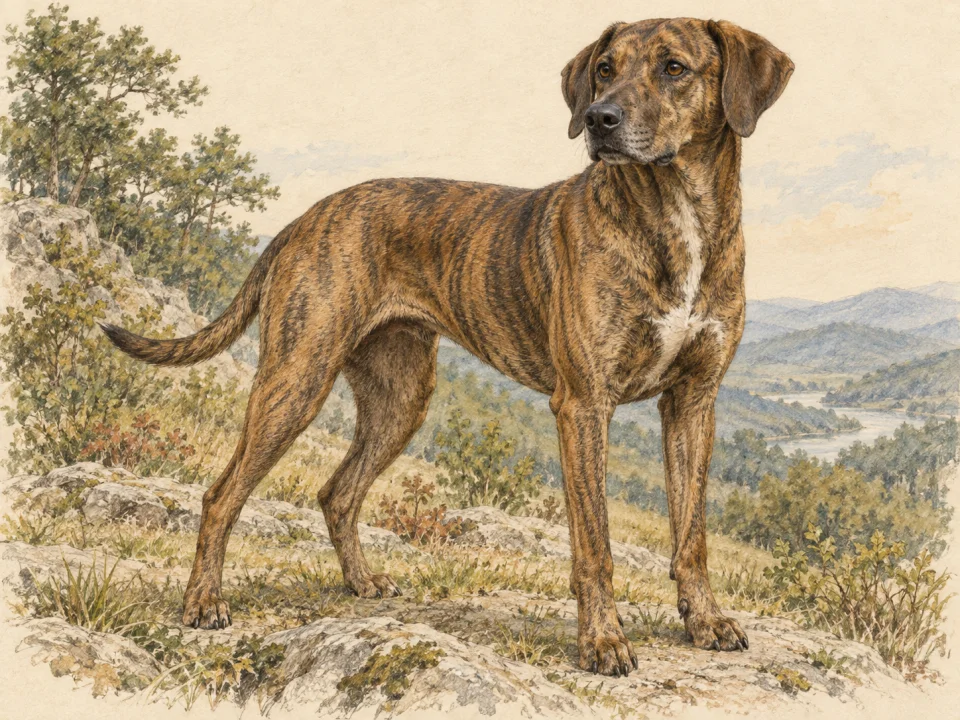
Understand what a tree dog brings to a companion home
UKC describes a dog bred to track game and signal at a tree, with a carrying bark and substantial working stamina. That background helps explain why a squirrel outside the window may matter more than the quiet afternoon you had planned. Ask a breeder or rescue what the individual has actually done: hunted regularly, lived with small pets, stayed indoors while people worked, or learned to settle after an outing. These are different experiences, and one does not establish the others. For a dog without hunting work, write down the activities you can maintain on ordinary weekdays, including shared outdoor time and a learning task. A large property is useful only if its boundaries and the dog’s access can be managed. It is not evidence that the dog will stay close when it finds a trail.[1]
Assess small-pet compatibility separately from friendliness to people
AKC cautions that Mountain Curs may view cats and other small pets as prey. Before bringing one into a mixed-pet home, ask for specific history rather than accepting “friendly” as an answer to every compatibility question. Plan physical separation and seek qualified help with introductions when needed; do not test the dog by allowing an uncontrolled chase. On walks, select a secure setup and enough distance from wildlife to practice responding to you. Keep a note of which situations are manageable and which require more space. The purpose is to make sensible choices for this individual, not to prove that its hunting background has disappeared. A dog that is affectionate with family can still need careful management around another species.[2]
Make outdoor care part of returning home
The short coat is relatively straightforward to brush, with more loose hair during seasonal shedding. Use the return from an outing as a predictable moment to look over the dog and notice changes in movement, skin or comfort, rather than assuming a rugged working dog cannot be hurt. Ask your veterinarian about preventive care appropriate to the places you actually visit. Keep the route, duration and any unusual event in mind if the dog seems different afterward; those details are more useful than a general description that it had been running outside. Training should also include quiet household skills and comfortable handling, not only exciting outdoor tasks. The dog’s daily life needs to work when the outing is over.[2]
Frequently asked questions
Is a big yard enough activity for a Mountain Cur?
Not by itself. This is a working hunter with tracking and treeing instincts. Plan purposeful activity with people and secure boundaries rather than relying on acreage to provide a complete routine.
Source [1]Does being good with people mean a Mountain Cur is safe with cats?
No. AKC specifically notes possible prey interest in small pets. Assess the individual’s history and manage introductions and separation; human friendliness does not establish compatibility with another species.
Source [2]FAQ sources
- United Kennel Club — Mountain Cur breed standard ↗FAQ reference 1
- American Kennel Club — Mountain Cur ↗FAQ reference 2
Sources & methodology
Breed-level measurements and comparison scores provide context. They do not predict an individual dog's health, behaviour or suitability. Open the original publisher pages below to verify the facts and compare any later updates.
- United Kennel Club — Mountain Cur breed standard ↗Reference 1 · reviewed 2026-09-27
- American Kennel Club — Mountain Cur ↗Reference 2 · reviewed 2026-09-27
Make it about your dog
Build a profile around your dog's age, experiences and everyday needs.
Meet your dog →Explore local care