
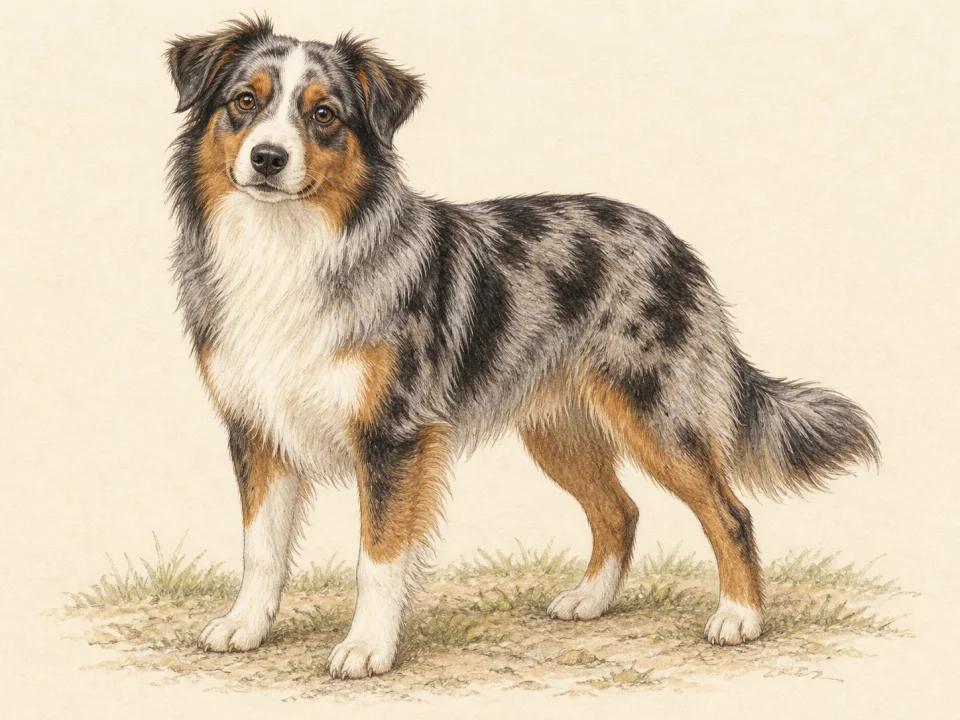
Match the household to the herder, not just its smaller frame
AKC describes this breed as an energetic, intelligent herder with a double coat. Its size may be convenient, but activity and care still have to fit an ordinary working day. Before choosing a puppy, write down who will provide an outing, a brief learning activity and a quiet place to rest. Ask about the individual’s response to household movement and visitors rather than assuming intelligence means it already knows how you want it to behave. For an adult dog, compare that plan with its established routine. AKC recommends weekly brushing, increasing during seasonal shedding. Check whether the household can maintain that work as well as exercise; a compact dog can still leave substantial loose hair. Sport participation is an option, not a requirement to enter competitions or an excuse to push an immature dog beyond its abilities.[1]
Check the current list, including NAD and the annual eye examination
MASCUSA’s health statement revised in May 2026 lists hip evaluation, an annual eye examination, and DNA tests for PRA-PRCD, multiple drug sensitivity, HSF4 hereditary cataracts and neuroaxonal dystrophy (NAD) in its required-testing section for the named programs. It separately lists additional recommended tests. When discussing a litter, request both parents’ documented results and compare the actual test names with this statement. A long commercial panel name alone does not tell you whether every relevant item was included. Keep the examination date visible: an eye DNA result and an annual clinical eye examination are different forms of evidence. If a record is missing or unclear, ask what was performed rather than filling the gap with a reassuring description of the parents. Discuss the findings with your veterinarian in the context of the individual dog.[2]
Keep MDR1 information where a treating veterinarian can use it
Washington State University explains that knowing a dog’s MDR1 status helps guide decisions about medications that can cause adverse reactions in susceptible dogs. Keep the actual result with the medical record and mention it when attending a new clinic. A useful handover contains the dog’s identification, the laboratory result and the current medication list; it does not need an owner-made drug ban list. Ask the veterinarian how the result affects the proposed treatment. Do not choose doses, stop prescribed care or replace parasite prevention based on another owner’s experience. If the status is unknown, say so clearly and ask about testing instead of assuming coat color, appearance or breed membership establishes the result.[3]
Frequently asked questions
Is a Miniature American Shepherd a low-exercise dog because it is small?
No. AKC describes an active, athletic herding dog. Choose a routine that includes physical activity and learning appropriate to the individual, rather than treating smaller size as a promise of low effort.
Source [1]Does an eye DNA test replace the annual eye examination?
No. MASCUSA’s May 2026 statement lists the annual clinical eye examination separately from named DNA tests. Check both the test results and the examination date when reviewing records.
Source [2]What should I do with my dog’s MDR1 result?
Share the actual result with the treating veterinarian, especially at a new clinic or before a medication decision. It helps guide individualized treatment; do not use it to make your own dose changes or stop prescribed care.
Source [3]FAQ sources
- American Kennel Club — Miniature American Shepherd ↗FAQ reference 1
- MASCUSA — Parent club health statement, revised May 6, 2026 ↗FAQ reference 2
- Washington State University — MDR1 in dogs ↗FAQ reference 3
Sources & methodology
Breed-level measurements and comparison scores provide context. They do not predict an individual dog's health, behaviour or suitability. Open the original publisher pages below to verify the facts and compare any later updates.
- American Kennel Club — Miniature American Shepherd ↗Reference 1 · reviewed 2026-09-27
- MASCUSA — Parent club health statement, revised May 6, 2026 ↗Reference 2 · reviewed 2026-09-27
- Washington State University — MDR1 in dogs ↗Reference 3 · reviewed 2026-09-27
Make it about your dog
Build a profile around your dog's age, experiences and everyday needs.
Meet your dog →Explore local care