
Decide who will maintain the coat between appointments
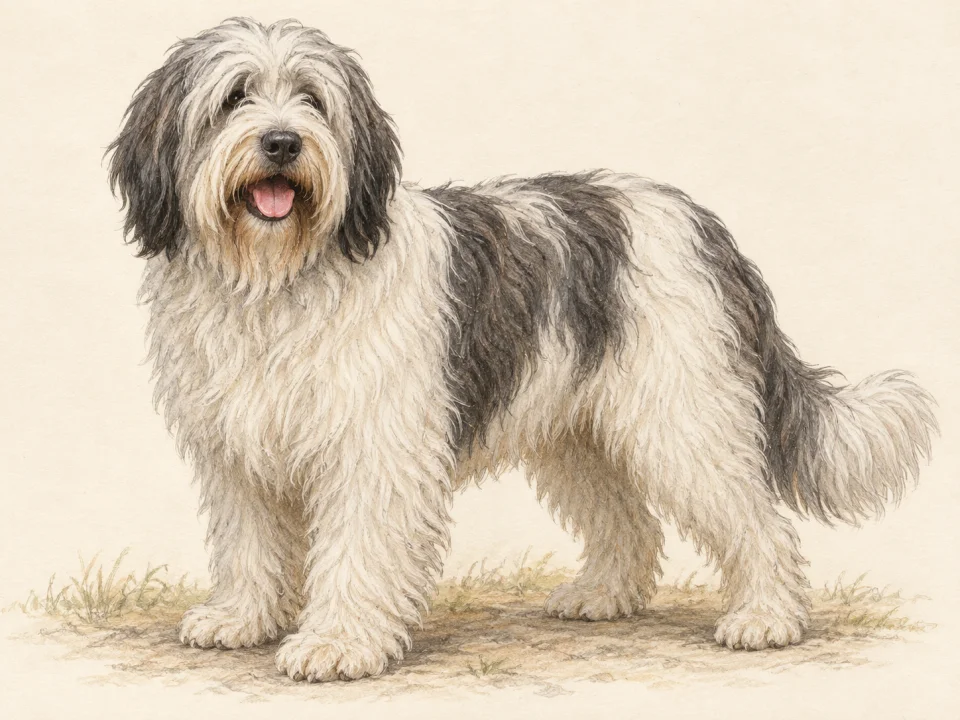
AKC describes a crisp outer coat over a soft, dense undercoat. A full coat needs thorough brushing, and a shorter pet clip still needs routine maintenance. Before choosing a grooming arrangement, ask for a demonstration on the actual dog: how to part the hair, check beneath the surface and work through a section comfortably. Plan the time between professional appointments rather than assuming a haircut will solve every tangle. After walks through vegetation, look for grass and other debris caught in the coat. Keep an unfinished-area note if several people share grooming so nobody mistakes a brushed back for a fully checked dog. If the skin is sore or a mat cannot be handled comfortably, get professional help. The shaggy appearance should coexist with clean skin, comfortable movement and tolerable handling.[1]
Use a clear task and reward instead of a contest of wills
The breed’s working background and substantial coat can both demand patience, but neither is a reason to use force. AVSAB recommends reward-based training and rejects aversive methods. Apply that principle to something useful at home, such as standing briefly for brushing: start with a duration the dog can manage, reward calm participation and stop before the session becomes a struggle. If the dog repeatedly moves away, consider discomfort, distraction or an unclear request instead of assigning a personality label. Combine suitable walks and activities with opportunities to rest; AKC describes a dog that enjoys doing things with its owner. Around visitors, give the dog room to observe and reward comfortable behavior rather than requiring immediate physical contact. For persistent fear or handling difficulty, ask a veterinarian or appropriately qualified behavior professional for help.[3]
Frequently asked questions
What does PON stand for?
PON is the abbreviation of Polski Owczarek Nizinny, the Polish name for the Polish Lowland Sheepdog.
Source [1]Can a PON puppy’s coat become lighter as it grows?
Yes. The AKC standard notes that many puppies are darker than they will be as adults. Ask about the parents and coat development, but do not choose on an exact promised adult shade.
Source [2]Does a confident PON need dominance-based training?
No. Current AVSAB guidance recommends reward-based methods for all dogs. Consistent cues and achievable tasks are more useful than treating handling or training as a contest for control.
Source [3]FAQ sources
Sources & methodology
Breed-level measurements and comparison scores provide context. They do not predict an individual dog's health, behaviour or suitability. Open the original publisher pages below to verify the facts and compare any later updates.
- American Kennel Club — Polish Lowland Sheepdog care ↗Reference 1 · reviewed 2026-09-27
- American Kennel Club — Polish Lowland Sheepdog standard ↗Reference 2 · reviewed 2026-09-27
- American Veterinary Society of Animal Behavior — Humane training position statements ↗Reference 3 · reviewed 2026-09-27
Make it about your dog
Build a profile around your dog's age, experiences and everyday needs.
Meet your dog →Explore local care