
Book a grooming conversation before booking a puppy
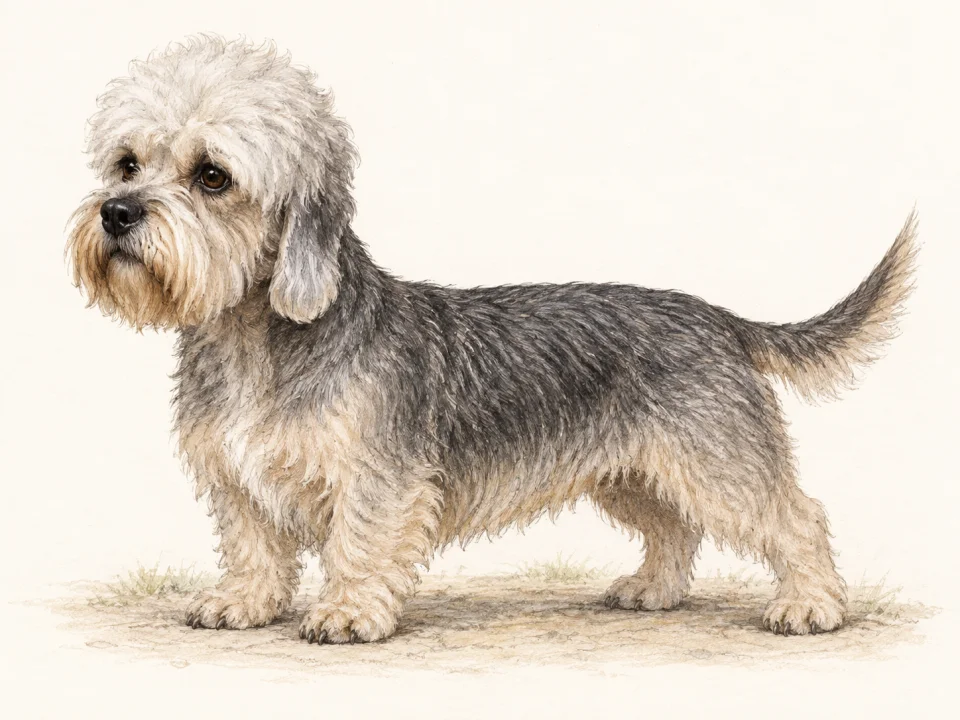
The Dandie’s soft topknot and crisp body coat are not maintained by one quick pass over the surface. The Southern Dandie Dinmont Terrier Club describes hand-stripping and explains that timing depends on coat growth and the finish being maintained. Treat an appointment interval as something to agree for the actual coat, not a universal calendar rule. Before committing, ask a groomer whether they have worked on Dandies, what home brushing they expect, and how they will handle a dog that is uncomfortable. Ask to see the difference between brushing out tangles and removing dead body hair. Those are separate jobs. Do not attempt unfamiliar stripping techniques simply because a tool is available online. A demonstration and a realistic home routine are more useful than choosing the breed on a promise of little hair on the furniture.[2]
Choose a walking companion rather than a distance-running partner
AKC describes a long, low-built hunting terrier suited to moderate exercise rather than sustained running alongside a jogger or bicycle. That distinction matters more than its small height: a Dandie is a sturdy 18–24-pound dog, not necessarily a dog you can casually carry for the remainder of an unsuitable outing. Plan walks that allow investigation and choose a turnaround point you can comfortably manage. Keep a leash outside secure enclosures because pursuit can interrupt even familiar training. For a household with a runner, an honest arrangement might be a separate suitable dog walk rather than taking the Dandie on every training run. This is a planning option, not an individual exercise prescription.[1]
Ask about the eyes even if a short breed listing shows no test panel
The Dandie Dinmont Terrier Club of America discusses glaucoma and encourages participation in eye examinations and research blood collection through its health program. A short generic statement that the breed is healthy does not answer whether a particular dog has been examined. Ask for the actual eye report, its date, which dog it identifies and what follow-up was advised. Also distinguish a blood sample collected for research from a diagnostic test result: one cannot stand in for the other. Have the veterinarian interpret any findings and relevant family history. Do not turn the club’s discussion into a promise that disease has been eliminated, or a claim that one examination guarantees healthy eyes for life.[3]
Frequently asked questions
Does low shedding mean a Dandie needs little grooming?
No. Brushing and skilled removal of dead coat are separate tasks. Agree on a routine with a groomer who understands the breed rather than choosing solely on visible shedding.
Source [1]Is a Dandie a good dog to run beside my bicycle?
AKC describes the long, low breed as a poor fit for sustained jogging or biking. Plan appropriate walks and discuss the individual’s activity needs instead.
Source [2]Does giving blood for research prove that a Dandie has passed an eye test?
No. Research sampling and an eye examination provide different information. Request the actual examination report and veterinary interpretation.
Source [3]FAQ sources
- Southern Dandie Dinmont Terrier Club — Grooming ↗FAQ reference 1
- American Kennel Club — Dandie Dinmont Terrier ↗FAQ reference 2
- Dandie Dinmont Terrier Club of America — Dandie Health ↗FAQ reference 3
Sources & methodology
Breed-level measurements and comparison scores provide context. They do not predict an individual dog's health, behaviour or suitability. Open the original publisher pages below to verify the facts and compare any later updates.
- American Kennel Club — Dandie Dinmont Terrier ↗Reference 1 · reviewed 2026-09-27
- Southern Dandie Dinmont Terrier Club — Grooming ↗Reference 2 · reviewed 2026-09-27
- Dandie Dinmont Terrier Club of America — Dandie Health ↗Reference 3 · reviewed 2026-09-27
Make it about your dog
Build a profile around your dog's age, experiences and everyday needs.
Meet your dog →Explore local care