
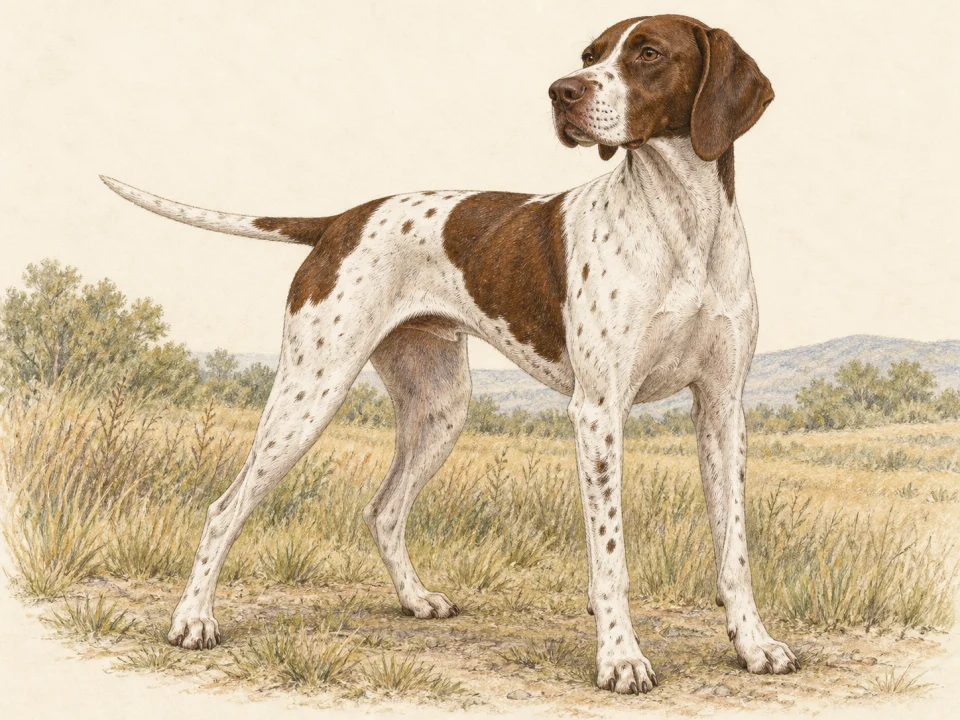
Choose activities you can share throughout the week
AKC describes a very active sporting dog and lists field events, tracking, obedience, rally and agility among possible activities. You do not need to pursue every sport, but you do need a workable routine beyond occasional weekend enthusiasm. Before committing, choose an activity you actually enjoy, find a suitable place to practice and decide how it fits alongside everyday walks and rest. Observe an adult dog after a typical day, not only during an exciting demonstration. For a puppy, senior or dog returning from inactivity, discuss the appropriate exercise plan with a veterinarian rather than borrowing a fit adult’s running schedule. Treat descriptions of endurance as background about the breed, not instructions to run until exhaustion. A secure area can offer room to move, while training provides a way to cooperate with the dog rather than simply trying to tire it out.[1]
Bring the 2025 screening list to the breeder conversation
The American Pointer Club’s statement approved in February 2025 recommends hip, elbow, eye and thyroid testing, with results reported to OFA. Ask the breeder to show the named reports and explain the dates and identities recorded on them. Put the four categories on a note before the conversation so an impressive result in one area does not distract from a missing report in another. Your veterinarian can explain what those findings mean for the individual and what they do not exclude. The club also notes skin concerns, epilepsy and other illness in the breed; it does not describe screening as a guarantee against all future disease. Continue ordinary veterinary care and investigate changes in comfort or performance instead of assuming an athletic breed should simply push through them.[3]
Frequently asked questions
Can a Pointer be solid-colored rather than white with patches?
Yes. The AKC standard allows liver, lemon, black or orange, either solid or combined with white. Color alone does not measure working ability or health.
Source [1]Does a Pointer’s short coat mean it is an easy choice for an inactive household?
No. Coat maintenance and activity needs are separate. AKC describes a very active sporting breed; decide whether you can provide regular shared activity and training before choosing one.
Source [2]Which health reports does the American Pointer Club recommend?
Its February 2025 statement lists hips, elbows, eyes and thyroid, with results reported to OFA. Ask for the individual records and have their meaning and limitations explained rather than accepting only a general health-tested claim.
Source [3]FAQ sources
- American Kennel Club — Pointer standard ↗FAQ reference 1
- American Kennel Club — Pointer ↗FAQ reference 2
- American Pointer Club — Health statement approved February 18, 2025 ↗FAQ reference 3
Sources & methodology
Breed-level measurements and comparison scores provide context. They do not predict an individual dog's health, behaviour or suitability. Open the original publisher pages below to verify the facts and compare any later updates.
- American Kennel Club — Pointer ↗Reference 1 · reviewed 2026-09-27
- American Kennel Club — Pointer standard ↗Reference 2 · reviewed 2026-09-27
- American Pointer Club — Health statement approved February 18, 2025 ↗Reference 3 · reviewed 2026-09-27
Make it about your dog
Build a profile around your dog's age, experiences and everyday needs.
Meet your dog →Explore local care