
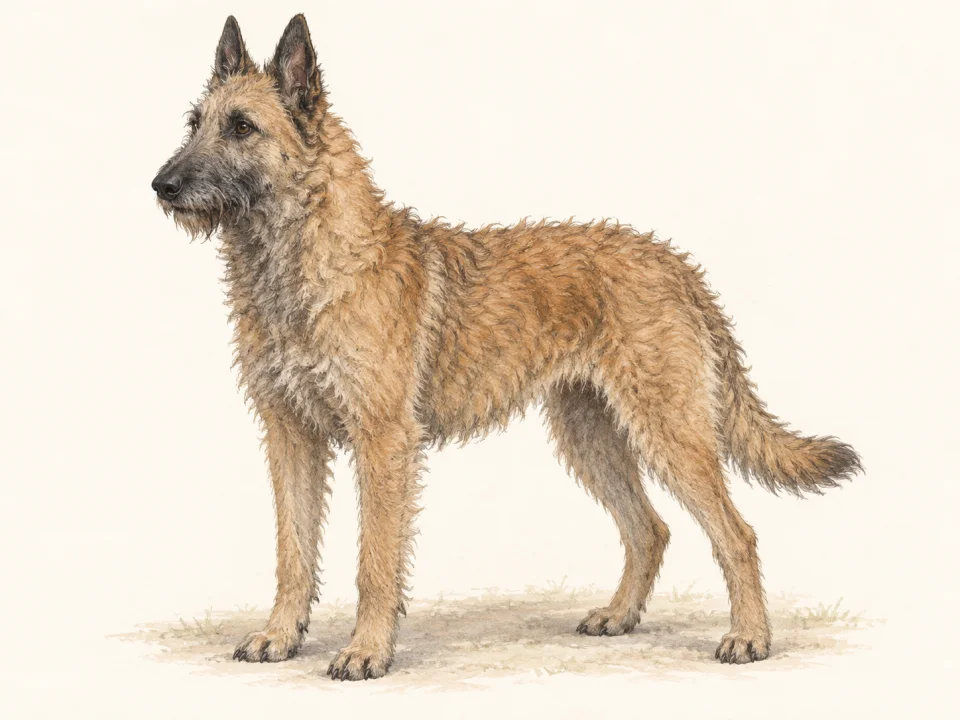
Identify the rough-coated Belgian herder
The Laekenois differs in coat texture and appearance from the Malinois, Belgian Sheepdog and Tervuren. AKC references males at 24–26 inches, females at 22–24 inches, with a weight range of 55–65 pounds. Do not select care advice solely because another dog looks like a Belgian shepherd. Confirm the breed and individual needs before planning grooming or activity.[1]
Make activity a partnership rather than a location
The source emphasizes active engagement with people rather than life alone in a yard. Plan suitable walks, learning and purposeful games in a repeatable weekday routine. A secure outdoor area can support that activity, but it does not organize it. Consider who takes over when the usual handler is unavailable so the dog’s engagement does not disappear on busy days.[1]
Prepare for reserve around unfamiliar people
A Laekenois may be affectionate with familiar people and observant or reserved with strangers. Give the individual room to watch before a close greeting, and reward calm attention. Provide a secure resting alternative during busy arrivals. Positive social experience should remain comfortable rather than becoming a requirement to accept handling from every visitor who wants to meet the dog.[1]
Teach practical cooperation before adding difficulty
Use short reward-based lessons for walking together, waiting at a gate and accepting routine care. Increase distractions only when the action is clear in easier conditions. An intelligent dog still needs a consistent explanation. If the response changes in a new place, simplify the lesson rather than assuming the dog should already perform the indoor version everywhere.[1]
Maintain the tousled coat without overlooking discomfort
Weekly grooming and occasional bathing are the AKC baseline. Check the rough coat for debris and areas that tangle, particularly after outdoor activity or around equipment. Include nail, ear and dental care rather than judging the whole routine from a tidy outline. Teach handling in small comfortable steps so a paw check is familiar before a problem makes it necessary.[1]
Request the full recommended screening set
AKC lists a lifespan of 10–12 years and recommends hip, elbow, cardiac, eye, thyroid and dentition evaluations. Ask for results tied to the tested dogs and clarification of dates and findings. A statement that the parents are robust is not the same as these records. Discuss wider family history and individual veterinary needs separately from what screening can establish.[1]
Frequently asked questions
How is a Laekenois different from a Malinois?
The Laekenois is distinguished by its rough, tousled coat among the closely related Belgian herding breeds. Use its own care information rather than treating it as a longer-coated Malinois.
Source [1]Can a Laekenois be kept occupied by staying in a yard?
Yard access alone does not replace active engagement with people. Plan shared physical activity and learning as part of ordinary daily life.
Source [1]How should visitors greet a reserved Laekenois?
Allow space and calm observation before closer contact. Do not force handling, and provide a secure alternative resting area if the situation is too busy.
Source [1]Which screening records should I request?
AKC lists hip, elbow, cardiac, eye, thyroid and dentition evaluations. Obtain identifiable reports and seek professional interpretation of uncertain findings.
Source [1]FAQ sources
Sources & methodology
Breed-level measurements and comparison scores provide context. They do not predict an individual dog's health, behaviour or suitability. Open the original publisher pages below to verify the facts and compare any later updates.
- American Kennel Club — Belgian Laekenois breed and care guidance ↗Reference 1 · reviewed 2026-09-27
Make it about your dog
Build a profile around your dog's age, experiences and everyday needs.
Meet your dog →Explore local care