
Do not choose from a performance clip alone
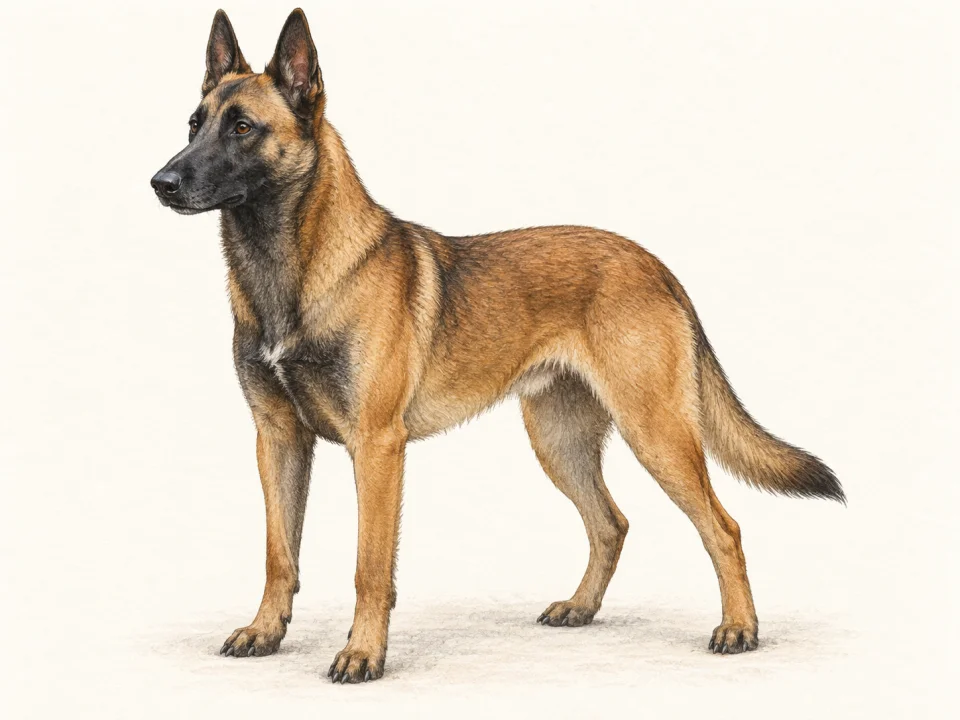
A skilled working Malinois represents training, selection and a handler’s sustained effort, not a ready-made behavior package. AKC references males at 24–26 inches and 60–80 pounds, females at 22–24 inches and 40–60 pounds. Assess the actual dog and your available daily time. An impressive demonstration cannot tell you how well a particular individual will fit an ordinary household.[1]
Define the daily work before bringing the dog home
The AKC guidance describes needs beyond ordinary walks and solitary yard access. Plan appropriate training and activities with a person, alongside physical exercise and recovery. Identify the schedule and backup care on workdays. Avoid assuming that continuously increasing distance will solve every difficulty; the dog also needs clear tasks, cooperative skills and opportunities to settle.[1]
Manage movement before it becomes a chase
The breed can be strongly interested in moving children, animals or vehicles. Use physical control and sensible separation where needed, then teach attention in easier situations before adding motion. Do not let household members become practice targets. If chasing is developing, obtain qualified help and change the environment rather than repeatedly testing whether the dog will stop this time.[1]
Build an off-duty routine as deliberately as a task
Teach returning to a resting place, releasing an object for a reward and waiting calmly for the next activity. Keep cues and boundaries consistent between carers. Start with small achievable steps and reward success before increasing excitement. A high-drive dog benefits from structure; being capable of intense work does not mean every interaction should become an intense game.[1]
Short hair still brings seasonal shedding
Routine brushing is comparatively straightforward, but the AKC entry describes heavier shedding twice a year and more frequent brushing then. Check paws and nails after active outings and keep dental and ear care in the plan. A clean coat does not show whether the dog is comfortable after exercise, so investigate changes in movement or willingness rather than dismissing them as tiredness.[1]
Use health records to inform an individual plan
AKC lists a lifespan reference of 14–16 years and recommends hip, elbow and eye evaluations. Request dated reports identifying the dogs assessed. A favorable result does not mean a puppy is ready for adult athletic demands or that later illness is impossible. Discuss age, conditioning and any discomfort with your veterinarian when deciding how to build physical activity.[1]
Frequently asked questions
Are daily walks alone enough for a Belgian Malinois?
The cited AKC guidance describes a need for substantial mental and physical engagement with a person beyond ordinary walks. Plan a sustainable training and activity routine before choosing the breed.
Source [1]Why must movement around a Malinois be managed?
The breed can have strong interest in moving objects, including children, animals and vehicles. Use control and appropriate separation while teaching attention gradually; do not use people as chase targets.
Source [1]Does a short coat mean a Malinois hardly sheds?
No. The source describes heavier seasonal shedding twice a year, when brushing needs increase despite the short coat.
Source [1]Do clear hip and elbow records make a puppy ready for demanding exercise?
No. Screening results and developmental readiness are different questions. Ask your veterinarian about age-appropriate activity and gradual conditioning.
Source [1]FAQ sources
Sources & methodology
Breed-level measurements and comparison scores provide context. They do not predict an individual dog's health, behaviour or suitability. Open the original publisher pages below to verify the facts and compare any later updates.
- American Kennel Club — Belgian Malinois breed and care guidance ↗Reference 1 · reviewed 2026-09-27
Make it about your dog
Build a profile around your dog's age, experiences and everyday needs.
Meet your dog →Explore local care