
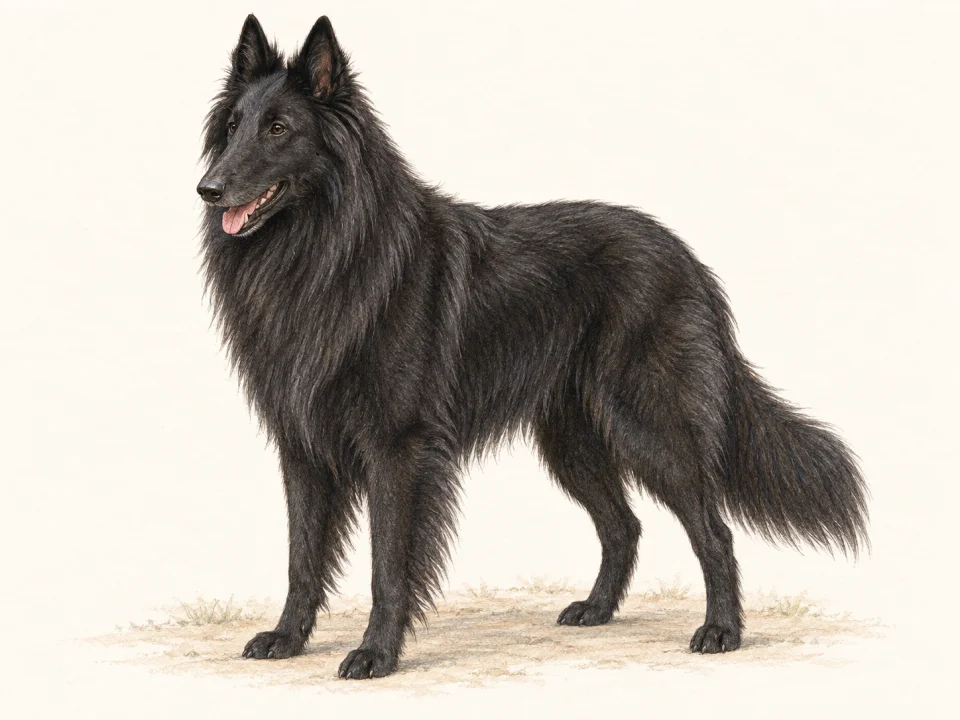
Identify the black-coated Belgian herder
In the AKC context, Belgian Sheepdog refers to the long-coated black member of the Belgian herding group. Males are referenced at 24–26 inches and 55–75 pounds, females at 22–24 inches and 45–60 pounds. Confirm the breed identity when comparing it with a Malinois or Laekenois. Similar working backgrounds do not make every coat-care routine interchangeable.[1]
Schedule a person, not only an exercise area
The breed benefits from substantial daily engagement with its owner. A suitable shared activity, training task or game provides interaction that time alone in a yard does not. Decide who supplies that time during a normal workweek and how another carer follows the routine. A close family bond is valuable, but it also creates a responsibility to plan for regular companionship.[1]
Let learning become part of everyday care
Teach a short sequence such as approaching for a harness, waiting at the door and walking together calmly. Reward each manageable step before linking them under distraction. A highly trainable reputation does not mean the dog arrives knowing household rules. Consistent signals between people make ordinary tasks clearer than repeatedly testing obedience in a situation the dog has not yet learned.[1]
Prepare for an annual coat workload change
Weekly brushing generally manages the coat outside shedding periods, while the AKC guidance describes heavy shedding at least once yearly that can require daily work. Plan that extra time instead of assuming the usual quick session remains sufficient. Check through the dense undercoat and ask a knowledgeable groomer about suitable tools if the coat becomes difficult to manage comfortably.[1]
Handle excitement with space and rehearsal
An active dog can need help switching from play to a quiet household moment. Practise settling in a low-distraction setting and provide a protected resting option when visitors arrive. Supervise children and other animals rather than assuming familiarity prevents every difficult interaction. If the dog is struggling, reduce the intensity of the situation before trying to teach a more complex response.[1]
Check records beyond the visible athletic frame
AKC gives a lifespan reference of 12–14 years and recommends hip, elbow and eye evaluations. Request dated results identifying the dogs, then discuss family history beyond those screens. Routine ear, dental and nail care still matters alongside coat maintenance. A strong-looking dog may still experience discomfort, so a change in movement or behavior deserves individual attention rather than a breed-based explanation.[1]
Frequently asked questions
Does Belgian Sheepdog mean every Belgian herding breed?
In the cited AKC context it refers specifically to the long-coated black breed. Malinois, Tervuren and Laekenois have their own entries and care details.
Source [1]How does grooming change during shedding season?
AKC describes weekly routine brushing but daily attention during a heavy seasonal shed. Work through the undercoat rather than only smoothing the outer hair.
Source [1]Can a Belgian Sheepdog meet its needs alone in a yard?
Yard access does not replace shared activity and human contact. Plan daily engagement with a person as well as suitable physical exercise.
Source [1]What screening records should I request?
Ask for hip, elbow and eye evaluations with dates and dog identities, plus wider family history. Screening addresses specific risks rather than all possible future illness.
Source [1]FAQ sources
Sources & methodology
Breed-level measurements and comparison scores provide context. They do not predict an individual dog's health, behaviour or suitability. Open the original publisher pages below to verify the facts and compare any later updates.
- American Kennel Club — Belgian Sheepdog breed and care guidance ↗Reference 1 · reviewed 2026-09-27
Make it about your dog
Build a profile around your dog's age, experiences and everyday needs.
Meet your dog →Explore local care