
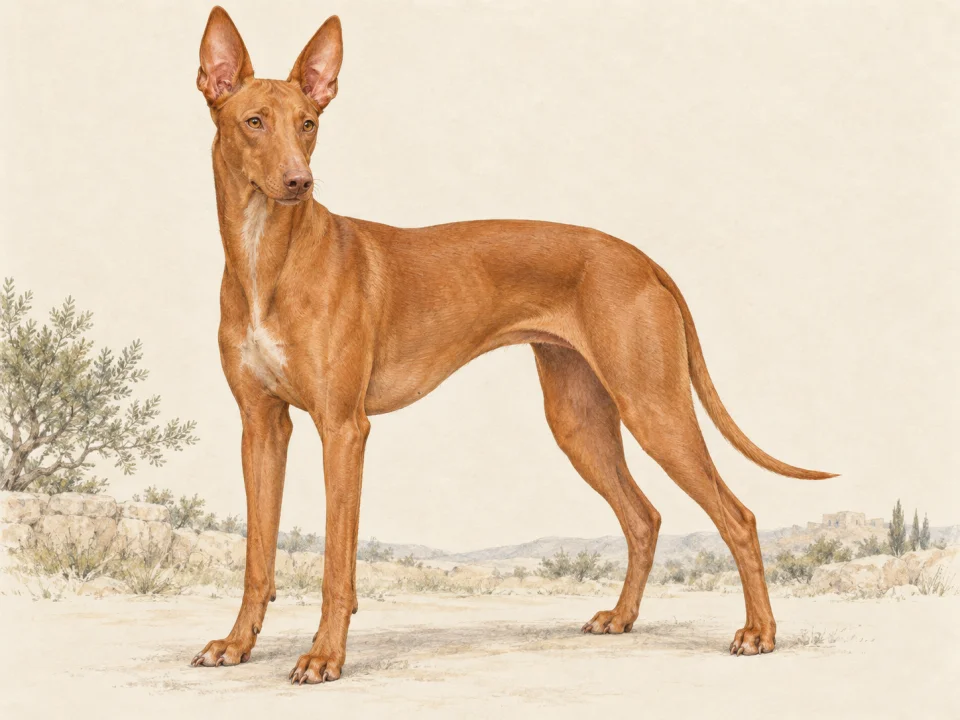
Know the Maltese hunter behind the name
The FCI standard lists Malta as the country of origin and describes a hunter that uses scent and sight, with hearing also important at close range. A resemblance to an ancient image does not establish an individual dog’s ancestry. For an owner, its present-day behavior matters more: ask to see an adult in ordinary surroundings and discuss what catches its attention on walks. Notice the difference between interacting with a person and becoming absorbed in movement or smells nearby. Before adding one to a household with small animals, describe the existing animals and their housing to the breeder or rescue and plan secure separation where needed. A friendly greeting does not establish safety in a chase situation.[1]
Design exercise around secure access, not a promise of recall
AKC specifically warns against off-leash exercise in an unenclosed area because training cannot be relied upon to override the hunting instinct. Before using a hired field or unfamiliar yard, walk the boundary yourself, check gates and look for damaged sections. Agree who controls the entrance so another person cannot open it while the dog is loose. Keep the leash attached until the area is secured, and arrange a clear handover to anyone walking the dog. Practice recall in safe conditions, but do not make a successful session the reason to remove containment near traffic. The short coat needs relatively little grooming according to AKC, which leaves time for these more consequential arrangements. Keep regular handling, ear checks, nail care and dental care in the routine rather than equating a sleek coat with no maintenance.[2]
Frequently asked questions
Is the Pharaoh Hound’s recognized country of origin Egypt?
The FCI standard lists Malta. The name and visual comparisons with ancient art should not be used as proof of a continuous Egyptian pedigree.
Source [1]Can a well-trained Pharaoh Hound run loose in an open park?
AKC advises against unenclosed off-leash exercise because pursuit can override a response to the owner. Provide suitable exercise with a leash or secure physical containment even while continuing recall training.
Source [2]Does a Pharaoh Hound hunt only by sight?
No. The FCI standard describes hunting by both scent and sight and also notes the use of hearing at close range. A plan based only on blocking the dog’s view misses other sources of interest.
Source [1]FAQ sources
- Fédération Cynologique Internationale — Pharaoh Hound standard ↗FAQ reference 1
- American Kennel Club — Pharaoh Hound care ↗FAQ reference 2
Sources & methodology
Breed-level measurements and comparison scores provide context. They do not predict an individual dog's health, behaviour or suitability. Open the original publisher pages below to verify the facts and compare any later updates.
- Fédération Cynologique Internationale — Pharaoh Hound standard ↗Reference 1 · reviewed 2026-09-27
- American Kennel Club — Pharaoh Hound care ↗Reference 2 · reviewed 2026-09-27
Make it about your dog
Build a profile around your dog's age, experiences and everyday needs.
Meet your dog →Explore local care