
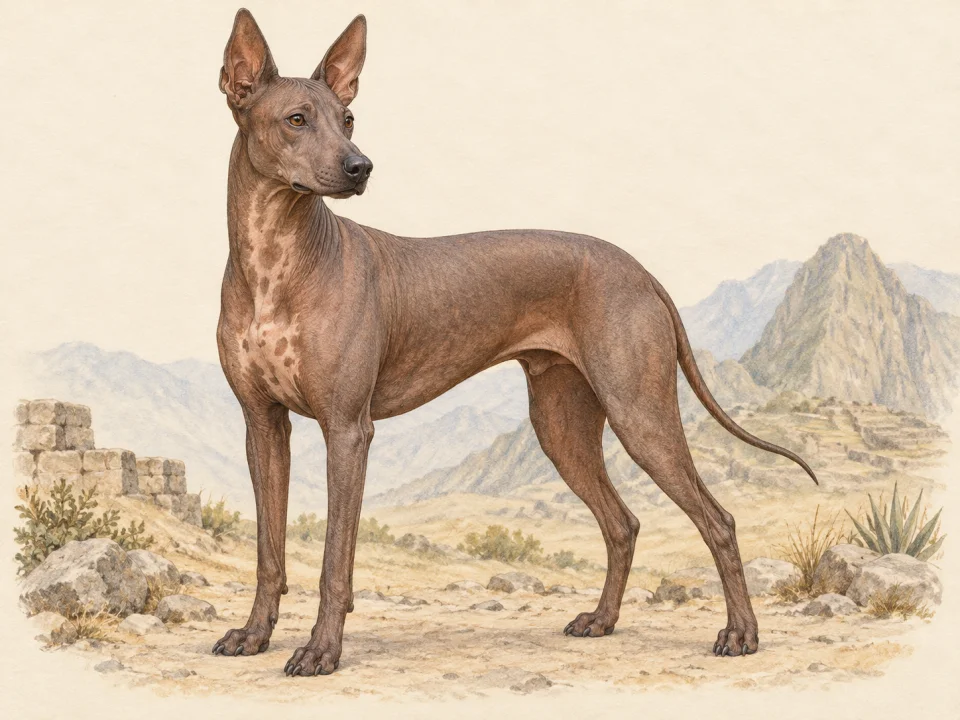
A coated puppy is not an unexpected different breed
The FCI standard recognizes both varieties and notes that coated and hairless puppies can occur in the same litter. It also distinguishes their teeth: missing teeth are associated with the hairless variety, while the coated variety is expected to have complete dentition. That distinction is useful when establishing a baseline with your veterinarian. Ask which teeth are present and whether any missing tooth needs investigation, then keep that record rather than assuming every later gap is inherited. Changes in eating or mouth comfort deserve attention even when missing teeth are familiar in the breed. Before choosing a puppy, ask about the adult size of its relatives as well as coat variety; the breed’s three size groups make a single average weight a poor guide to equipment and transport.[2]
Make a skin-protection plan before an outdoor day
Hairlessness removes much of the coat barrier between skin and the environment. AKC’s sunscreen guidance recommends products formulated for dogs and warns against zinc oxide or PABA. Ask your veterinarian which product and application instructions suit your dog rather than borrowing a human sunscreen. Pair the plan with shade and the option to return indoors; sunscreen is not permission for unlimited sun exposure. For a carer, write down the approved product, its instructions, where it is stored and whom to contact if the skin becomes irritated. Check that any protective garment fits comfortably and does not rub. Avoid experimenting with several new skin products at once: a simple record of what was used and when is more useful if a reaction needs veterinary assessment.[3]
Plan indoor companionship and controlled introductions
AKC describes an active companion that needs socialization and should live indoors. It also advises caution around small pets that may be treated as prey. Introduce a new household gradually, giving the dog space to observe unfamiliar people without being crowded or forced into handling. Keep small animals securely separated while you work out an appropriate management plan; calm behavior during one meeting is not a guarantee for the next. Provide suitable walks, training and play instead of treating a hairless dog as too delicate for any activity. Adjust the outing to weather and skin comfort, and keep indoor games available when conditions are unsuitable.[1]
Frequently asked questions
Can a Peruvian Inca Orchid have a full coat?
Yes. Hairless and coated varieties are recognized, and both can appear in one litter. A coat alone does not mean the dog is a different breed.
Source [1]Should I ignore missing teeth in a hairless Peruvian Inca Orchid?
No. Incomplete dentition is associated with the hairless variety, but a veterinarian should establish what is present and assess changes or discomfort. Do not assume a newly noticed problem is simply inherited.
Source [1]Can I use my own sunscreen on a hairless dog?
Do not assume it is suitable. AKC advises a dog-formulated product and warns against zinc oxide and PABA. Ask your veterinarian for a suitable option and follow its instructions alongside shade and limits on exposure.
Source [2]FAQ sources
Sources & methodology
Breed-level measurements and comparison scores provide context. They do not predict an individual dog's health, behaviour or suitability. Open the original publisher pages below to verify the facts and compare any later updates.
- American Kennel Club — Peruvian Inca Orchid ↗Reference 1 · reviewed 2026-09-27
- Fédération Cynologique Internationale — Peruvian Hairless Dog, 2021 standard ↗Reference 2 · reviewed 2026-09-27
- American Kennel Club — Dog sunscreen guidance ↗Reference 3 · reviewed 2026-09-27
Make it about your dog
Build a profile around your dog's age, experiences and everyday needs.
Meet your dog →Explore local care