
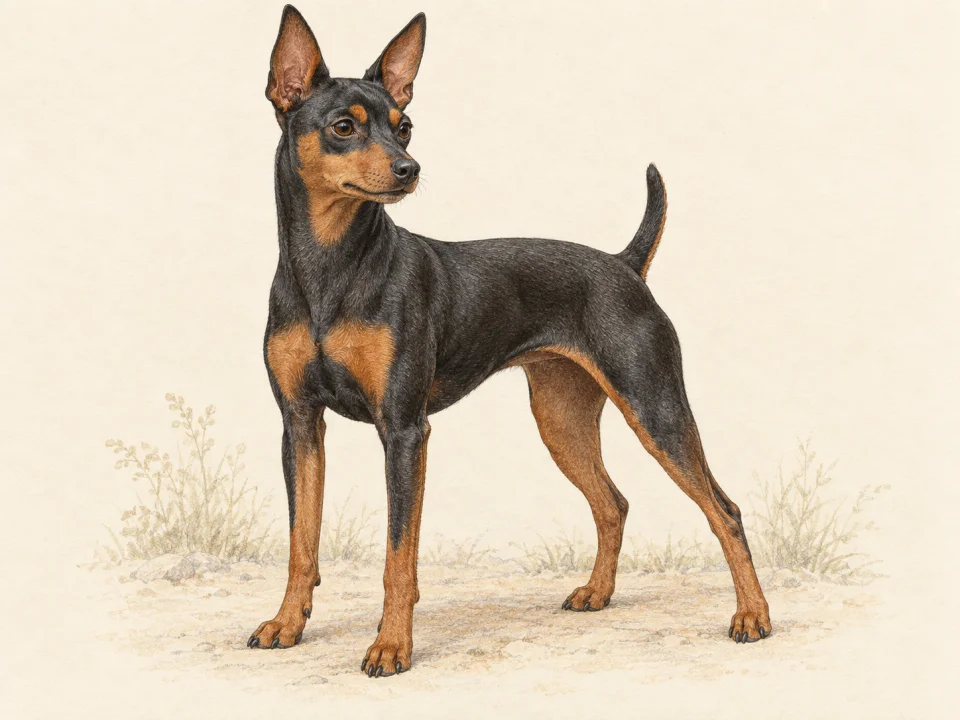
Start with the right breed comparison
AKC identifies the Miniature Pinscher as a breed in its own right. Comparing its silhouette with a Doberman tells you little about how your prospective dog lives. Ask about the current walking, rest and handling routine instead. If you are deciding between breeds, compare the responsibilities you would take on rather than trying to choose the same dog in a smaller size.[1]
Reserve time for activity, not only lap space
The source describes an active, athletic dog. Put the walks and shared activities you can provide into an ordinary working-day timetable. Include the person responsible when you are delayed. Ask the current carer which parts of that plan the individual already knows. A compact dog may fit into a small home, but that does not tell you whether the daily schedule works.[1]
Give the household one set of cues
Choose a useful first task, such as coming away from an open doorway, with help from a reward-based trainer if needed. Write the cue and expected response down so different carers do not improvise conflicting instructions. Begin in a quiet setting. Record where the dog can respond comfortably before adding distractions, and keep an alternative management arrangement while the skill is still developing.[1]
Use coat care to practice comfortable handling
AKC describes a short coat that is straightforward to maintain with gentle brushing. Ask for a demonstration and let the handling experience guide the session. Add nail and mouth-care questions to the first veterinary discussion. Small size is not a reason to hold the dog through discomfort or to assume another family member will automatically know how to groom it.[1]
Ask for a concrete temperament example
Replace the question is this dog confident with a request for a recent example: what happened when someone unfamiliar entered, and what did the handler do? Note the setting and whether the dog could settle. A useful answer includes circumstances, not just an adjective. This is especially helpful when deciding how to manage shared entrances or frequent visitors in your own home.[1]
Check what happens on your longest day
Draw a timeline for the day you are most likely to be absent. Identify who will provide care, what the dog is accustomed to and which arrangements are untested. Discuss any gap before adoption and organize backup support. Review the plan after settling in; a routine that works on a quiet weekend may need adjustment when the household returns to work.[1]
Frequently asked questions
Is the Miniature Pinscher a miniature Doberman?
No. AKC explains that the Miniature Pinscher is a distinct breed, rather than a scaled-down version of another dog. Similar coloring should not be used as evidence that two breeds have the same care needs.
Source [1]What is Miniature Pinscher temperament like?
AKC describes an active, confident small dog. Instead of treating confidence as guaranteed sociability, ask how the individual responds to visitors, other dogs and routine handling.
Source [1]Can Miniature Pinschers take part in dog sports?
Yes. AKC notes participation in activities such as agility, obedience and Rally. Choose training suitable for the dog’s age, health and current experience rather than assuming a small dog needs no preparation.
Source [1]What should I ask before choosing a Miniature Pinscher?
Ask the current carer about activity, quiet rest, handling and responses at doors. Request examples from ordinary days. This helps translate a lively breed description into a routine your household can sustain.
Source [1]FAQ sources
- American Kennel Club — Miniature Pinscher facts ↗FAQ reference 1
Sources & methodology
Breed-level measurements and comparison scores provide context. They do not predict an individual dog's health, behaviour or suitability. Open the original publisher pages below to verify the facts and compare any later updates.
- American Kennel Club — Miniature Pinscher breed and care guidance ↗Reference 1 · reviewed 2026-09-26
Make it about your dog
Build a profile around your dog's age, experiences and everyday needs.
Meet your dog →Explore local care