
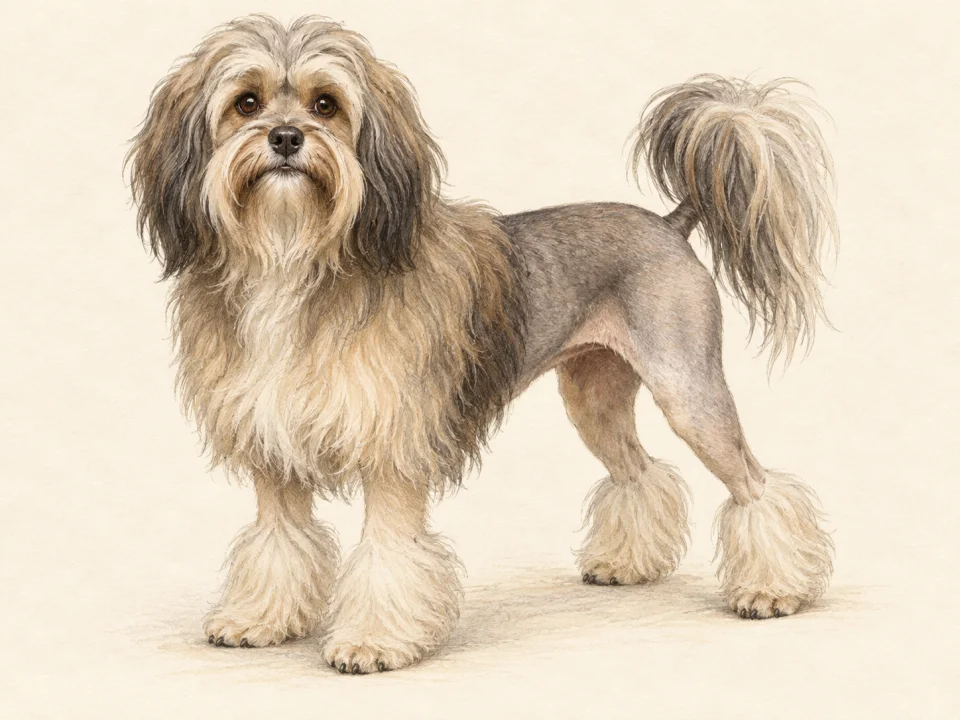
The lion outline is a grooming choice, not a naturally bare rear
The AKC show standard specifies the traditional lion clip, leaving a mane and tail plume while closely clipping other areas. The unclipped coat is long and slightly to moderately wavy, not a naturally curly poodle coat. For a companion, AKC’s care page also describes a puppy cut as an option. Tell the groomer whether you are planning a practical pet trim or a show presentation, and ask what upkeep each involves. A familiar photograph should not force a style that the household cannot maintain comfortably. All colors and color combinations are accepted in the standard; there is no single required lion-like shade. Neither a color nor a haircut tells you whether a particular dog will fit your routine.[1]
Keep the care routine between grooming visits
AKC recommends brushing every few days and periodic grooming to maintain the chosen trim. Ask for a demonstration suited to the coat, including how to notice developing tangles without pulling through them. Schedule that work alongside play and walks rather than treating a salon appointment as the whole care plan. AKC describes a lively companion that can enjoy learning activities and responds better to positive methods than harsh correction. For an alert dog, teach a useful response to everyday sounds: reward turning back to you or settling in a familiar place, starting with manageable distractions. If a sound causes fear or sustained distress, adjust the situation and seek qualified help instead of demanding silence. The dog’s small stature makes it easy to overlook its choices; give it comfortable ways to participate in handling and interaction rather than simply lifting it into every situation.[2]
Read height figures in context
The AKC profile gives a height of 12–14 inches, which is the catalogue figure used in the fact panel above. The official standard effective January 2022 instead describes an ideal adult height of 11–13 inches at the shoulder, allowing one inch above or below that ideal. A show ideal and a profile summary are not identical measurements. Neither tells you the dimensions of the dog in front of you. Measure an adult before choosing a carrier, and check the carrier’s own fit instructions. For a puppy, ask the breeder about the parents’ size rather than treating either range as a growth promise. A dog outside the show ideal is not, for that reason alone, an unsuitable companion.[1]
Ask for three kinds of parental health records
The Löwchen Club of America’s March 2020 statement recommends patella examinations, yearly eye examinations and hip evaluations. These are separate records: a general veterinary check or a DNA panel should not be presented as having completed all three. When considering a litter, write down each parent’s identity, which examination was performed, the result and its date. Check that the documents refer to the same dogs as the pedigree, and ask about anything missing. The annual eye recommendation makes the examination date particularly useful; an old report describes an earlier assessment. Confirm the club’s latest recommendations before relying on a stored statement. Screening helps inform a breeding decision but does not promise that a puppy will never develop a health problem.[3]
Frequently asked questions
Does a Löwchen naturally have a hairless hindquarter?
No. The traditional lion appearance comes from clipping. The AKC show standard defines that presentation; it is not a naturally bare region of the coat.
Source [1]Must my pet Löwchen wear the show lion clip?
AKC’s care page describes a puppy cut as well as the traditional lion trim for grooming. Discuss a manageable pet style with your groomer while remembering that show presentation has separate requirements.
Source [2]Why do I see different Löwchen height ranges?
AKC’s profile lists 12–14 inches, while its standard effective January 2022 gives an ideal of 11–13 inches with one inch of latitude either way. The standard describes the show ideal; measure the individual dog for practical equipment decisions.
Source [1]Which health reports should a Löwchen breeder provide?
The national club’s March 2020 statement recommends patella examinations, yearly eye examinations and hip evaluations. Ask for identifiable, dated results for the parents and confirm the current recommendations; a general vet check is not a substitute for those records.
Source [3]FAQ sources
- AKC — Official Löwchen Standard, effective 2022 ↗FAQ reference 1
- American Kennel Club — Löwchen ↗FAQ reference 2
- Löwchen Club of America — health statement approved March 31, 2020 ↗FAQ reference 3
Sources & methodology
Breed-level measurements and comparison scores provide context. They do not predict an individual dog's health, behaviour or suitability. Open the original publisher pages below to verify the facts and compare any later updates.
- AKC — Official Löwchen Standard, effective 2022 ↗Reference 1 · reviewed 2026-09-27
- American Kennel Club — Löwchen ↗Reference 2 · reviewed 2026-09-27
- Löwchen Club of America — health statement approved March 31, 2020 ↗Reference 3 · reviewed 2026-09-27
Make it about your dog
Build a profile around your dog's age, experiences and everyday needs.
Meet your dog →Explore local care