
Companionship is part of daily care
Cavaliers are widely described as affectionate, people-oriented companions. Before choosing one, map the real week: work, travel and care cover included. Gradual alone-time learning is different from assuming a sociable dog will cope with long absences.[2]
Ask specifically about heart health
PDSA identifies mitral valve disease as an important breed concern. Ask for the individual dog’s veterinary history and discuss appropriate examinations with your vet. Coughing, reduced stamina or breathing changes need professional assessment rather than a breed-based guess.[1]
Know the other health questions
PDSA also describes breed risks affecting the nervous system, eyes and joints. Request screening evidence where relevant and ask what each result does and does not show. A clear result cannot guarantee future health, but missing records should not be replaced by reassurance.[1]
Build an active but adaptable routine
PDSA recommends daily activity and suggests splitting it across walks. Adjust exercise to age, health, weather and veterinary advice. Include sniffing and calm exploration; a small body does not remove the need for mental and physical activity.[1]
Use gentle, consistent teaching
AKC describes an eager-to-please temperament. Reward-based training can make use of that engagement while protecting trust. Practise household skills in the places they are needed and arrange professional help if fear, distress or safety concerns appear.[2]
Plan coat and ear care
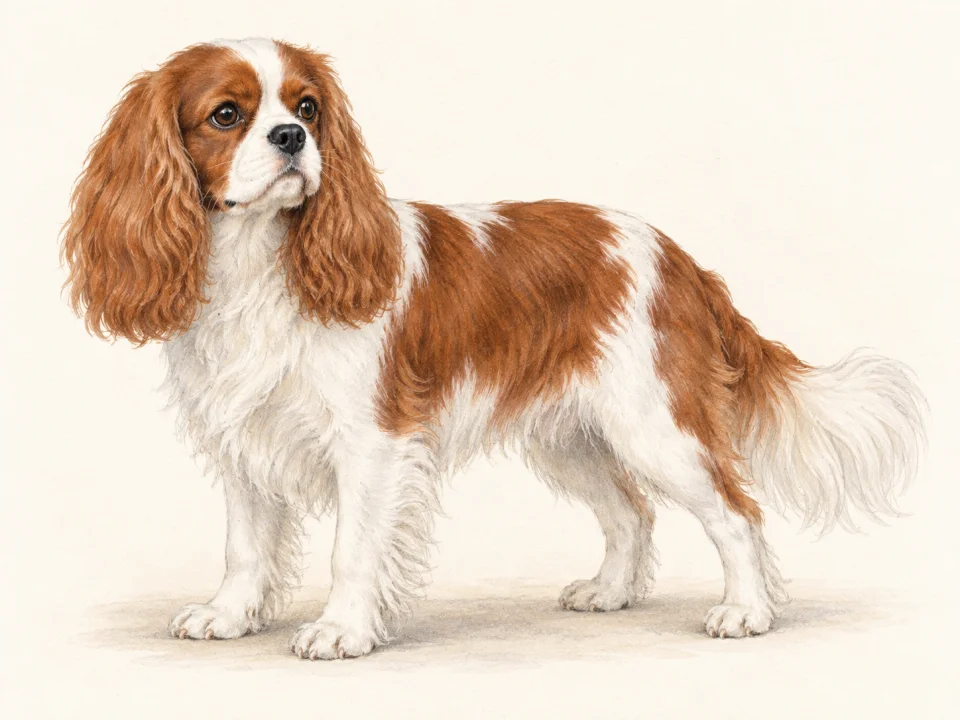
The feathered coat benefits from regular brushing, particularly where tangles form. PDSA also recommends ear checks. Ask a groomer or veterinary professional to demonstrate handling and what changes should trigger a clinical appointment.[1]
Research the individual, not only the breed
Ask how the dog behaves around handling, food, visitors, children and other animals. Observe a calm interaction and allow space. Breed tendencies can guide questions, but they cannot promise that an individual will suit every household.
Price the care before making a promise
Request insurance quotations and read limits, exclusions and waiting periods. Ask a local practice about routine and breed-relevant care costs. Keep emergency savings in the plan; a low purchase or adoption price does not reduce future clinical needs.
Frequently asked questions
Do Cavaliers need a walk every day?
PDSA recommends at least one hour of daily exercise, split across walks. Age, health, weather and veterinary advice should shape the individual plan.
Source [1]What health problem should Cavalier owners ask about?
Mitral valve disease is an important breed concern identified by PDSA. Ask your veterinarian about history, examinations and any changes in stamina or breathing.
Source [1]Are Cavaliers easy to train?
Their eager-to-please nature can support learning. Use gentle reward-based practice and consistent expectations rather than assuming affection replaces training.
Source [2]Do Cavaliers need regular grooming?
Yes. Their feathered coat needs regular brushing, and PDSA recommends routine ear checks. Ask a professional to demonstrate safe handling.
Source [1]FAQ sources
- PDSA — Cavalier King Charles Spaniel care and health ↗FAQ reference 1
- American Kennel Club — Cavalier lifestyle ↗FAQ reference 2
Sources & methodology
Breed-level measurements and comparison scores provide context. They do not predict an individual dog's health, behaviour or suitability. Open the original publisher pages below to verify the facts and compare any later updates.
- PDSA — Cavalier King Charles Spaniel care and health ↗Reference 1 · reviewed 2026-09-09
- American Kennel Club — Cavalier lifestyle ↗Reference 2 · reviewed 2026-09-09
Make it about your dog
Build a profile around your dog's age, experiences and everyday needs.
Meet your dog →Explore local care