
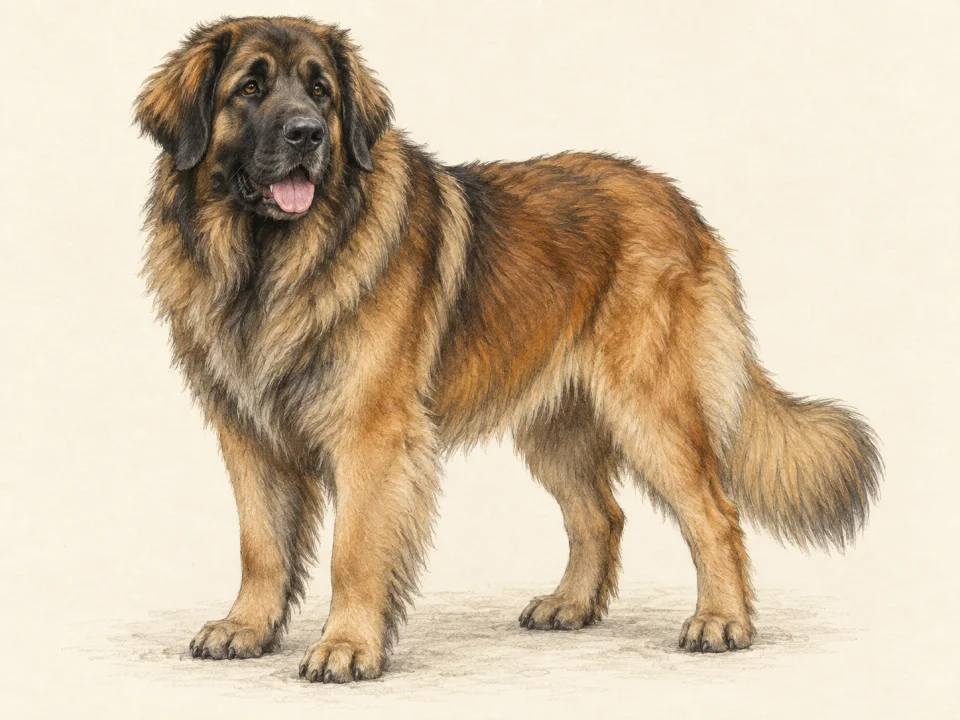
Plan for the adult you cannot simply pick up
AKC’s adult weight references reach 170 pounds for males and 140 pounds for females. Those figures are not individual target weights, but they make transport and handling concrete questions. Before bringing home a puppy, check the vehicle entrance, the route to a resting area and how veterinary visits would work if the grown dog could not walk comfortably. Identify who could help and ask a professional about suitable equipment. Teach routine cooperation while the dog is manageable: approaching a vehicle, standing for care and moving with a handler should not first be addressed during an emergency. A reputation for gentleness does not remove the physical consequences of an enthusiastic adolescent or an adult leaning into someone.[1]
Set aside time for the whole coat
AKC recommends daily brushing, with particular attention behind the ears and along the backs of the legs, plus more thorough weekly grooming. Seasonal shedding adds to the workload. Ask an experienced groomer to demonstrate how to reach through the coat without pulling and how to tell when an area needs help. Consider your own working position as well as the dog’s comfort: a routine that requires one exhausting session is harder to sustain than an arrangement you can repeat. Build tolerant handling with rewards and pauses, and have new pain or reluctance assessed instead of assuming it is simply resistance to grooming.[1]
The neurological panel has several targets and real limits
The University of Minnesota lists LPN1, LPN2 and LPPN3 for forms of laryngeal paralysis–polyneuropathy, alongside LEMP for a central nervous system disorder. It explicitly states that the first three tests do not explain all confirmed or suspected cases of laryngeal paralysis and polyneuropathy. Ask for the actual named results rather than accepting “neurologically clear” as a complete description. New noisy breathing, a changed bark or difficulty moving needs veterinary attention even when available DNA results are clear; difficulty breathing warrants urgent care. Bring the reports to the appointment so the veterinarian can interpret them alongside clinical findings. Screening helps with specific inherited risks, but it is not a diagnosis of the dog’s present condition or a lifetime guarantee.[2]
Frequently asked questions
Do clear LPN1, LPN2 and LPPN3 results rule out all polyneuropathy?
No. The University of Minnesota says these tests do not account for all confirmed or suspected cases. Current symptoms still require veterinary assessment.
Source [1]Can I postpone Leonberger grooming until the seasonal shed?
AKC recommends regular daily brushing and a more thorough weekly session, with extra shedding seasonally. Plan a sustainable routine throughout the year.
Source [2]FAQ sources
- University of Minnesota College of Veterinary Medicine — Leonberger Health Panel ↗FAQ reference 1
- American Kennel Club — Leonberger ↗FAQ reference 2
Sources & methodology
Breed-level measurements and comparison scores provide context. They do not predict an individual dog's health, behaviour or suitability. Open the original publisher pages below to verify the facts and compare any later updates.
- American Kennel Club — Leonberger ↗Reference 1 · reviewed 2026-09-27
- University of Minnesota College of Veterinary Medicine — Leonberger Health Panel ↗Reference 2 · reviewed 2026-09-27
Make it about your dog
Build a profile around your dog's age, experiences and everyday needs.
Meet your dog →Explore local care