
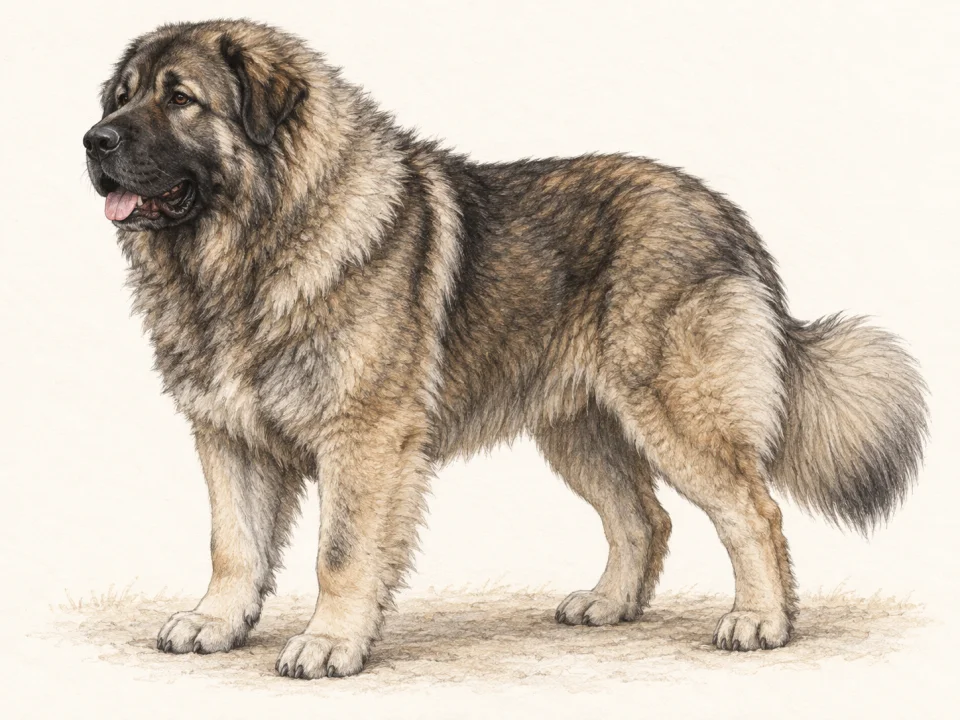
Evaluate the guardian role before the appearance
AKC describes a breed historically used to protect property and livestock. A massive coat and calm home manner can make the dog look reassuring, but its protective tendencies are a central ownership consideration. Ask about the particular dog’s response to unfamiliar people and animals. Choose only after considering how everyday deliveries, guests and professional care will be managed safely.[1]
Create a visitor plan that does not depend on persuasion
The cited training guidance warns that bringing people into the home may be difficult. Prepare secure separation and a clear routine before guests arrive. Every caregiver should know who controls gates and doors and where the dog will remain. Do not ask a visitor to demonstrate bravery or force familiarity; introductions must follow the individual’s behavior and appropriate professional guidance.[1]
Use containment for walks and outdoor time
AKC recommends secure containment during exercise and a leash on walks. Inspect the actual boundary and equipment for a dog of this strength. Reference size is 23–30 inches and 99–170 pounds, so practical handling deserves attention before adoption. A property boundary or past recall success cannot substitute for a physical management plan when an unexpected distraction appears.[1]
Match movement to condition rather than a rugged reputation
The breed is described as relatively low-energy while still benefiting from daily walks and suitable activity. Build up according to the individual’s age, health and fitness. Do not infer readiness for a demanding hike from a large body or historical livestock work. Plan comfortable rest and transport as carefully as the outward route, especially when several people share care.[1]
Choose a grooming routine for the actual coat
Coat length varies, and AKC says longer-coated dogs need daily grooming. Before committing, ask to see a complete grooming demonstration and consider whether you can perform it comfortably. Practice gentle handling and short successful sessions instead of waiting for heavy tangles. Nails, ears and teeth need separate regular attention, regardless of whether the dog has a shorter or longer coat.[1]
Request records and prepare for adult care
The cited page recommends health screening but gives no named testing panel. Obtain identifiable records and discuss the individual’s needs with a veterinarian. Also plan how transport and handling would work if mobility became limited. AKC lists a reference lifespan of 10–12 years, but neither that range nor a general healthy-breed description replaces assessment of the dog in front of you.[1]
Frequently asked questions
Does being affectionate with family mean visitors can enter freely?
No. AKC highlights strong protective tendencies and possible difficulty with visitors. Prepare secure management and assess introductions individually.
Source [1]Can a Caucasian Shepherd exercise without a secure boundary?
The cited guidance recommends containment and leashed walks. Plan boundaries and equipment for the dog’s actual size and strength.
Source [1]Do all Caucasian Shepherd coats need identical care?
No. Coat length varies, and longer coats need daily grooming according to AKC. Ask for a demonstration suited to the individual coat.
Source [1]Is there a named health-test panel on the cited page?
No named panel is supplied. Request the actual screening and care records and review their scope with a veterinarian.
Source [1]FAQ sources
Sources & methodology
Breed-level measurements and comparison scores provide context. They do not predict an individual dog's health, behaviour or suitability. Open the original publisher pages below to verify the facts and compare any later updates.
- American Kennel Club — Caucasian Shepherd Dog breed and care guidance ↗Reference 1 · reviewed 2026-09-27
Make it about your dog
Build a profile around your dog's age, experiences and everyday needs.
Meet your dog →Explore local care