
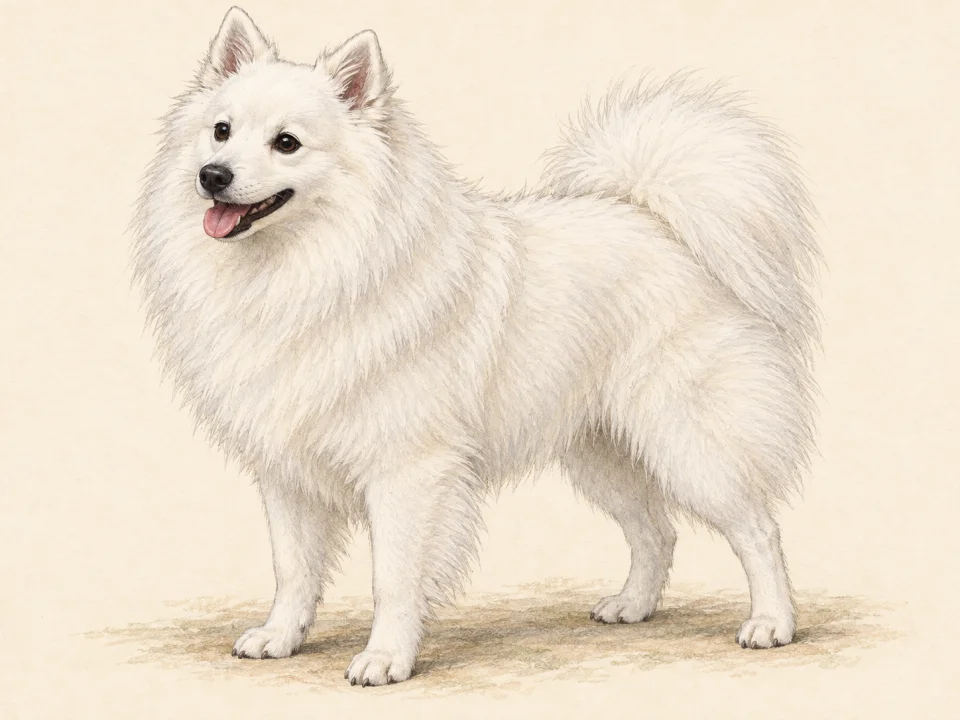
The white coat has two different layers
The FCI standard describes a straight outer coat standing away from the body over a short, dense, soft undercoat. The longer frill around the neck and feathering on the tail are part of that structure; this is not simply a smooth white coat made fluffy by styling. The same standard identifies the Japanese Spitz as a companion from Japan and gives males a shoulder height of 30–38 cm, with females slightly smaller. Use the description to understand the breed, not to judge an individual dog’s health or temperament from its appearance.[2]
Budget time for the shedding season, not just the weekly brush
AKC distinguishes ordinary weekly brushing from daily brushing during a seasonal undercoat shed. A household that can manage the quiet part of the coat cycle may still find the loose hair during that change surprising. Before committing, ask to see the grooming tools and an actual brushing demonstration on an adult dog. Decide where loose hair will be cleaned up and who can take over coat care during a busy week. Do not turn a brushing session into a struggle to finish every area at once. Company matters as well: AKC describes a dog that enjoys family interaction and can live in different-sized homes with regular activity. Compare the breed with your longest ordinary absence, rather than assuming a small home is unsuitable or a large yard supplies companionship.[1]
A skipping step is useful information for the veterinarian
Patellar luxation means the kneecap moves out of its normal groove. ACVS explains that a dog may briefly carry a hind leg, skip for several steps and then resume using it. Symptoms vary, and diagnosis requires an orthopedic examination; a video or a breed description cannot establish the cause. If you notice an intermittent change, note which leg appears affected, when it happens and whether the dog seems uncomfortable. A short recording, if you can obtain one without making the dog repeat the movement, can help explain what you saw. Arrange veterinary assessment rather than treating the return to a normal gait as proof that nothing happened. Do not try to move the kneecap yourself. Treatment depends on the examined dog; an online mention of this condition is not a reason to assume surgery is inevitable.[3]
Frequently asked questions
Does a Japanese Spitz shed even though its coat looks easy to keep clean?
Yes. AKC describes a substantial seasonal undercoat shed with more frequent brushing than the ordinary weekly routine. A clean-looking white coat does not mean little loose hair.
Source [1]Does a Japanese Spitz that skips on one hind leg definitely have a luxating patella?
No. Skipping can be a sign described by ACVS, but an orthopedic examination is needed to diagnose patellar luxation. Record what you notice and seek veterinary assessment rather than diagnosing from the gait alone.
Source [2]FAQ sources
- American Kennel Club — Japanese Spitz ↗FAQ reference 1
- American College of Veterinary Surgeons — Patellar Luxations ↗FAQ reference 2
Sources & methodology
Breed-level measurements and comparison scores provide context. They do not predict an individual dog's health, behaviour or suitability. Open the original publisher pages below to verify the facts and compare any later updates.
- American Kennel Club — Japanese Spitz ↗Reference 1 · reviewed 2026-09-27
- FCI — Japanese Spitz standard No. 262 ↗Reference 2 · reviewed 2026-09-27
- American College of Veterinary Surgeons — Patellar Luxations ↗Reference 3 · reviewed 2026-09-27
Make it about your dog
Build a profile around your dog's age, experiences and everyday needs.
Meet your dog →Explore local care