
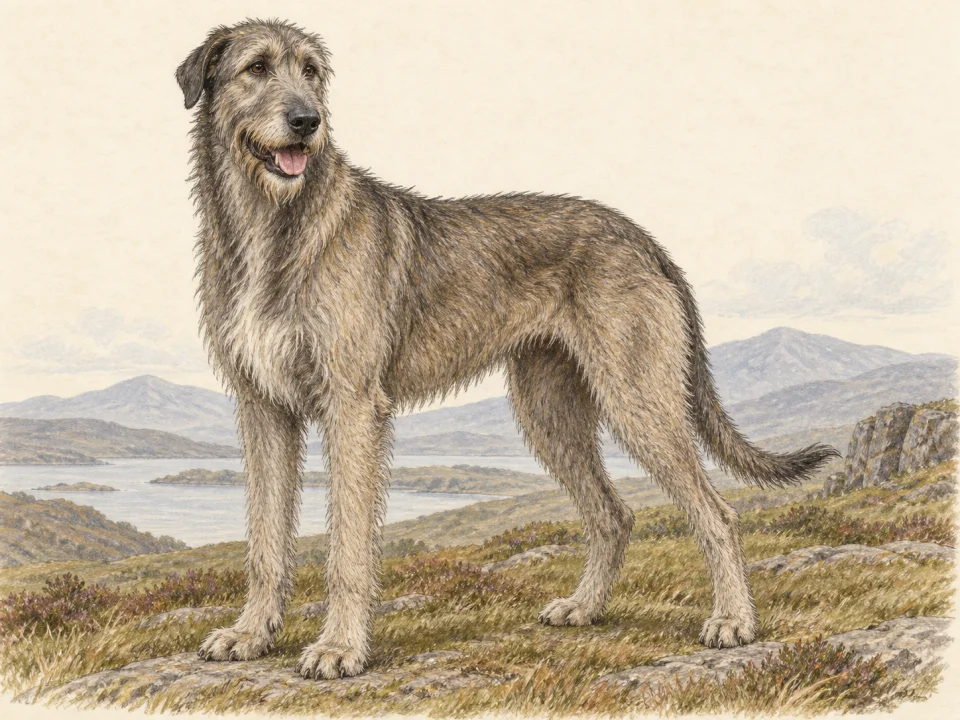
Size figures need context
The Irish Wolfhound is the tallest AKC breed. Its standard gives minimum heights of 32 inches for males and 30 for females, with minimum weights of 120 and 105 pounds respectively for mature dogs. These are breed-standard thresholds, not a population average or a target to reach by feeding more. Use individual body condition and veterinary advice when judging weight.[1]
Plan the house around a giant dog
Before bringing one home, measure the vehicle doorway, resting space and the route to the yard. Think through how two people would help an injured adult into a car. A quiet resting area should let the dog stretch out without blocking a busy passage. Large size can make an otherwise gentle movement difficult for toddlers or an unsteady adult to manage.[1]
Chasing and recall are separate questions
A calm Wolfhound at home can still pursue a moving animal outdoors. Choose secure enclosed spaces for off-leash exercise and use a leash elsewhere; an apparently empty field is not a fence. Practise turning back to the handler at easy distances, but do not treat a successful training session as proof that the dog will ignore a sudden chase opportunity.[1]
Let a youngster grow at its own pace
Wolfhounds mature slowly, with puppy development extending to around 18 months and beyond. Avoid making a youngster match an adult running or cycling routine. Build calm handling, short reward-based lessons and age-appropriate activity instead. Keep a note of activity and recovery if the dog seems uncomfortable, then discuss the change with a veterinarian rather than pushing through it.[1]
A wiry coat still needs weekly attention
The double coat combines a rough outer layer with a softer undercoat. Regular weekly brushing helps manage ongoing shedding; the breed is not simply maintenance-free between seasonal changes. Make a repeatable route through the beard, elbows, legs and body, checking the skin as you work. Separate ordinary loose hair from a new bald patch or irritated area that needs investigation.[1]
Read health records before making a commitment
AKC lists a typical lifespan of 6–8 years and recommends hip, elbow, cardiac, eye and serum bile acid screening for breeding dogs. Ask what was tested, which dog each result belongs to and when the assessment took place. A list of tests in an advertisement is not the same as accessible results, and clear screening cannot promise an individual lifespan.[1]
Frequently asked questions
What is the average weight of an Irish Wolfhound?
The standard minimum is 120 pounds for mature males and 105 pounds for mature females. Those figures are not a measured average. Individual dogs vary, so assess weight with body condition and veterinary guidance rather than feeding toward a breed number.
Source [1]How long do Irish Wolfhounds usually live?
AKC lists 6–8 years. This is a breed reference range, not a prediction for an individual dog; health, care and individual variation still matter.
Source [1]Can an Irish Wolfhound run loose in an open field?
A sighthound may chase moving animals despite being calm at home. Use a secure enclosure for off-leash activity and a leash elsewhere; recall practice does not remove the need for containment.
Source [1]Do Irish Wolfhounds shed?
Yes. Their rough double coat sheds throughout the year and benefits from weekly brushing. A wiry texture does not mean the coat is non-shedding.
Source [1]FAQ sources
Sources & methodology
Breed-level measurements and comparison scores provide context. They do not predict an individual dog's health, behaviour or suitability. Open the original publisher pages below to verify the facts and compare any later updates.
- American Kennel Club — Irish Wolfhound breed and care guidance ↗Reference 1 · reviewed 2026-09-27
Make it about your dog
Build a profile around your dog's age, experiences and everyday needs.
Meet your dog →Explore local care