
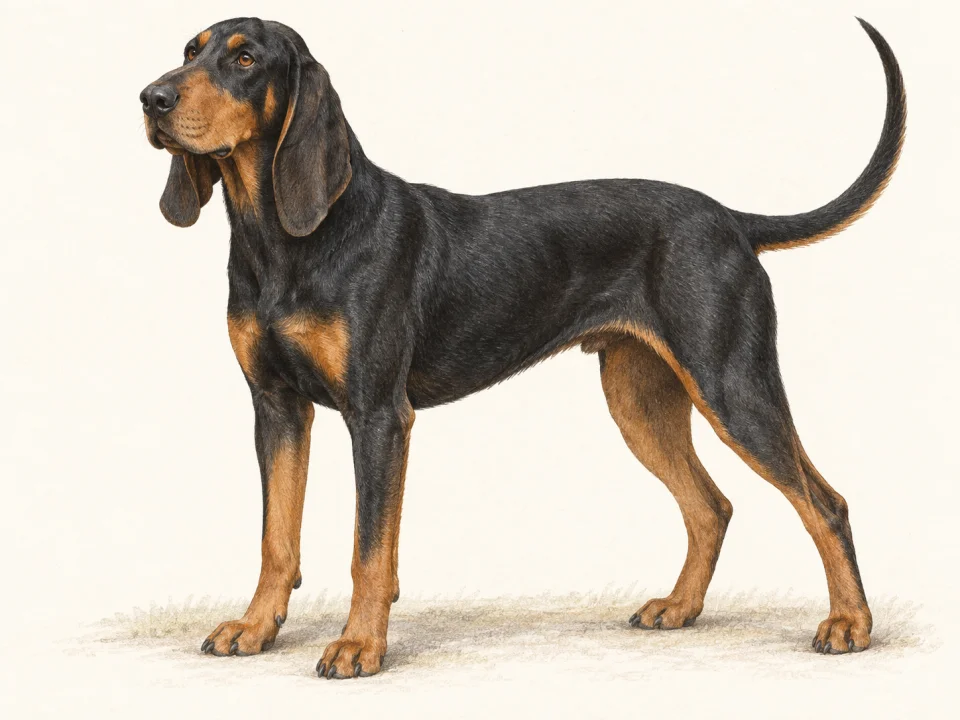
Allow for a substantial adult hound
AKC references males at 25–27 inches, females at 23–25 inches, and a broad weight range of 65–110 pounds. Assess the individual rather than ordering equipment from a single breed-size label. Think through transport and who can manage the dog on leash. A relaxed indoor manner does not remove the practical impact of a large hound suddenly wanting to follow a scent.[1]
Keep the nose behind a dependable boundary
Use a strong, well-fitting walking setup and secure fencing for free movement. Check gates before play and do not assume familiar surroundings prevent pursuit of a small animal. Practise returning attention where the dog can succeed, then add difficulty gradually. Training supports control but should not be treated as evidence that every compelling trail will be ignored.[1]
Make companionship part of the noise plan
The breed is sociable and can vocalize loudly when left bored or isolated. Consider neighbors and the ordinary workday arrangement before choosing it. Plan meaningful contact and appropriate activity rather than relying on a distant yard. Teach comfortable separations gradually, and investigate persistent distress instead of treating all loudness as something that simply needs stronger correction.[1]
Choose moderate daily engagement you can repeat
The cited care guidance describes moderate daily exercise through suitable walks and play. A safe sniffing route can provide interest as well as movement. Adjust the outing to the dog’s age and health, then allow rest. A non-hunting home should still provide purposeful activities without assuming it must recreate a hunting trip or exhaust the dog on every outing.[1]
Keep the short-coat routine complete
Weekly brushing or a grooming mitt helps manage loose hair from the dense coat. Add nail and dental care and regular checks of the long ears. A painful ear or unusual odor needs assessment rather than repeated improvised cleaning. Brief rewarded handling practice makes those checks easier, especially before the dog reaches full adult size and a care task becomes urgent.[1]
Ask for identifiable screening information
AKC lists a lifespan of 10–12 years and recommends hip, cardiac and eye evaluations. Obtain dated records that identify the dogs assessed and discuss wider family history. A statement that the line is sturdy does not establish which tests were done. Keep the meaning of each result separate from a promise about an individual dog’s eventual lifespan or complete freedom from illness.[1]
Frequently asked questions
Does a quiet Black and Tan Coonhound at home still need secure walks?
Yes. A relaxed home manner does not remove its strong scent and chase interests. Use a leash outside secure enclosures and practise attention without relying on recall alone.
Source [1]Can isolation contribute to loud vocalizing?
The cited guidance notes that this sociable breed can be loudly unhappy when bored and ignored. Plan companionship and suitable activity, and assess persistent distress rather than assuming it is only a noise habit.
Source [1]How much grooming does the short coat need?
Weekly brushing is the source’s baseline. Nails, teeth and the long ears still require separate regular attention.
Source [1]Which health evaluations are recommended?
AKC lists hips, heart and eyes. Request identifiable dated reports and discuss broader family health history with a veterinarian.
Source [1]FAQ sources
Sources & methodology
Breed-level measurements and comparison scores provide context. They do not predict an individual dog's health, behaviour or suitability. Open the original publisher pages below to verify the facts and compare any later updates.
- American Kennel Club — Black and Tan Coonhound breed and care guidance ↗Reference 1 · reviewed 2026-09-27
Make it about your dog
Build a profile around your dog's age, experiences and everyday needs.
Meet your dog →Explore local care