
The front door is part of the ownership decision
AKC describes a strong, territorial breed that needs early training and socialization. Intelligence does not give a dog human judgment about a delivery driver, visiting child or emergency worker. Before bringing a Giant home, decide where it can wait securely while the door opens and who is responsible for introductions. Rehearse the household arrangement without requiring a stranger to be the test. If a dog is already reacting intensely, get qualified help rather than asking visitors to push through the reaction. The practical question is whether every regular caregiver can carry out the plan, including when the primary owner is absent. An impressive appearance is not a substitute for that preparation. Discuss the individual’s history with its breeder or rescue, and choose activities and instruction that build cooperation instead of encouraging suspicion.[1]
Budget for coat maintenance as well as exercise
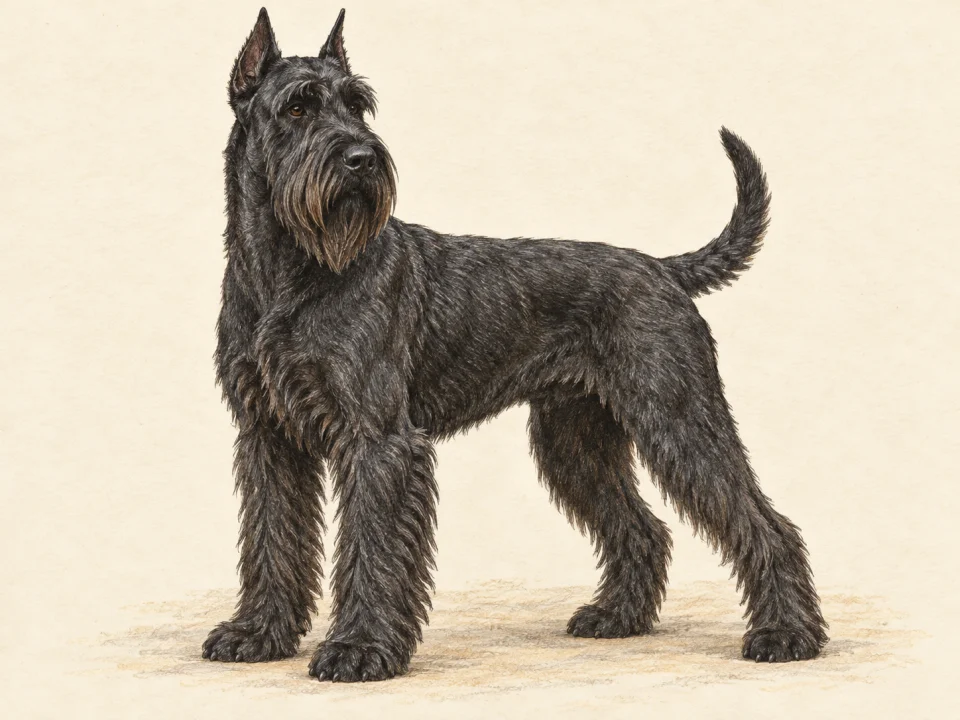
The wiry outer coat sits over a softer undercoat. AKC recommends weekly brushing and regular clipping or stripping, so this is not simply a wash-and-go large dog. Ask a groomer to explain the maintenance choices for your dog and demonstrate what needs doing between appointments. Record the appointment cost, the home tools and which person will do the work; a plan relying on occasional emergency detangling is difficult for both dog and owner. Introduce comfortable handling before a long grooming session becomes necessary. Separately, arrange regular activity with people. A grooming appointment does not replace shared exercise, and exercise does not resolve neglected coat care. These are two distinct commitments when assessing the time available in your household.[1]
Read the health statement beyond the first four tests
The GSCA statement dated November 9, 2022 lists hip, elbow, ophthalmologist and thyroid assessments as CHIC requirements. It also strongly recommends cardiac assessment and genetic evaluations for prcd-PRA and dilated cardiomyopathy. The statement identifies echocardiography as the preferred cardiac examination option. Because requirements can change, verify current guidance when discussing a litter. Ask for each parent’s identifiable reports, including the additional assessments, rather than relying on a short assurance that testing was done. Keep test names, dates and actual findings together and ask your veterinarian to explain their scope. A result about a particular inherited variant does not establish that all possible heart disease has been excluded.[2]
Frequently asked questions
Does a Giant Schnauzer’s protective reputation mean it knows which visitors are safe?
No. A breed description does not establish that judgment in an individual. Plan secure arrivals and supervised introductions, with professional help for concerning reactions.
Source [1]Which tests does the GSCA statement recommend beyond hips, elbows, eyes and thyroid?
Its November 2022 statement also strongly recommends cardiac assessment and genetic evaluations for prcd-PRA and dilated cardiomyopathy. Confirm current guidance and review the actual reports for both parents.
Source [2]FAQ sources
- American Kennel Club — Giant Schnauzer ↗FAQ reference 1
- Giant Schnauzer Club of America — Health Statement, November 2022 ↗FAQ reference 2
Sources & methodology
Breed-level measurements and comparison scores provide context. They do not predict an individual dog's health, behaviour or suitability. Open the original publisher pages below to verify the facts and compare any later updates.
- American Kennel Club — Giant Schnauzer ↗Reference 1 · reviewed 2026-09-27
- Giant Schnauzer Club of America — Health Statement, November 2022 ↗Reference 2 · reviewed 2026-09-27
Make it about your dog
Build a profile around your dog's age, experiences and everyday needs.
Meet your dog →Explore local care