
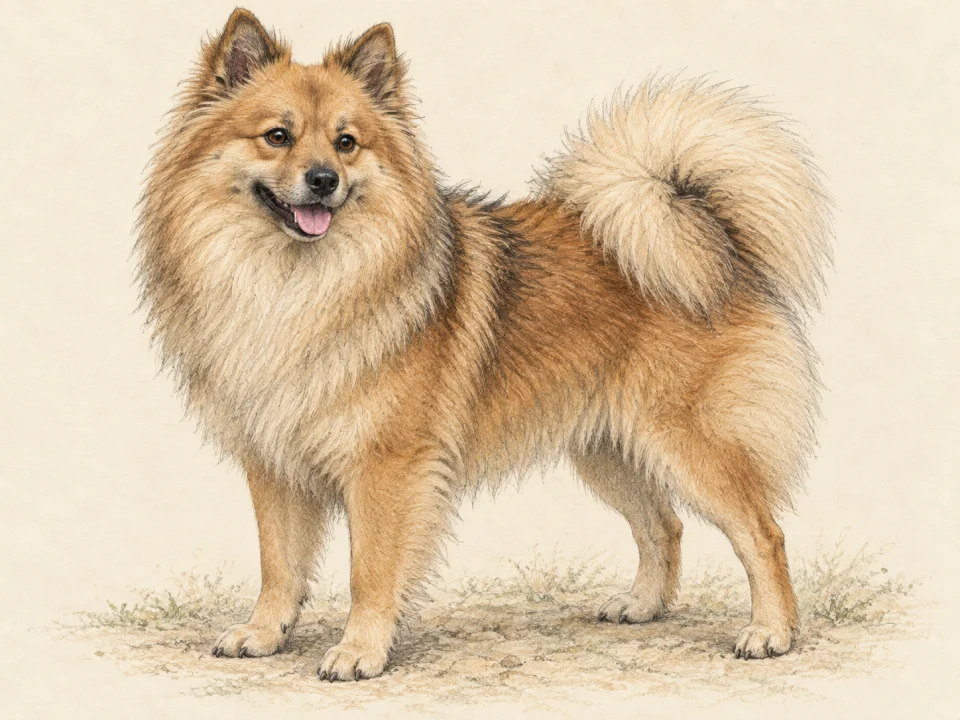
Which size of German Spitz are you looking at?
The AKC standard effective in February 2025 separates three heights at the withers: Small is 8 to under 12 inches; Medium is 12 to under 16 inches; Large is 16 to 20 inches. The withers are the top of the shoulders, not the ears. A dog measuring exactly 12 inches therefore enters the Medium range; exactly 16 inches enters Large. The standard says weight should correspond to size rather than specifying one target weight for every German Spitz. When comparing dogs, record the variety, the registry and the adult shoulder height together. Buy a harness, carrier or crate from the actual dog’s measurements and the equipment maker’s sizing instructions, not from the breed name alone.[1]
Why Klein and Mittel listings can look different
In the UK standard, Klein is 23–29 cm (9–11½ inches) and Mittel is 30–38 cm (12–15 inches). These labels and boundaries should not be silently substituted for the US categories. For an imported puppy or a listing using German names, ask which standard the description follows and check the parents’ recorded sizes. Those records offer context, not a guarantee of the puppy’s final measurements. A useful comparison note is: registry; named variety; measured adult height; date measured. This avoids mistaking different naming systems for conflicting facts about the same dog.[2]
The two chores a fluffy photograph does not show
Expect a substantial undercoat shed and more frequent brushing during that period. AKC describes daily brushing during the seasonal coat change, with a lighter routine between sheds. Arrange a demonstration that reaches loose undercoat without pulling the skin; brushing only the outer surface can miss what is underneath. The other commitment is sound: this is an alert, vocal watchdog. Before choosing an apartment home, consider corridor traffic, window views and where the dog can rest away from them. Reward calm responses and keep training engaging. Neither a smaller size nor a longer walk guarantees quiet behavior. Persistent distress needs individual help, rather than punishment for making noise.[3]
Read the actual health statement, not just “DNA tested”
The German Spitz Club of America’s October 2023 statement lists an examination by a board-certified ophthalmologist, OFA evaluations of patellas, elbows and hips, and multiplex DNA testing. It explicitly consolidates the requirements across sizes. A DNA panel therefore does not replace the eye or orthopedic examinations in that statement. For each parent, match the identity on the report, the test performed, its date and its result; ask which conditions a panel actually covers. This is a dated club document, so verify whether the club has revised it when choosing a breeder. Screening information helps assess breeding decisions but cannot promise that a puppy will never become ill.[4]
Frequently asked questions
Is every German Spitz a small dog?
No. The US standard includes Small, Medium and Large varieties, with the Large range reaching 20 inches at the shoulder. Check the named variety and adult measurements rather than relying on a generic small-dog label.
Source [1]Is the German Spitz coat low-maintenance outside a salon?
It still needs regular brushing, and seasonal undercoat shedding brings substantially more work. Ask for an at-home grooming demonstration before bringing the dog home.
Source [2]Does a clear DNA panel cover the club’s health checks?
No. The October 2023 US club statement also names specialist eye examination and OFA patella, elbow and hip evaluations. Request those reports separately.
Source [3]FAQ sources
Sources & methodology
Breed-level measurements and comparison scores provide context. They do not predict an individual dog's health, behaviour or suitability. Open the original publisher pages below to verify the facts and compare any later updates.
- American Kennel Club — German Spitz standard, effective February 6, 2025 ↗Reference 1 · reviewed 2026-09-27
- Royal Kennel Club — German Spitz Klein and Mittel size standard ↗Reference 2 · reviewed 2026-09-27
- American Kennel Club — German Spitz care and training ↗Reference 3 · reviewed 2026-09-27
- German Spitz Club of America — health testing statement, October 25, 2023 ↗Reference 4 · reviewed 2026-09-27
Make it about your dog
Build a profile around your dog's age, experiences and everyday needs.
Meet your dog →Explore local care