
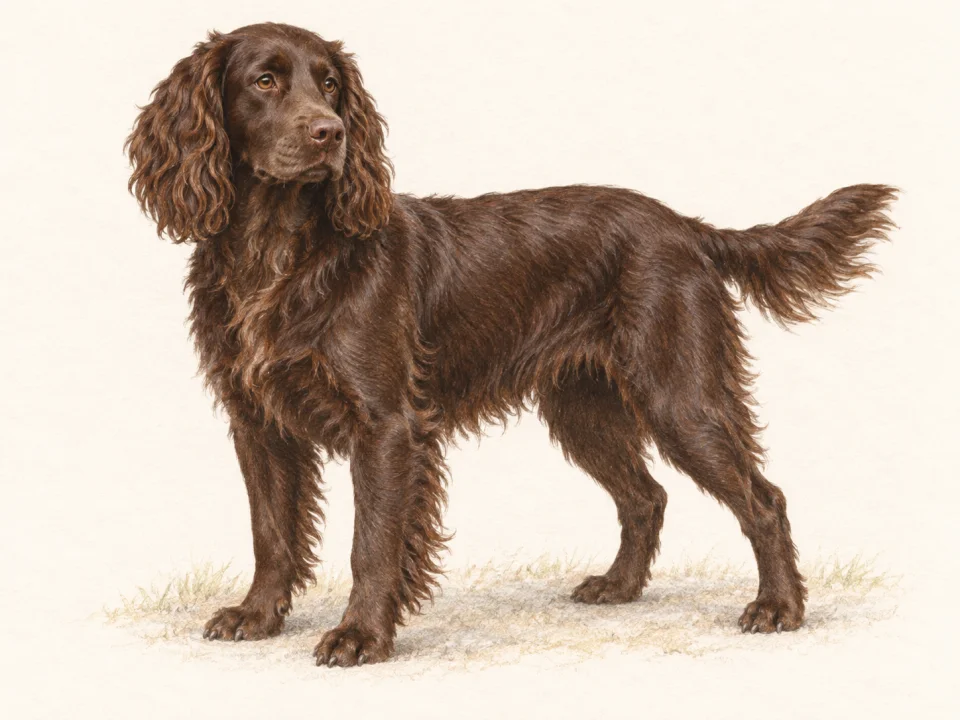
A compact sporting dog still needs a working outlet
AKC references males at 15.5–18 inches and 30–40 pounds, females at 14–16.5 inches and 25–35 pounds. The smaller frame can be convenient for an active household, but it does not remove the sporting-dog commitment. Ask about the individual’s routine and condition. Choose the breed for the activities you can actually share, not just for the manageable size or brown coat.[1]
Combine movement with a task
Suitable walks, controlled retrieving or a searching game can provide physical and mental engagement. Teach returning and exchanging an object through rewards rather than letting every play session become an uncontrolled chase. Match intensity to age and health, and allow recovery. A calm evening near the family may depend on having had a satisfying routine earlier in the day.[1]
Do not let swimming reputation replace supervision
A history of water work does not make every outing safe for every dog. Introduce access gradually, check conditions and ensure an easy way out. Supervise and stop before fatigue or discomfort becomes the problem. Keep dry-land activities available so exercise does not depend on water access or encourage continuing a swim when the individual is no longer comfortable.[1]
Check ears and feathering after outdoor work
The medium-length wavy coat generally benefits from weekly brushing and occasional bathing. Inspect feathered areas for debris and check the hanging ears regularly. Ask your veterinarian to demonstrate appropriate ear care rather than improvising treatment for pain or discharge. Include nails and teeth as separate tasks; a coat that looks tidy does not establish that the whole care routine is complete.[1]
Build companionship and learning into the household
Boykins often enjoy participating with their people. Use short positive lessons and gradual introductions to new environments, while allowing a quiet resting place when the household is busy. Supervise children and other dogs rather than assuming a friendly breed description guarantees every interaction. A consistent daily plan makes training more useful than sporadic lessons followed by long periods without engagement.[1]
Request the exercise-induced collapse report
AKC lists a lifespan of 10–15 years. Its recommended panel includes patella, hip and eye evaluations plus EIC and CEA DNA tests. Obtain identifiable results and veterinary interpretation of what each covers. A dog looking energetic does not replace screening, and an abnormal response during activity should not be dismissed as ordinary tiredness or diagnosed solely from a breed page.[1]
Frequently asked questions
Is the Boykin Spaniel a low-energy dog because it is gentle indoors?
No. The cited guidance describes moderate-to-high energy and a need for substantial suitable activity. A relaxed home manner can coexist with a strong sporting drive.
Source [1]Does water-dog ancestry make unsupervised swimming safe?
No. Check conditions, provide safe entry and exit, and supervise the individual. Willingness to swim does not guarantee freedom from fatigue or other difficulty.
Source [1]Which DNA tests appear in the Boykin screening panel?
AKC lists exercise-induced collapse (EIC) and Collie Eye Anomaly (CEA) tests, alongside patella, hip and eye evaluations. Request identifiable records and professional interpretation.
Source [1]How should the ears be cared for after outings?
Inspect them regularly and ask a veterinarian to demonstrate suitable care. Pain, discharge or unusual odor calls for assessment rather than repeated improvised cleaning.
Source [1]FAQ sources
Sources & methodology
Breed-level measurements and comparison scores provide context. They do not predict an individual dog's health, behaviour or suitability. Open the original publisher pages below to verify the facts and compare any later updates.
- American Kennel Club — Boykin Spaniel breed and care guidance ↗Reference 1 · reviewed 2026-09-27
Make it about your dog
Build a profile around your dog's age, experiences and everyday needs.
Meet your dog →Explore local care