
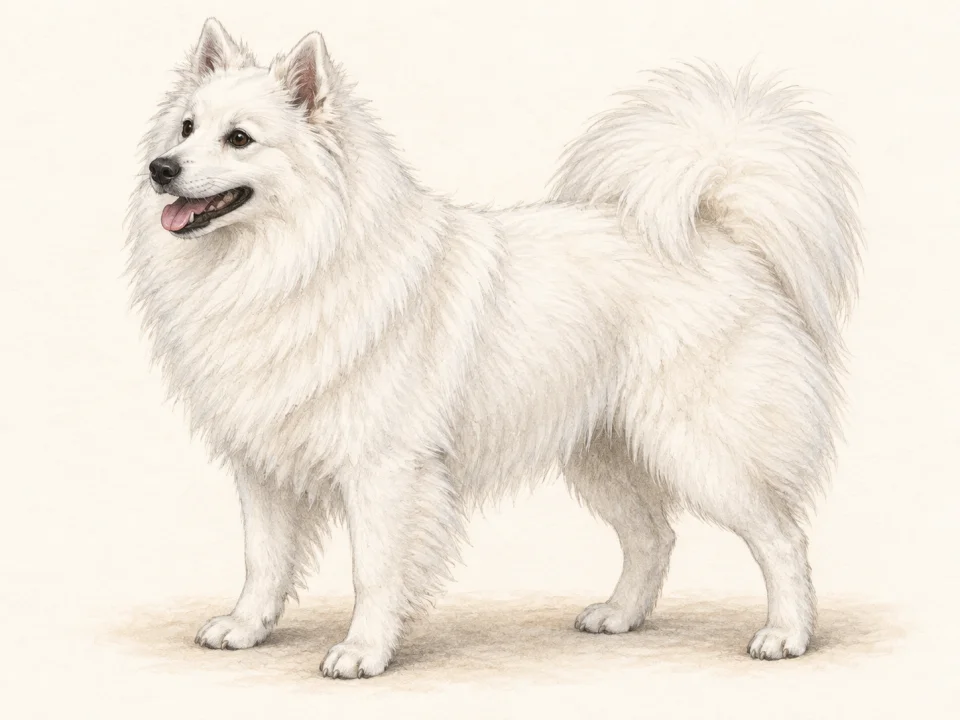
Choose the size category before buying equipment
AKC lists toy Eskies at 9–12 inches and 6–10 pounds, miniatures at 12–15 inches and 10–20 pounds, and standards at 15–19 inches and 25–35 pounds. A single breed label therefore cannot select a crate or harness. Confirm the category, then measure the individual. These reference ranges are not instructions to feed a dog toward a particular number.[1]
The white coat needs brushing more than assumptions
The double coat contains a dense undercoat beneath longer outer hair. AKC describes ongoing shedding and recommends thorough brushing two or three times weekly. Work through manageable sections near the skin rather than tidying only the ruff. A coat that looks bright can still conceal a developing tangle; use a calm routine to check comfort as well as appearance.[1]
Give the clever dog something clear to learn
Eskie enthusiasm for learning can be used for useful household actions. Teach returning to a mat, accepting a harness or finding a toy in short reward-based sessions. Increase difficulty a little at a time rather than testing a new skill in a busy setting. Quick learning does not mean the dog understands an unfamiliar cue without consistent instruction.[1]
A thick coat does not make outdoor isolation appropriate
The breed forms close attachments and benefits from participating in household life. A secure yard can support play, but it should not become the dog’s entire daily arrangement. Account for companionship during workdays and practise comfortable short separations gradually. Persistent distress needs assessment and support rather than an assumption that more outdoor space will solve it.[1]
Balance alert curiosity with rest
Provide suitable walks, play and mental challenges, then make quiet recovery easy. An active youngster and an older dog may need different routines, so watch the individual instead of following a fixed exercise promise. Reward calm observation when introducing new people or places. Friendly expectations should not mean forcing every greeting or overlooking a dog that is asking for distance.[1]
Keep eye screening distinct from everyday appearance
AKC lists a lifespan of 13–15 years and recommends hip and eye evaluations plus PRA-prcd DNA testing. Ask for dated results identifying the tested dogs; bright-looking eyes are not a substitute for those records. Include regular dental, nail and ear care in your own routine. Screening covers particular risks and cannot certify that every future health problem has been excluded.[1]
Frequently asked questions
What sizes does the American Eskimo Dog come in?
There are toy, miniature and standard varieties. AKC weight references are 6–10, 10–20 and 25–35 pounds respectively; choose equipment from individual measurements as well as the variety.
Source [1]Do American Eskimo Dogs shed?
Yes. Their double coat sheds regularly. AKC recommends thorough brushing two or three times a week to remove loose hair and help prevent matting.
Source [1]Can an Eskie live alone outdoors because of its coat?
Its coat does not replace companionship. The breed benefits from indoor household involvement; supervised yard activity is an addition to that routine.
Source [1]Which inherited eye test should I ask about?
Ask about PRA-prcd DNA testing and an eye evaluation, alongside hip screening. Obtain results tied to the actual dogs rather than relying on a general health-checked statement.
Source [1]FAQ sources
Sources & methodology
Breed-level measurements and comparison scores provide context. They do not predict an individual dog's health, behaviour or suitability. Open the original publisher pages below to verify the facts and compare any later updates.
- American Kennel Club — American Eskimo Dog breed and care guidance ↗Reference 1 · reviewed 2026-09-27
Make it about your dog
Build a profile around your dog's age, experiences and everyday needs.
Meet your dog →Explore local care