
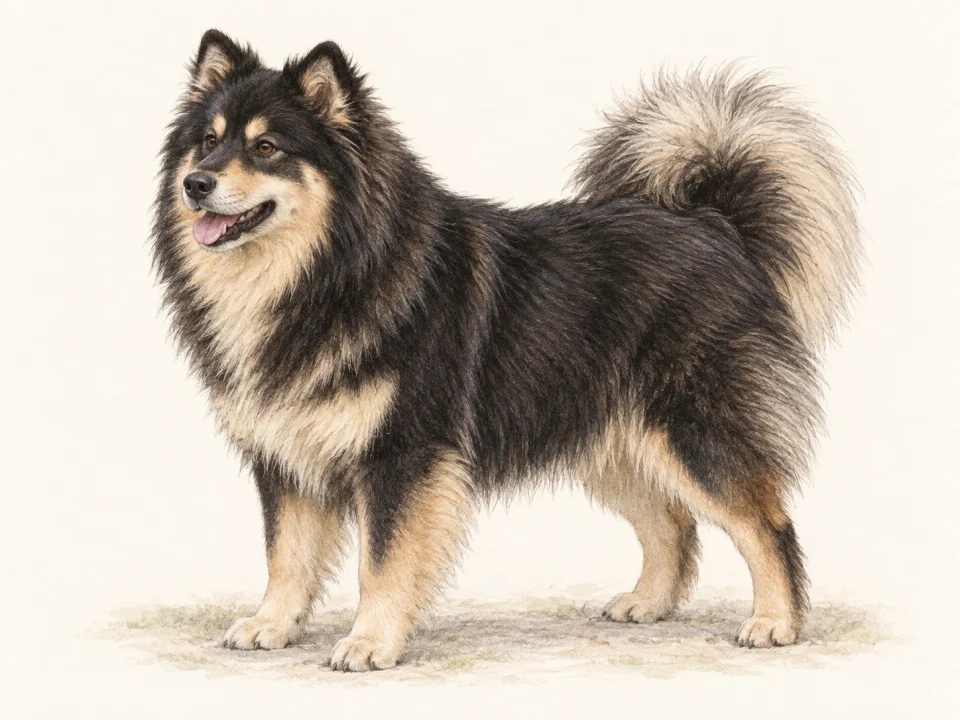
A northern working history does not replace family life
The FCI standard describes dogs used by the Sami for reindeer herding and watch work, with the modern Finnish Lapphund also established as a companion. That history explains why a fluffy outline can contain a strong, agile dog. It does not establish that an individual should spend its life outside or be expected to occupy itself. Before choosing a Lapphund, plan who will provide company and shared activity during an ordinary week. Include quiet time together as well as outings, and ask about the individual’s experience when family members leave. Treat outdoor shelter, secure space and companionship as separate needs. A dog’s ability to cope with a climate is not evidence that an isolated routine suits it.[2]
Discuss barking before choosing a shared-wall home
AKC identifies barking as a feature prospective owners should consider. Ask an adult dog’s carer what prompts it: arrivals, activity outside, excitement or something else. A useful conversation includes how long it continues and what helps the dog settle, rather than merely whether it barks. For a puppy, discuss the adults in the breeding program and get guidance on introducing ordinary sounds without overwhelming it. Plan a resting area and the household response to predictable triggers. The goal is workable management and learning, not a promise of a silent dog. Do not deliberately startle a dog to test a breed description, and seek qualified help for persistent fear or distress rather than dismissing it as part of its ancestry.[1]
Budget for the undercoat, not just the visible outline
AKC recommends more frequent brushing during shedding periods than during routine maintenance. Ask for a demonstration that reaches loose undercoat comfortably without repeatedly scraping the skin, and check the areas where a harness or collar contacts the coat. Split care into manageable sessions if that helps the individual remain comfortable. A thick coat should not be used as a reason to skip checks beneath it: note discomfort or skin changes and seek appropriate advice. Nor should a summer haircut be treated as an automatic cooling plan. Discuss coat care with a knowledgeable groomer and veterinarian, and arrange activity and a comfortable environment for the actual weather. Coat appearance alone cannot tell you whether the dog is coping with heat.[1]
Frequently asked questions
Is the Finnish Lapphund only a working reindeer dog?
No. The FCI standard describes its historical herding and watch roles and its modern popularity as a companion. The individual still needs a suitable daily routine.
Source [1]Can I expect a Finnish Lapphund to be silent in an apartment?
No breed description can promise that. AKC flags a tendency to bark; investigate the individual’s triggers and plan how the household will manage them.
Source [2]Does the thick coat require the same grooming effort all year?
Not necessarily. AKC recommends increased brushing during shedding periods. Learn a comfortable technique and adjust care to the coat you are actually seeing.
Source [2]FAQ sources
- FCI Standard No. 189 — Finnish Lapponian Dog, 2016 ↗FAQ reference 1
- American Kennel Club — Finnish Lapphund ↗FAQ reference 2
Sources & methodology
Breed-level measurements and comparison scores provide context. They do not predict an individual dog's health, behaviour or suitability. Open the original publisher pages below to verify the facts and compare any later updates.
- American Kennel Club — Finnish Lapphund ↗Reference 1 · reviewed 2026-09-27
- FCI Standard No. 189 — Finnish Lapponian Dog, 2016 ↗Reference 2 · reviewed 2026-09-27
Make it about your dog
Build a profile around your dog's age, experiences and everyday needs.
Meet your dog →Explore local care