
Start with the work, then decide whether the dog fits
The FCI standard identifies this breed as a versatile flushing dog developed by hunters for hunting. It describes scent work, retrieving, water work and vocalizing on a trail. A friendly temperament does not turn those working traits into a promise of quiet, low-engagement companionship. Before choosing a puppy, ask a breeder to describe an ordinary week outside the busiest working season. What tasks does the adult dog perform, where, and with whom? Then compare that routine with what you can offer. If your plan consists mainly of brief neighborhood walks, say so plainly rather than assuming a future hobby will fill the gap. This conversation is a better starting point than choosing from coat photographs.[2]
Do not select a working temperament by color
The FCI history describes earlier distinctions between brown and roan lines, but explicitly says those differences in disposition can no longer be treated as valid following interbreeding. Ask about the actual parents and the individual instead of using color to predict working range or behavior. For a prospective owner, a useful observation visit includes transitions: how the dog responds when an outing ends, how equipment is put on, and how the handler redirects attention. A field demonstration alone can show skill without answering those household questions. Keep observed behavior, pedigree information and the breeder’s expectations separate in your notes; none is interchangeable with a color-based assumption.[2]
Account for the care after the outing
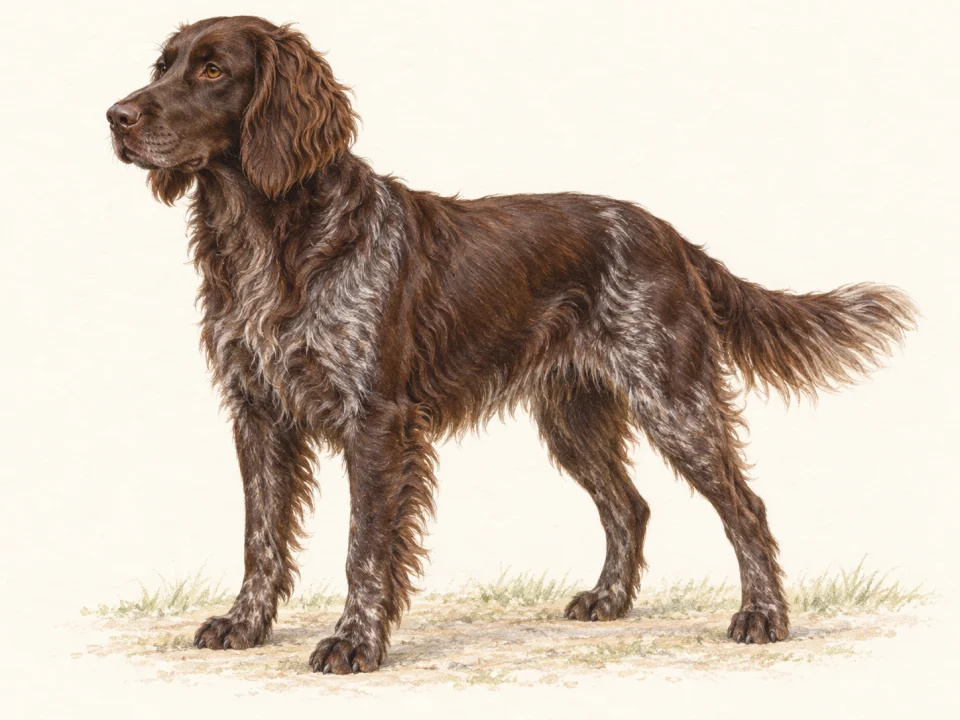
AKC describes a dense coat with undercoat and feathering, with shorter hair on the head, and recommends regular weekly grooming. For a dog spending time in cover or water, leave time after the outing to inspect the coat, feet and hanging ears instead of treating care as a separate weekend chore. Ask an experienced handler to show where debris collects on their dogs and how they manage it comfortably. If a spot is painful or the ear seems abnormal, obtain appropriate advice rather than repeatedly cleaning or pulling at it. The source’s broad healthy-breed description does not supply an individual medical history: request the available records when discussing a puppy or adult dog.[1]
Frequently asked questions
Is the German Spaniel name another name for the Deutscher Wachtelhund?
Yes. The FCI standard uses German Spaniel as its English name and identifies a versatile flushing and hunting role.
Source [1]Can brown versus roan color predict how the dog will work?
Do not rely on that distinction. The FCI history says the former differences in disposition are no longer a valid division after interbreeding. Ask about the individual and its family.
Source [1]What care should I plan after an outdoor session?
Allow time to inspect the feathered coat, feet and ears, alongside regular grooming. Ask for a practical demonstration and seek advice for pain or abnormal findings rather than forcing a cleanup.
Source [2]FAQ sources
- FCI Standard No. 104 — Deutscher Wachtelhund ↗FAQ reference 1
- American Kennel Club — Deutscher Wachtelhund ↗FAQ reference 2
Sources & methodology
Breed-level measurements and comparison scores provide context. They do not predict an individual dog's health, behaviour or suitability. Open the original publisher pages below to verify the facts and compare any later updates.
- American Kennel Club — Deutscher Wachtelhund ↗Reference 1 · reviewed 2026-09-27
- FCI Standard No. 104 — Deutscher Wachtelhund ↗Reference 2 · reviewed 2026-09-27
Make it about your dog
Build a profile around your dog's age, experiences and everyday needs.
Meet your dog →Explore local care