
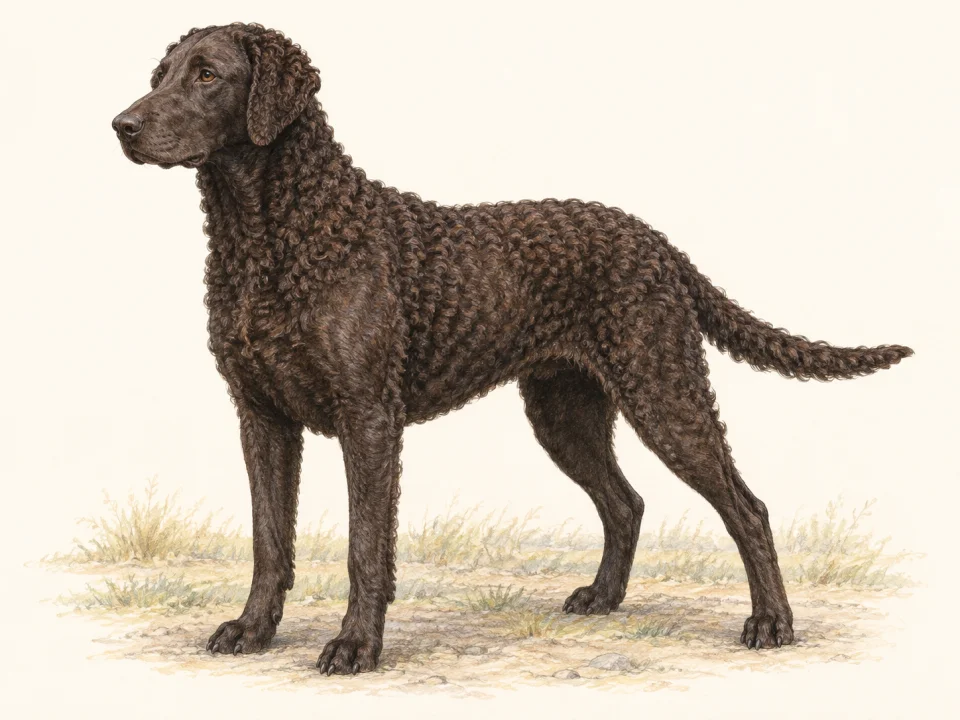
Meet the dog behind the retriever expectation
AKC describes affection and playfulness with familiar people but possible reserve with strangers. Do not assume every retriever welcomes immediate contact from everyone. Ask how the individual handles visitors and new settings. Calm introductions and an opportunity to observe can be more useful than a crowded greeting, while shared activities help build a predictable relationship at home.[1]
Vary practice without making cues inconsistent
The cited training guidance warns that excessive repetition can lead to lost interest. Teach a clear task, reward success and vary the activity before attention disappears. Keep rules consistent even when the game changes. If considering field training, observe an instructor’s methods first; suitable instruction should help you work with the dog without relying on rough handling.[1]
Use exercise and companionship together
AKC describes a dog that needs substantial activity but can settle well indoors when its needs are met. Plan suitable walks, retrieving or other prepared tasks with people rather than prolonged isolation outdoors. A large home is not the only consideration: ask whether your normal schedule provides engagement and recovery. Adjust effort to the individual’s health, age and conditioning.[1]
Treat the curls differently from a brushed-out coat
The cited grooming guidance says the breed lacks an undercoat and that brushing can make the curls frizz. Ask a groomer familiar with the breed to demonstrate routine care and appropriate loose-hair removal during shedding. Avoid applying another retriever’s grooming routine automatically. Include regular nails and checks for debris or discomfort even when frequent baths are not needed.[1]
Keep water outings supervised
A coat developed for water work does not guarantee safety in every setting. Check conditions and access, provide an easy exit and supervise the individual. Learn the dog’s experience before increasing demands, and end activity when it is no longer suitable. The breed’s reference weight of 60–95 pounds also makes planning practical assistance and transport worthwhile before an outing.[1]
Combine screening records with an emergency plan
AKC lists hip, cardiac and ophthalmologist assessments plus PRA-crd4/cord1, EIC and GSDIIIa DNA tests. Request the separate reports and veterinary interpretation. The health discussion also identifies GDV, or bloat, as a life-threatening concern. Ask your veterinarian about recognition and emergency arrangements; a completed screening panel does not remove the need to respond promptly to an urgent problem.[1]
Frequently asked questions
Should I brush a Curly like a typical double-coated retriever?
Not automatically. AKC describes no undercoat and notes that brushing can frizz the curls. Get a breed-appropriate grooming demonstration.
Source [1]Why does my Curly lose interest in repeated drills?
The cited guidance notes that excessive repetition can bore the dog. Keep tasks clear but vary the activity and use rewarding, gentle instruction.
Source [1]Does a Curly need to live in a very large house?
House size alone does not establish suitability. AKC emphasizes adequate activity and time with people, with the ability to settle indoors when needs are met.
Source [1]Which DNA tests are in the cited health panel?
PRA-crd4/cord1, exercise-induced collapse and glycogen storage disease IIIa tests, alongside hip, heart and eye assessments. Ask for the actual reports and professional interpretation.
Source [1]FAQ sources
Sources & methodology
Breed-level measurements and comparison scores provide context. They do not predict an individual dog's health, behaviour or suitability. Open the original publisher pages below to verify the facts and compare any later updates.
- American Kennel Club — Curly-Coated Retriever breed and care guidance ↗Reference 1 · reviewed 2026-09-27
Make it about your dog
Build a profile around your dog's age, experiences and everyday needs.
Meet your dog →Explore local care