
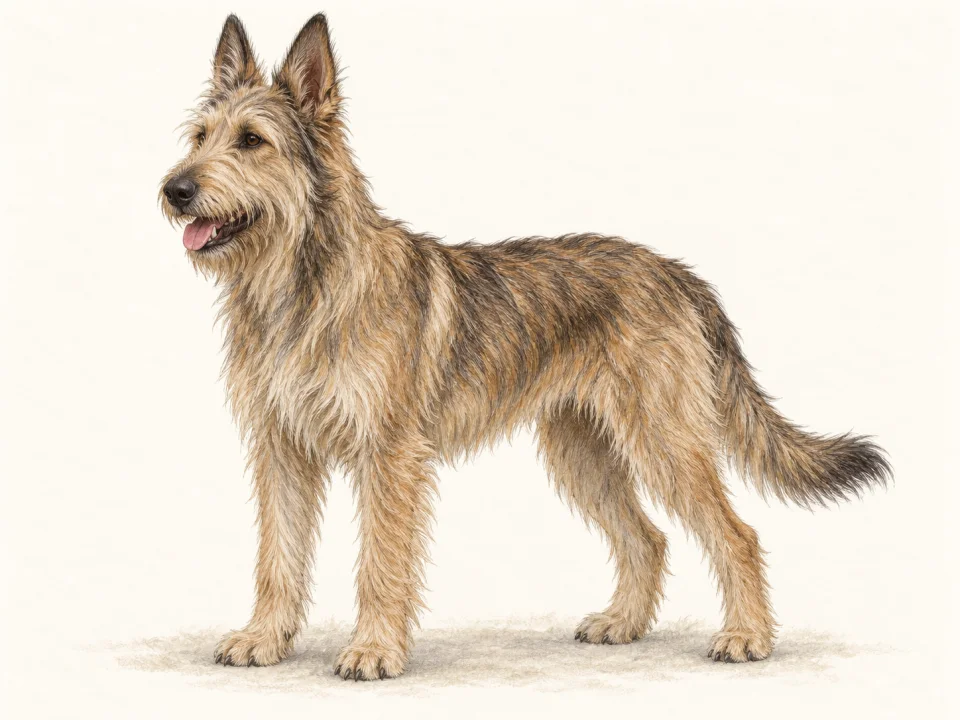
Do not confuse the shaggy outline with heavy grooming
The Picard has a harsh outer coat over a softer dense underlayer, rather than a long silky coat requiring constant styling. AKC references males at 23.5–25.5 inches, females at 21.5–23.5 inches, and a 50–70 pound weight range. Measure the individual for equipment. A lean rectangular frame and shaggy outline should not be interpreted as a reason to feed toward the largest number.[1]
Change the coat routine when shedding changes
The cited AKC guidance describes relatively infrequent brushing outside shedding season, with brushing every day or two during the heavier shed. Check the dog’s actual coat rather than blindly following a calendar. Remove loose undercoat gently using suitable tools and avoid treating the rough outer texture as a defect that needs constant washing or smoothing.[1]
Give stamina an ordinary weekday outlet
A Picard needs substantial suitable activity and mental stimulation, not only a weekend adventure. Plan walks and shared tasks around the individual’s age and health. Decide how the routine works when weather or work changes your day. A secure yard is useful space but cannot supply a training plan, companionship or observation of how well the dog is recovering.[1]
Find the reward that actually matters to this dog
The source notes that praise and attention can be especially useful for some Picards. Try appropriate rewards and observe which supports calm learning rather than assuming every dog values the same treat or toy. Keep lessons short and achievable. If the dog seems independent, clarify the task and reduce distractions before deciding that it is deliberately refusing.[1]
Teach new situations without forcing confidence
Introduce people, places and handling gradually, leaving enough space for the dog to remain comfortable. Reward attention and allow a quiet break when needed. A capable athletic dog can still be sensitive to pressure. Consistent positive experience is more useful than testing tolerance through an intense greeting or repeatedly asking for a response in an overwhelming environment.[1]
Read the health record alongside the individual history
AKC lists a lifespan reference of 12–13 years and recommends hip and eye evaluations. Obtain dated reports with dog identities and ask about wider family history. Keep ear, dental and nail care in the routine alongside the comparatively simple coat. A lively outward appearance does not rule out discomfort, so investigate changes in movement or behavior instead of attributing them automatically to temperament.[1]
Frequently asked questions
Does a Berger Picard need the same grooming all year?
No. The cited guidance describes a much greater brushing workload during shedding, when loose undercoat needs frequent removal. Adjust to the individual coat rather than appearance alone.
Source [1]What rewards can help train a Berger Picard?
Praise, attention, food or play may have different value to different dogs. The source highlights praise and affection; observe the individual and use clear positive teaching rather than harsh methods.
Source [1]Is a Berger Picard suitable for a mostly inactive routine?
Its working background brings substantial activity and mental-engagement needs. Evaluate the actual weekday schedule before assuming occasional long outings are enough.
Source [1]Which screening evaluations does AKC list?
The cited panel lists hips and eyes. Request identifiable dated results and discuss wider health history with a veterinarian rather than treating the panel as a complete guarantee.
Source [1]FAQ sources
Sources & methodology
Breed-level measurements and comparison scores provide context. They do not predict an individual dog's health, behaviour or suitability. Open the original publisher pages below to verify the facts and compare any later updates.
- American Kennel Club — Berger Picard breed and care guidance ↗Reference 1 · reviewed 2026-09-27
Make it about your dog
Build a profile around your dog's age, experiences and everyday needs.
Meet your dog →Explore local care