
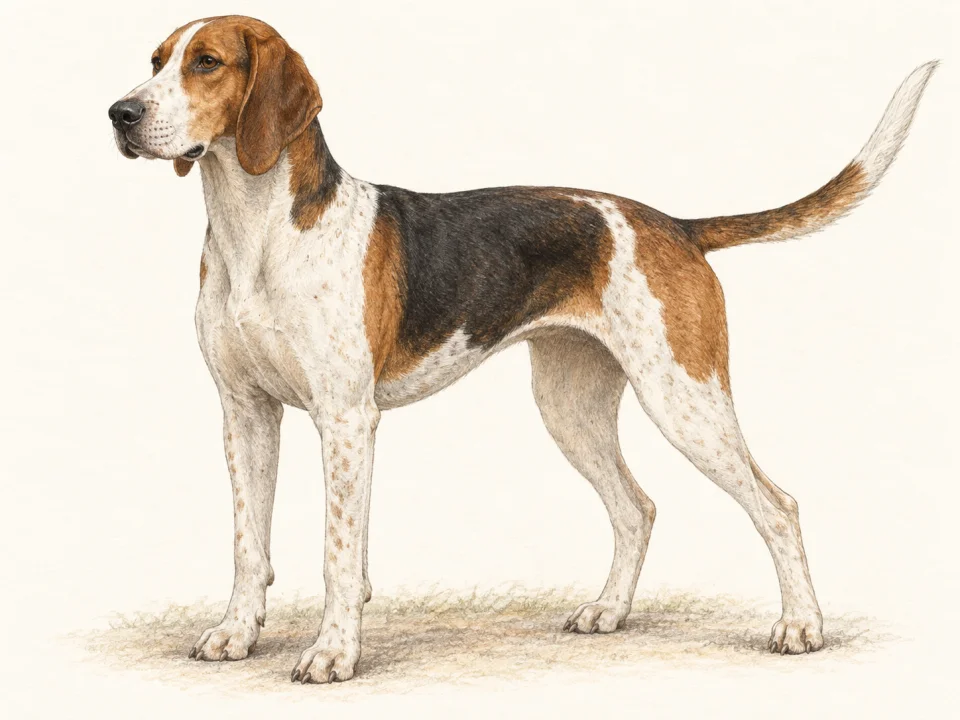
Before moving a pack hound into a household
AKC describes a sociable, pack-oriented breed that is uncommon as a house pet. A comfortable life alongside other hounds is useful background, but it does not answer whether an individual has learned to live in your home. For an adult placement, ask the current carer to separate observed experience from unknowns: has the dog slept indoors, spent time without other dogs, traveled alone or encountered everyday household noise? Record “not yet known” when that is the honest answer. Then agree with the placing organization on introductions and support. This is a way to plan a transition, not a prediction that a pack-raised hound will necessarily struggle. Nor does pack sociability guarantee safe behavior with every animal or visitor. Assess introductions individually rather than using the breed label as permission for immediate unsupervised access.[1]
Secure access matters more than simply having acreage
The breed’s pursuit background makes scent an important walking consideration. AKC recommends a leash outside a safely enclosed space. Before calling a property suitable, trace the dog’s route from the house to the exercise area: gates used by deliveries, shared driveways and the point where a leash is attached all deserve attention. Decide who checks those access points and how visitors are admitted without the dog slipping through. This practical check is useful even on a large property; land area alone does not provide containment or companionship. Ask about the individual’s current activity and build a suitable routine with professional guidance where needed. Endurance in the breed’s history is not evidence that a puppy, an older dog or an unconditioned adult is ready for a long run.[1]
Keep a clear emergency plan for possible bloat
Gastric dilatation-volvulus (GDV) is a rapidly developing, life-threatening emergency. ACVS identifies deep-chested conformation as an associated risk factor and lists warning signs including repeated unproductive retching, drooling, abdominal enlargement and distress; weakness or collapse can follow. Seek immediate veterinary care if these signs occur rather than waiting to establish a diagnosis at home. Do not wait for every sign to appear. Before an emergency, save the nearest available emergency clinic’s contact details and work out transport for a large dog. Discuss individual risk and preventive options with your veterinarian during routine care. An emergency plan complements ordinary care; it does not mean that every English Foxhound will develop GDV.[2]
Frequently asked questions
Does an English Foxhound need assessment before joining a home with other dogs?
Yes. Pack-oriented breed history does not establish compatibility between particular dogs. Ask about the individual’s experience and arrange managed introductions.
Source [1]Is an unfenced rural property enough for an English Foxhound?
It does not provide secure containment. AKC recommends a leash unless the dog is in a safely enclosed area because scent can draw it away.
Source [1]What if my dog repeatedly tries to vomit but produces nothing?
Seek immediate veterinary attention, especially with distress, drooling or abdominal enlargement. These can be signs of GDV; do not wait for all signs or attempt to diagnose it yourself.
Source [2]FAQ sources
- American Kennel Club — English Foxhound ↗FAQ reference 1
- American College of Veterinary Surgeons — Gastric Dilatation-Volvulus ↗FAQ reference 2
Sources & methodology
Breed-level measurements and comparison scores provide context. They do not predict an individual dog's health, behaviour or suitability. Open the original publisher pages below to verify the facts and compare any later updates.
- American Kennel Club — English Foxhound ↗Reference 1 · reviewed 2026-09-27
- American College of Veterinary Surgeons — Gastric Dilatation-Volvulus ↗Reference 2 · reviewed 2026-09-27
Make it about your dog
Build a profile around your dog's age, experiences and everyday needs.
Meet your dog →Explore local care