
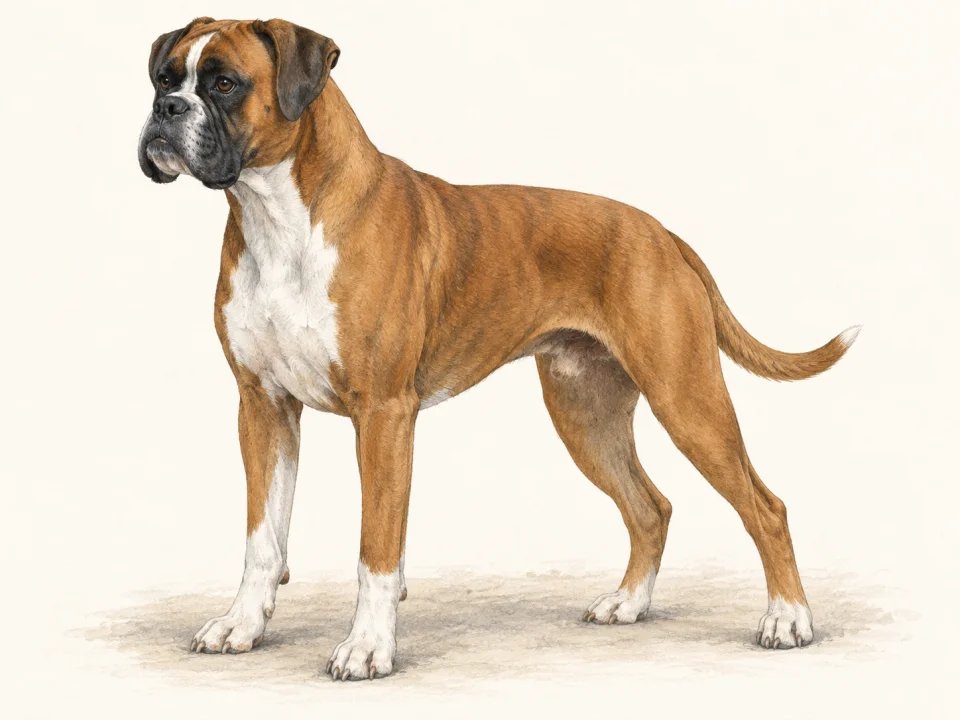
Plan for the bouncy adult rather than only the puppy
AKC references males at 23–25 inches and 65–80 pounds, with females shorter and generally lighter. A friendly jump can still overwhelm a small child or an unsteady adult. Teach greeting with feet on the ground and provide a calm arrival routine. Supervise interactions instead of treating the breed’s affectionate reputation as proof that every exuberant moment will be safe.[1]
Keep climate limits in the exercise plan
The cited guidance says Boxers tolerate neither extreme heat nor extreme cold well. Provide comfortable indoor living and adapt outings to the individual and conditions. An eager invitation to play is not evidence that pushing harder is safe. Discuss exercise tolerance with your veterinarian, especially when signs or known health concerns make the usual activity plan questionable.[1]
Make active time controlled and purposeful
Suitable daily walks, shared play and mental tasks can channel energy without depending on an uncontrolled run. Use a leash outside secure areas and check gates before free play. Practise pausing and returning attention while games are still manageable. A growing dog needs an age-appropriate plan rather than a copy of a fit adult’s most demanding activities.[1]
Use variety without making the rules unpredictable
Boxers can become bored with repetition. Teach a short clear task, reward success and change activity before attention disappears. Keep the cue’s meaning consistent between people even when the game changes. Assess other-dog introductions individually and provide separate spaces when needed; compatibility should be observed, not guaranteed from the dogs’ sex or a general breed description.[1]
Take advantage of an easy coat without skipping care
A rubber brush or grooming glove once or twice weekly is the AKC baseline for the short coat. Include regular nails, teeth and ear checks so the simple outer grooming does not hide other responsibilities. Practise brief cooperative handling when the dog is comfortable. A new painful spot or reluctance to move should not be brushed off as ordinary playfulness or tiredness.[1]
Ask which cardiac assessments were done and when
AKC lists a lifespan of 10–12 years. Its panel includes joint and thyroid evaluations, cardiac assessments, ARVC DNA testing, annual Holter monitoring and degenerative myelopathy DNA testing. Request the reports and dates, and ask a veterinarian what each establishes. A DNA result, a cardiac examination and rhythm monitoring are different evidence; one must not be represented as a substitute for all the others.[1]
Frequently asked questions
Can a friendly Boxer still be too boisterous for a small child?
Yes. Strength and enthusiasm can cause accidental collisions. Teach controlled greetings, supervise directly and provide calm alternatives rather than relying on friendliness alone.
Source [1]Can a Boxer live outside because it is athletic?
The cited guidance recommends indoor family life and notes poor tolerance of extreme heat and cold. Athletic ability does not remove those care needs.
Source [1]Does a clear ARVC DNA result replace other heart assessments?
No. The cited panel includes different cardiac assessments and annual Holter monitoring. Ask a veterinarian to interpret the separate reports and their limitations.
Source [1]How often does a Boxer’s short coat need brushing?
AKC describes a brush or grooming-glove session once or twice weekly. Nails, teeth and ears still need regular care beyond the coat.
Source [1]FAQ sources
- American Kennel Club — Boxer breed and care guidance ↗FAQ reference 1
Sources & methodology
Breed-level measurements and comparison scores provide context. They do not predict an individual dog's health, behaviour or suitability. Open the original publisher pages below to verify the facts and compare any later updates.
- American Kennel Club — Boxer breed and care guidance ↗Reference 1 · reviewed 2026-09-27
Make it about your dog
Build a profile around your dog's age, experiences and everyday needs.
Meet your dog →Explore local care