
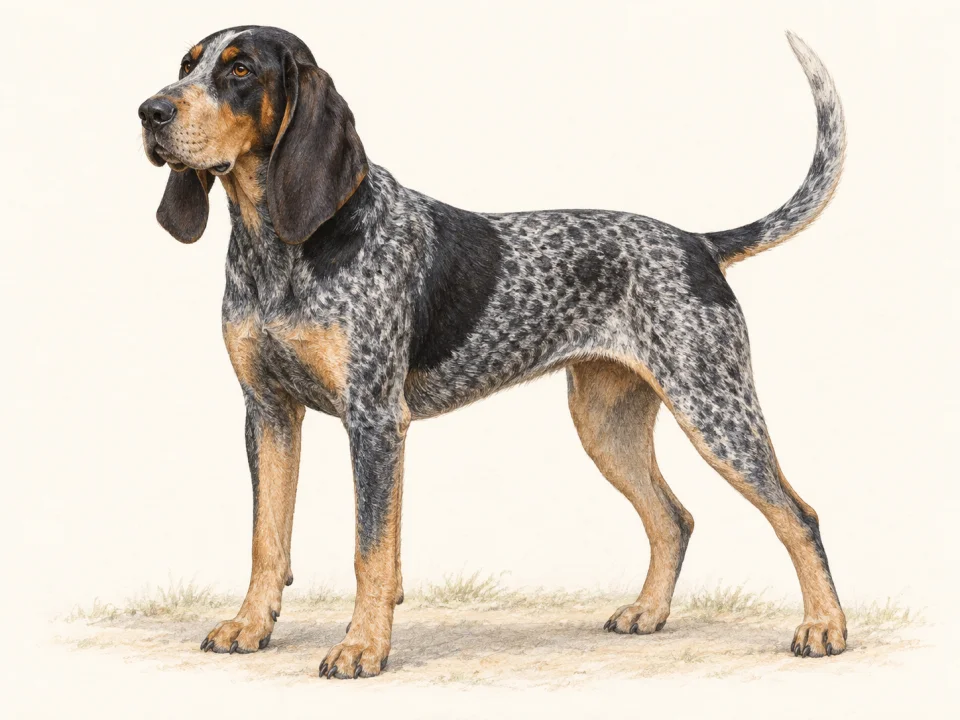
The ticking describes the coat, not the workload
The name refers to the mottled black-and-blue appearance of the coat. AKC references males at 22–27 inches and 55–80 pounds, females at 21–25 inches and 45–65 pounds. Do not choose only from the attractive markings. Consider the actual dog’s routine, voice and scent interest before deciding whether its needs fit the household and neighborhood.[1]
A sleeping hound can still be a determined hunter
Blueticks may rest contentedly near their people while retaining strong interest in following prey. Plan suitable regular activity with a person rather than interpreting quiet downtime as an absence of exercise needs. Adjust demands to development and condition. A controlled search game or other learning task can add purpose when the household is not using the dog for traditional hunting.[1]
Use containment before the trail becomes interesting
Keep walks on leash and free play in secure enclosed spaces. Practise returning attention in a quiet setting and increase distractions gradually without abandoning the physical boundary. A single successful outing does not prove off-leash reliability. Gates and equipment deserve routine checks because an unexpected scent can create a much harder challenge than the last training session.[1]
Decide whether the voice suits the home
Baying and other carrying hound sounds are part of the breed’s working background. Consider nearby neighbors and ask about the individual’s vocal behavior before committing. Plan companionship and appropriate outlets, and assess persistent distress when alone. Training can teach useful alternatives in some situations, but it should not be sold as a guarantee that a Bluetick will become silent.[1]
Give the long ears more attention than the short coat
Weekly brushing generally manages routine loose hair, while the source recommends daily checks of the hanging ears for signs of trouble. Teach gentle handling and ask a veterinarian to demonstrate appropriate care. A painful or abnormal ear needs assessment rather than repeated improvised cleaning. Nails and teeth also need regular attention despite the relatively easy coat.[1]
Keep a blank screening panel in context
AKC lists a lifespan of 11–12 years and no recommended tests in the consulted panel. That is not evidence that every individual is free of health risks. Request current breed guidance, family history and available veterinary records. Discuss the dog’s own condition and care plan with a veterinarian instead of turning the absence of a published checklist into a health guarantee.[1]
Frequently asked questions
Does a Bluetick’s quiet indoor behavior mean little exercise is needed?
No. Resting contentedly can coexist with strong hunting drive. Plan suitable activity and engagement based on the individual rather than judging needs from downtime.
Source [1]Can I expect a Bluetick Coonhound to be silent after training?
No reliable guarantee can be made. Its carrying hound voice matters when evaluating housing, and persistent distress should be assessed separately from ordinary vocal behavior.
Source [1]How often should I check a Bluetick’s ears?
The cited AKC care guidance recommends daily checks for signs of infection. Seek veterinary advice for pain, discharge or unusual odor rather than treating every change as routine cleaning.
Source [1]Does “no recommended health tests” mean no health risks?
No. Request current breed advice and individual records, then review them with a veterinarian. An empty panel is not a complete health assessment.
Source [1]FAQ sources
Sources & methodology
Breed-level measurements and comparison scores provide context. They do not predict an individual dog's health, behaviour or suitability. Open the original publisher pages below to verify the facts and compare any later updates.
- American Kennel Club — Bluetick Coonhound breed and care guidance ↗Reference 1 · reviewed 2026-09-27
Make it about your dog
Build a profile around your dog's age, experiences and everyday needs.
Meet your dog →Explore local care