
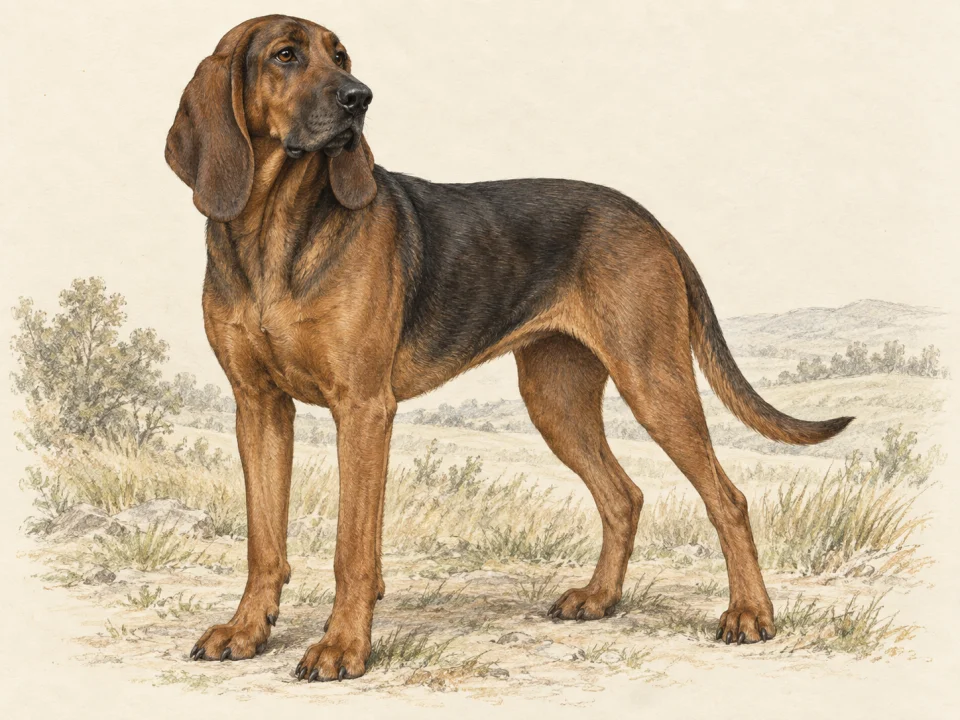
Discuss the work before choosing the dog
FCI identifies the Hanoverian as a highly specialized hound for tracking wounded game, with working ability central to its development. This is more specific than an interest in accompanying someone on walks. Before acquiring one, discuss your intended routine honestly with a knowledgeable breeder or breed organization: what experience do you have, who will provide instruction, and what suitable work can the individual regularly do? A recreational scent game may be enjoyable, but do not assume it is equivalent to the breed’s traditional work or proves that any home is suitable. The standard describes sensitivity toward its handler and reserve with strangers. Give unfamiliar people space to be introduced without forcing contact, and seek advice when a reaction causes concern. Concentration on a track is a working trait, not evidence that a dog is trying to outrank a person when attention is difficult to regain. Teach the desired response with clear, humane instruction and appropriate management.[1]
A simple coat leaves more time for the handling plan
AKC describes modest grooming demands for the short coat, while highlighting ear checks and regular nail care. Use that care time to notice discomfort or changes after outdoor activity, rather than assuming low grooming needs mean no inspection. Practice comfortable handling before an ear examination or nail trim becomes difficult. For outings, decide how the dog will remain securely managed around roads and wildlife and ask an experienced instructor about suitable tracking equipment. A strong dog leaning into scent work needs a handler who can manage the setting safely; increasing force is not a substitute for instruction. Request available health and family records when discussing a puppy, and involve your veterinarian in activity and nutrition decisions. A broad statement that the breed is healthy cannot establish the health of the particular dog or replace an examination.[2]
Frequently asked questions
What kind of tracking was the Hanoverian Scenthound developed for?
FCI identifies specialized tracking of wounded game. Discuss the demands of that working background with an experienced breed contact rather than choosing solely for appearance.
Source [1]Does a short coat eliminate routine care?
No. AKC still calls for ear checks, nail care and attention to teeth. Keep handling comfortable and seek veterinary advice for irritation or pain rather than relying on the coat’s easy upkeep.
Source [2]FAQ sources
- FCI Standard No. 213 — Hanoverian Scenthound, 2015 ↗FAQ reference 1
- American Kennel Club — Hanoverian Scenthound ↗FAQ reference 2
Sources & methodology
Breed-level measurements and comparison scores provide context. They do not predict an individual dog's health, behaviour or suitability. Open the original publisher pages below to verify the facts and compare any later updates.
- FCI Standard No. 213 — Hanoverian Scenthound, 2015 ↗Reference 1 · reviewed 2026-09-27
- American Kennel Club — Hanoverian Scenthound ↗Reference 2 · reviewed 2026-09-27
Make it about your dog
Build a profile around your dog's age, experiences and everyday needs.
Meet your dog →Explore local care