
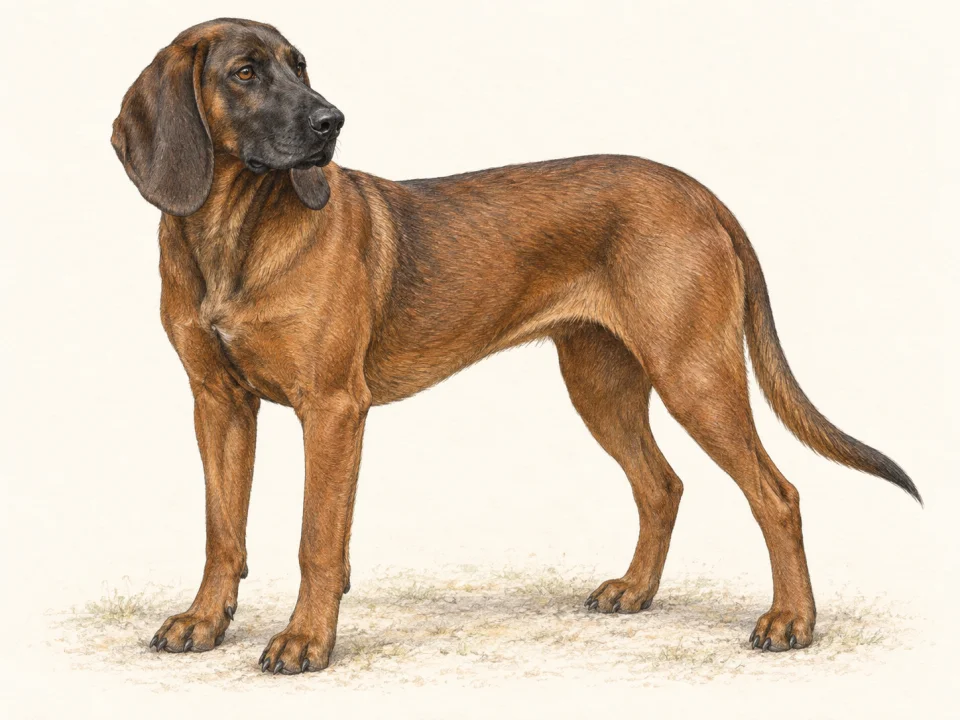
Understand the specialist before choosing the companion
Also called the Bayerischer Gebirgsschweisshund, this breed was developed for demanding scent-tracking work. AKC lists it at 17–20.5 inches and 37–66 pounds. Its medium frame should not be interpreted as a general-purpose low-effort pet. Discuss the individual’s working background and likely needs with knowledgeable breed contacts before deciding whether your daily routine is a realistic match.[1]
A non-working home needs a substantial alternative
The AKC guidance cautions that this is not a casual activity breed. If the dog is not doing its traditional work, plan abundant appropriate mental and physical engagement with experienced guidance. Identify the actual tasks, locations and available time rather than promising occasional adventures. A quiet evening demeanor is not evidence that a sedentary week has satisfied its needs.[1]
Inspect for both climbing and digging opportunities
The source notes that bored dogs may climb fences or dig. Check the entire boundary, including objects that provide footholds and gaps beneath gates. Supervise a new dog’s use of the space and maintain control outside secure areas. Training remains useful, but a compelling trail should not be the moment you discover that the enclosure relied on an assumption.[1]
Make handler contact part of the arrangement
The breed is closely attached to its person and is not well suited to life isolated in a kennel. A kennel may be one managed space, but it cannot provide the relationship or activity on its own. Plan companionship during the workweek and teach comfortable separations gradually. A working background does not mean social involvement is unnecessary between tasks.[1]
Use positive teaching and respect unfamiliar situations
Bavarians can be reserved around strangers. Allow calm observation without forcing close contact, and reward useful responses in manageable settings. Keep training patient and clear, as the cited guidance favors positive reinforcement over punishment. If attention or confidence drops, simplify the next attempt. The goal is reliable cooperation, not testing how much pressure an independent tracking dog will tolerate.[1]
Check routine care and the limits of the health entry
Regular brushing, nail care and ear checks suit the dense close coat. AKC lists a lifespan of 12–15 years and discusses hip dysplasia and epilepsy in its health text, but names no formal screening panel. Request actual records and family history, then seek veterinary interpretation. Do not treat a brief healthy-breed description as proof that an individual has been screened for everything.[1]
Frequently asked questions
Is Bayerischer Gebirgsschweisshund the same breed?
Yes. It is the German name for the Bavarian Mountain Scent Hound.
Source [1]Is this a casual walking companion for a low-activity home?
The cited AKC guidance describes a specialist with substantial work and stimulation needs. Assess the actual daily plan and seek knowledgeable breed advice before assuming ordinary short walks will suffice.
Source [1]Can it live mainly alone in a kennel between activities?
The breed benefits from close handler and household contact. A kennel can be a managed space, but should not replace companionship and purposeful engagement.
Source [1]What boundary weaknesses should an owner check?
Inspect for climbing aids and digging gaps as well as gate security. The source notes both climbing and digging, so height alone does not establish a secure enclosure.
Source [1]FAQ sources
Sources & methodology
Breed-level measurements and comparison scores provide context. They do not predict an individual dog's health, behaviour or suitability. Open the original publisher pages below to verify the facts and compare any later updates.
- American Kennel Club — Bavarian Mountain Scent Hound breed and care guidance ↗Reference 1 · reviewed 2026-09-27
Make it about your dog
Build a profile around your dog's age, experiences and everyday needs.
Meet your dog →Explore local care