
Choose between two care routines, not two personalities
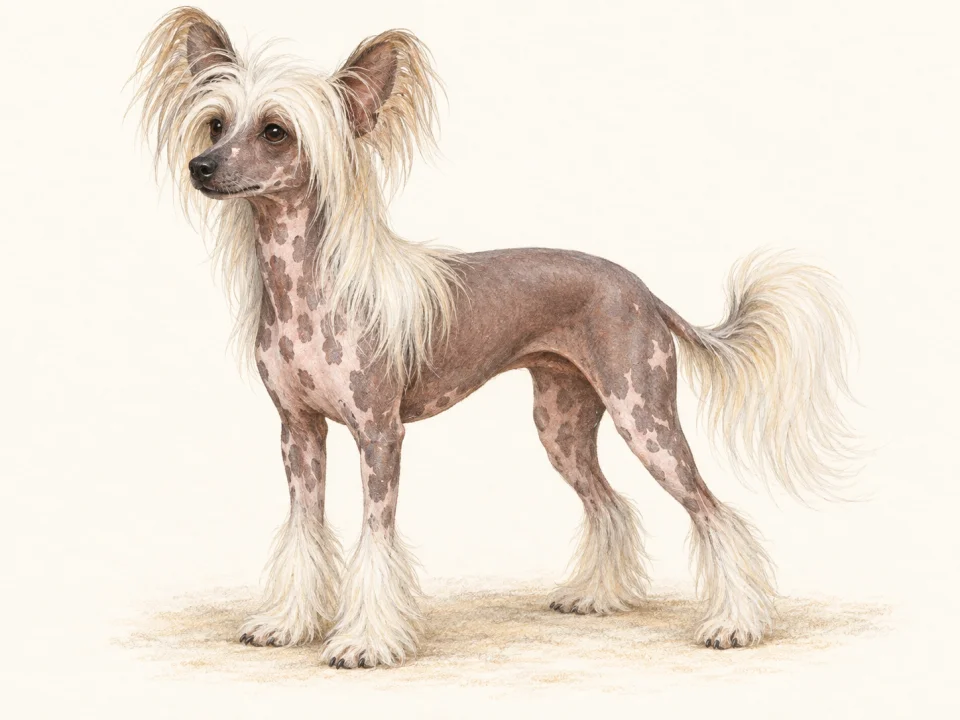
AKC describes hairless dogs with hair on the head, tail and lower legs, and Powderpuffs with a soft full coat. The varieties share the breed’s affectionate, lively character, but ask to see the maintenance each requires. A decision based only on shedding can overlook skin protection for one variety or frequent coat work for the other.[1]
Protect exposed skin with an individualized plan
The cited guidance highlights sunburn and skin irritation in hairless Cresteds. Discuss suitable protection and products with your veterinarian rather than applying a human skin-care routine by default. Plan outdoor time with shade and appropriate protection, and inspect skin gently. Persistent redness or a new lesion needs assessment instead of repeated experimentation with lotions or assumptions about a normal breed feature.[1]
Brush the Powderpuff before tangles become a problem
AKC recommends daily brushing because the soft coat can mat quickly. Ask an experienced groomer to demonstrate a comfortable method that checks beneath the visible outer hair. Short, calm sessions can make regular work easier to sustain. Record areas completed if several people share grooming, so everyone does not brush the easy surface while overlooking the same tangled section.[1]
Use gentle patience to build skills
The cited training guidance emphasizes sensitivity and patient teaching. Reward a clear response, keep tasks achievable and reduce distractions when a new cue is difficult. A close bond does not mean the dog automatically understands household expectations. Include cooperative handling and calm greetings in the routine, not only entertaining tricks, so learning supports the care the individual will actually need.[1]
Keep daily activity suitable for a small companion
Short walks and shared play are the cited exercise starting points. Adapt them to health, weather and the individual’s comfort, taking exposed skin into account for hairless dogs. The reference size is 11–13 inches and 8–12 pounds. Small stature does not remove a need for activity, but it is a reason to supervise interactions and choose equipment that fits securely.[1]
Distinguish eye DNA tests from an eye examination
The cited panel includes patella evaluation, a cardiac exam, ophthalmologist evaluation, and PLL and PRA-rcd3 DNA tests. Request identifiable reports and ask what each covers. Genetic testing for named conditions does not replace every other assessment or explain all future symptoms. AKC lists a lifespan reference of 13–18 years, but care should respond to the dog’s actual condition throughout life.[1]
Frequently asked questions
Is a hairless Chinese Crested almost maintenance-free?
No. Exposed skin needs appropriate protection and monitoring. Ask your veterinarian about suitable products and address persistent irritation rather than improvising treatments.
Source [1]How often does a Powderpuff need brushing?
AKC recommends daily brushing because the soft coat can mat quickly. Learn a comfortable method that reaches tangles beneath the surface.
Source [1]Do both coat varieties need gentle training?
Yes. The cited guidance emphasizes patient, gentle teaching for the breed. Use clear tasks and rewards and adjust difficulty when the dog struggles.
Source [1]Do PLL and PRA DNA tests replace an ophthalmologist evaluation?
No. The cited panel lists them separately, along with patella and cardiac assessments. They provide different information and should be interpreted appropriately.
Source [1]FAQ sources
Sources & methodology
Breed-level measurements and comparison scores provide context. They do not predict an individual dog's health, behaviour or suitability. Open the original publisher pages below to verify the facts and compare any later updates.
- American Kennel Club — Chinese Crested breed and care guidance ↗Reference 1 · reviewed 2026-09-27
Make it about your dog
Build a profile around your dog's age, experiences and everyday needs.
Meet your dog →Explore local care