
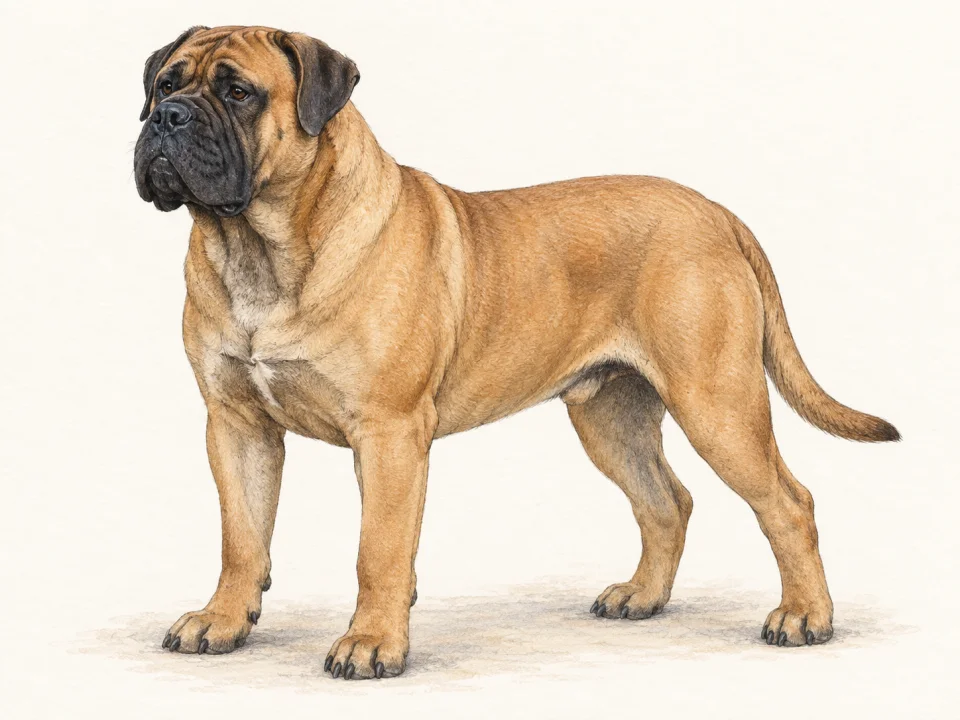
Translate adult size into everyday logistics
AKC lists males at 25–27 inches and 110–130 pounds, females at 24–26 inches and 100–120 pounds. Use those ranges to assess vehicle space, gates and the strength needed for ordinary leash handling. Do not feed a puppy toward the largest number. Healthy body condition and steady development matter more than producing an especially heavy adult.[1]
Teach the visitor routine early
A guarding background makes a predictable arrival routine especially valuable. Start with settling behind a gate while a familiar person enters, then reward calm behavior before any greeting. Provide a quiet alternative when the household is busy. Do not expect guests to manage the dog, and do not assume that friendliness with family automatically describes behavior around every unfamiliar person.[1]
Choose moderate exercise rather than endurance goals
The breed needs regular activity, but is not an obvious choice for someone seeking a distance-running companion. Build a manageable walking routine and adjust it to age, weather and the individual dog. A growing puppy should not be pushed to complete an adult exercise plan. Ask a veterinarian about any new reluctance to move or change in recovery.[1]
Make handling a household skill
Teach loose-leash movement, waiting at doors and calmly accepting touch while the dog is still easy to manage. Everyone who handles the dog should use the same cues and reward system. Practise in quiet places before adding visitors or other distractions. Physical power is a reason to invest in cooperation, not a reason to rely on force or confrontation.[1]
Notice changes under the short coat
Seasonal shedding can occur despite the short coat. A regular brushing routine provides an opportunity to check skin, feet and nails as well as remove loose hair. Mark unusual patches, redness or persistent scratching for veterinary discussion instead of dismissing every coat change as normal shedding. Brief positive handling sessions can make these checks easier on a large adult.[1]
Plan for health and a shorter lifespan
AKC gives a lifespan reference of 7–9 years. Recommended breeding evaluations cover hips, elbows, heart, eyes and thyroid. Request actual results tied to each parent and distinguish screening from a routine vaccination visit. Include veterinary costs and transport arrangements in the household plan; a favorable result does not eliminate later illness or predict exactly how long one dog will live.[1]
Frequently asked questions
What is a Bullmastiff’s life expectancy?
AKC lists 7–9 years. Individual outcomes vary, and a clear screening result cannot guarantee a particular lifespan.
Source [1]How much should an adult Bullmastiff weigh?
The AKC ranges are 110–130 pounds for males and 100–120 pounds for females. They are reference ranges, not feeding targets; assess the individual dog’s body condition with a veterinarian.
Source [1]Is a Bullmastiff a good long-distance running dog?
The breed generally suits moderate regular exercise better than an endurance-running routine. Match activity to the individual, and avoid making a growing puppy follow an adult distance goal.
Source [1]Does the short coat mean a Bullmastiff does not shed?
No. Bullmastiffs can shed seasonally. Regular brushing helps with loose hair, while unusual hair loss or irritated skin needs separate attention.
Source [1]FAQ sources
- American Kennel Club — Bullmastiff breed and care guidance ↗FAQ reference 1
Sources & methodology
Breed-level measurements and comparison scores provide context. They do not predict an individual dog's health, behaviour or suitability. Open the original publisher pages below to verify the facts and compare any later updates.
- American Kennel Club — Bullmastiff breed and care guidance ↗Reference 1 · reviewed 2026-09-27
Make it about your dog
Build a profile around your dog's age, experiences and everyday needs.
Meet your dog →Explore local care