
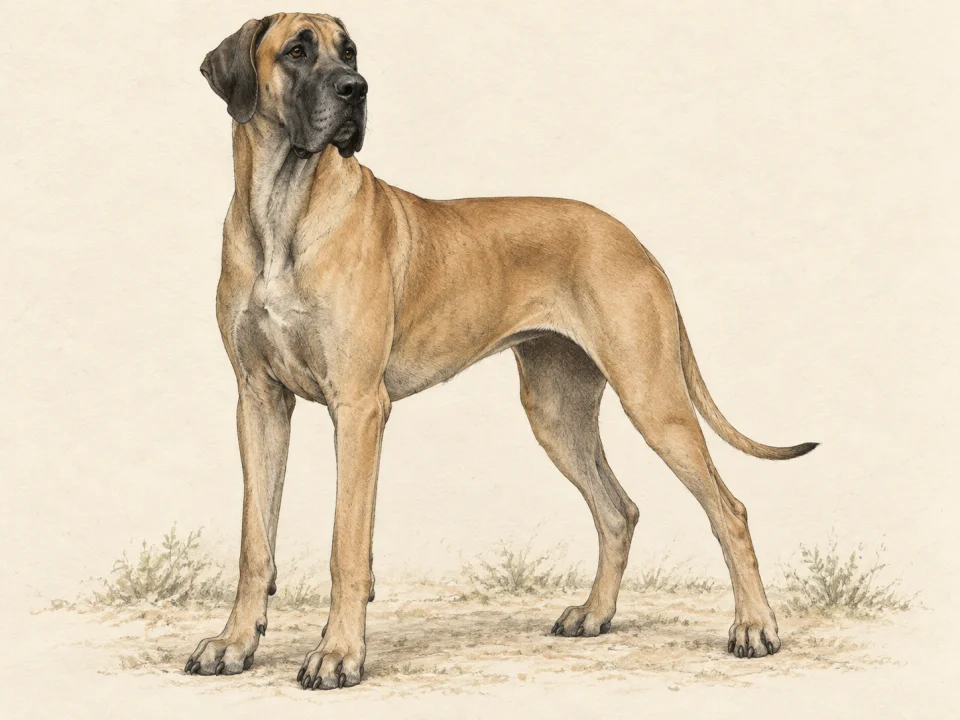
Plan for an adult you may not be able to lift
AKC lists adult males at 140–175 pounds and females at 110–140 pounds. Before choosing a Dane, check how an adult will enter your vehicle, turn in the hallway and reach a resting area without blocking access. Think beyond the healthy dog: if it cannot walk comfortably, who can help and how will you reach the clinic? Ask your veterinarian about suitable transport assistance rather than improvising a lift during a crisis. Early practice with cooperative handling, doorways and relaxed leash walking is useful while the dog is still manageable. A friendly intention does not prevent a very large dog from knocking someone off balance, so arrange supervision and space for children or visitors who are unsteady on their feet. Ask a trainer for reward-based instruction before pulling or jumping becomes a physical contest.[1]
Know the emergency signs before you need them
ACVS identifies Great Danes among breeds commonly seen with gastric dilatation-volvulus, a life-threatening emergency. Unproductive retching, a swollen abdomen, drooling, marked distress or weakness warrant immediate veterinary attention; do not wait for collapse or every sign to appear. Call an emergency clinic and arrange prompt transport rather than trying a home remedy. At a routine visit, discuss preventive gastropexy: it is intended to prevent stomach rotation, but does not prevent all stomach dilation. Previous surgery therefore does not make new warning signs safe to ignore. Keep the emergency clinic’s number and route accessible to every caregiver. The plan should identify who calls, who drives and what help is available to move a giant dog, without delaying care while gathering nonessential belongings.[2]
Keep growth, exercise and coat care in proportion
An adult Dane’s long stride should not become a puppy’s exercise target. Ask your veterinarian to tailor activity and nutrition to growth, condition and health before adding sustained running or demanding outings. Daily movement and training can be age-appropriate without pursuing maximum distance. The short coat still sheds; AKC notes that the dog’s sheer size makes even ordinary shedding noticeable and recommends regular brushing. Include nail handling in gradual, comfortable practice rather than waiting until a full trim is urgently needed. These quieter care skills matter when the adult is too large for one person to reposition easily. Reassess the routine if mobility or tolerance changes instead of assuming a calm dog needs no further attention.[1]
Frequently asked questions
Can a Great Dane still have a swollen stomach after gastropexy?
Yes. ACVS explains that gastropexy targets rotation and does not prevent all dilation. Treat new warning signs as urgent and contact a veterinarian even if the dog has had the procedure.
Source [1]Does the Great Dane come from Denmark?
Despite the English name, AKC identifies Germany as the breed’s origin.
Source [2]FAQ sources
- American College of Veterinary Surgeons — Gastric Dilatation-Volvulus ↗FAQ reference 1
- American Kennel Club — Great Dane ↗FAQ reference 2
Sources & methodology
Breed-level measurements and comparison scores provide context. They do not predict an individual dog's health, behaviour or suitability. Open the original publisher pages below to verify the facts and compare any later updates.
- American Kennel Club — Great Dane ↗Reference 1 · reviewed 2026-09-27
- American College of Veterinary Surgeons — Gastric Dilatation-Volvulus ↗Reference 2 · reviewed 2026-09-27
Make it about your dog
Build a profile around your dog's age, experiences and everyday needs.
Meet your dog →Explore local care