
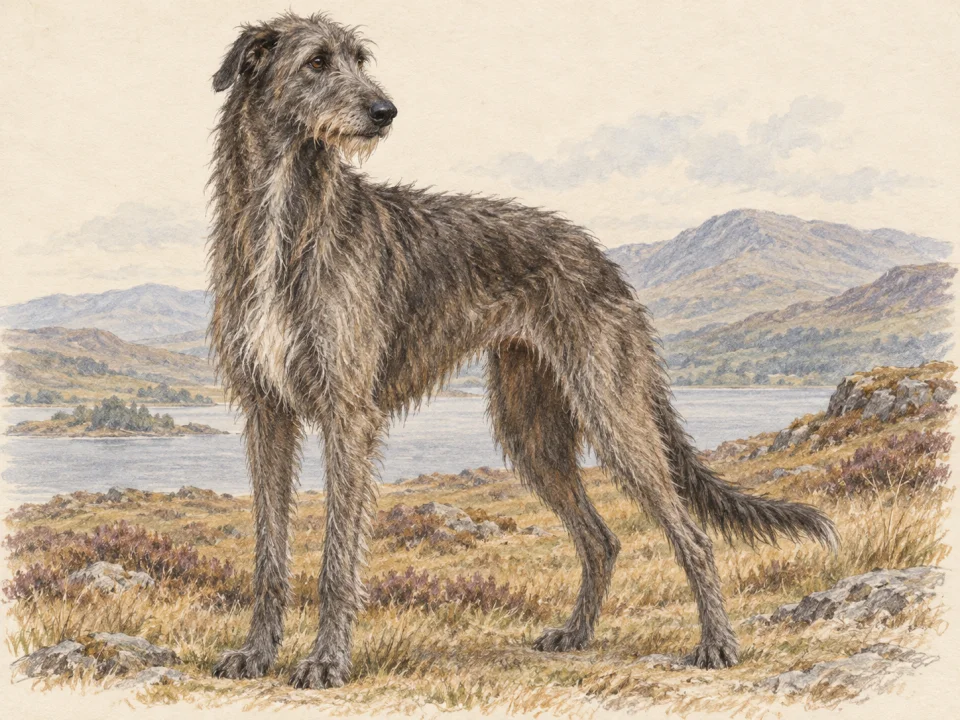
Plan for the growing hound and the full-sized adult
AKC emphasizes age-appropriate exercise for young Deerhounds and cautions against forced exercise such as running beside a bicycle while immature. Discuss the youngster’s routine with your veterinarian rather than borrowing an adult endurance schedule. Secure space matters too: a quiet indoor manner does not remove the possibility of chasing an animal outdoors. Before committing to a puppy, work through the route from sleeping area to yard, the available enclosed exercise space and the vehicle used for veterinary visits. Consider how an adult dog would enter the car if injured or less mobile, and who could help. These are practical space and handling questions that a shoulder-height figure alone cannot answer. Teach comfortable car entry and routine handling gradually; do not wait until the first urgent trip to discover the arrangement is unworkable.[1]
Keep a four-part health file
The club’s September 2023 guidance recommends knowing Factor VII deficiency and DEPOH genetic status, alongside heart and liver-shunt screening. It distinguishes cardiac ultrasound by a veterinary cardiologist for breeding dogs from listening to offspring’s hearts, and recommends bile acid testing of offspring for liver-shunt screening. Ask which assessment was actually performed, not simply whether the heart or liver was checked. Keep written reports with dates and the dog’s identity, including the basis of any status inferred from parents. Have the veterinarian explain abnormal or uncertain findings. The file is a starting point for ongoing care, not a certificate against every illness. It should travel with the dog when veterinary practices or caregivers change.[2]
Discuss two different bleeding risks before surgery
The club’s health committee distinguishes Factor VII deficiency, which concerns clot formation, from delayed postoperative hemorrhage, which concerns clot stability. A Deerhound can have both; testing for one does not answer the other question. WSU offers a test for a variant associated with delayed bleeding. Give the surgical team the actual records before a planned procedure and discuss the monitoring and emergency-contact plan. An apparently uneventful operation does not by itself rule out bleeding later. If unexpected bleeding, marked bruising or deterioration occurs after surgery, contact the treating veterinarian or emergency hospital promptly. The veterinarian should determine any preventive medication and treatment; do not choose a drug or dose from a breed page. Keep the emergency hospital details and test reports accessible to anyone caring for the dog during recovery.[3]
Frequently asked questions
Can I exercise a Deerhound puppy by having it run beside my bicycle?
AKC advises against forced exercise of that kind in immature Deerhounds. Ask your veterinarian for an age-appropriate plan and provide safe opportunities for activity rather than setting an adult running target.
Source [1]Does a clear Factor VII result also clear delayed postoperative bleeding risk?
No. The club describes Factor VII deficiency and DEPOH as different problems that can occur in the same dog. Discuss both records with the veterinarian before surgery.
Source [2]Is hearing no heart murmur the same as a cardiac ultrasound?
No. The club’s guidance distinguishes listening to the heart from a specialist ultrasound examination. Ask which was done, request the finding and discuss any further assessment with your veterinarian.
Source [3]FAQ sources
Sources & methodology
Breed-level measurements and comparison scores provide context. They do not predict an individual dog's health, behaviour or suitability. Open the original publisher pages below to verify the facts and compare any later updates.
- American Kennel Club — Scottish Deerhound care ↗Reference 1 · reviewed 2026-09-27
- Scottish Deerhound Club of America — September 2023 health testing guidelines ↗Reference 2 · reviewed 2026-09-27
- SDCA Health and Genetics Committee — Bleeding issues ↗Reference 3 · reviewed 2026-09-27
- Washington State University — DEPOHGEN testing ↗Reference 4 · reviewed 2026-09-27
Make it about your dog
Build a profile around your dog's age, experiences and everyday needs.
Meet your dog →Explore local care