
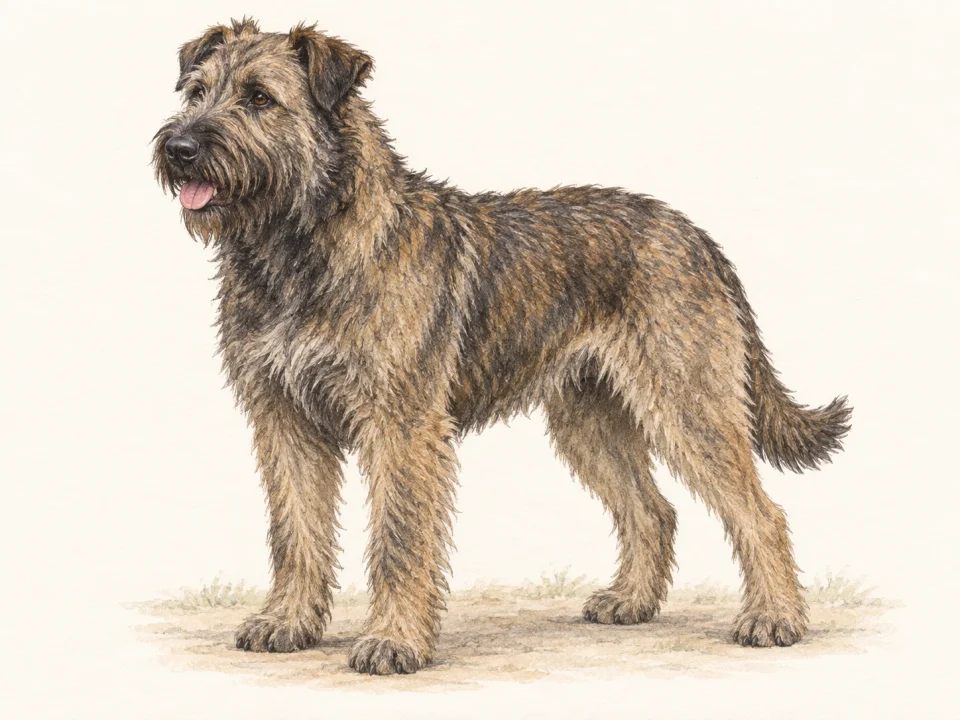
Use the full breed name when comparing information
The Bouvier des Ardennes is distinct from the Bouvier des Flandres. AKC references males at 22–24.5 inches and 61.5–77.5 pounds, females at 20.5–22 inches and 48.5–62 pounds. Verify which breed a care description covers before applying it. Similar names and rough coats do not establish identical grooming methods, size or household requirements.[1]
Define a meaningful workload before choosing the dog
The source describes a busy cattle worker unlikely to be satisfied by an ordinary neighborhood walk alone. A non-farm home needs suitable structured activity and mental challenges that are actually available during the week. Identify tasks and experienced support rather than promising unlimited exercise. A rural address by itself does not provide engagement, safe management or a workable training routine.[1]
Keep the thinking dog engaged without endless repetition
Teach a clear action, reinforce it and vary the challenge gradually. Independent problem-solving can make unnecessary repetition unappealing, so notice whether the lesson remains understandable and worthwhile. Start practical skills such as waiting at a gate in easy surroundings. If the dog disengages, improve the task and reward rather than assuming pressure will create understanding.[1]
Manage property awareness and unfamiliar arrivals
A cattle and farm-guarding background makes thoughtful social experience important. Arrange calm visitor introductions and a secure alternative resting area. Reward neutral observation without requiring the dog to greet everyone closely. Maintain containment even on familiar land; attachment to an owner does not establish recall under every distraction or guarantee that an unfamiliar visitor will be accepted automatically.[1]
Do not copy another rough coat’s stripping routine
The cited AKC guidance recommends weekly brushing and occasional bathing while retaining a rustic coat, specifically advising against hand-stripping. Ask a breed-familiar groomer for individual help rather than importing a terrier or Flandres routine. Remove caught debris gently and check for discomfort. Natural appearance should not become an excuse to ignore a painful tangle or irritated skin.[1]
Ask about joint records and limits of genetic evidence
AKC lists a lifespan of 12–16 years. Its health text recommends hip and elbow assessment and says spinocerebellar ataxia DNA testing should be considered while noting limited research. Request identifiable records and professional interpretation. Do not turn a suggested test into proof that the breed has a complete validated screening panel or that every puppy is clear of all inherited risks.[1]
Frequently asked questions
Is the Bouvier des Ardennes the same as the Bouvier des Flandres?
No. They are distinct breeds. Confirm the full name before applying size, grooming or activity advice.
Source [1]Should a Bouvier des Ardennes be hand-stripped like some rough-coated breeds?
The cited AKC guidance says the rustic coat should not be hand-stripped. Use weekly brushing and seek breed-familiar advice for the individual coat.
Source [1]Does living in the countryside automatically meet its working needs?
No. A rural location is not itself a task or training plan. Arrange suitable purposeful activity, safe management and regular engagement with a person.
Source [1]How should I interpret the source’s ataxia-test suggestion?
The source says to consider the test and notes limited research. Request the actual report and veterinary interpretation rather than assuming it provides complete genetic clearance.
Source [1]FAQ sources
Sources & methodology
Breed-level measurements and comparison scores provide context. They do not predict an individual dog's health, behaviour or suitability. Open the original publisher pages below to verify the facts and compare any later updates.
- American Kennel Club — Bouvier des Ardennes breed and care guidance ↗Reference 1 · reviewed 2026-09-27
Make it about your dog
Build a profile around your dog's age, experiences and everyday needs.
Meet your dog →Explore local care