
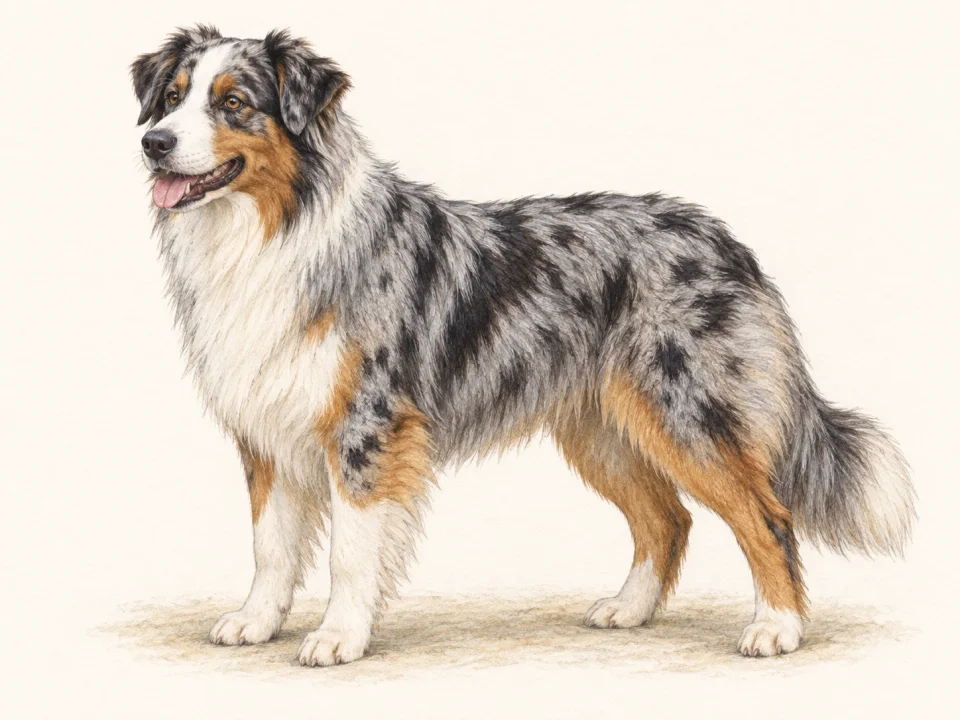
The working role matters more than the coat pattern
Australian Shepherds come in several coat appearances, including merle, but appearance is not a workload rating. AKC lists males at 20–23 inches and 50–65 pounds, females at 18–21 inches and 40–55 pounds. Ask about the individual’s behavior, background and needs before choosing. A medium-size dog can still require a substantial share of the household’s time and attention.[1]
Write a weekday plan before promising a sport
Aussies benefit from purposeful work and sustained engagement. Suitable training or dog activities can channel that drive, but they need to happen in an ordinary week rather than only on special outings. Identify when exercise, learning and companionship fit around work. Include a quieter alternative for disrupted days so the routine does not depend entirely on ideal weather or unlimited free time.[1]
Do not turn children into a herding outlet
The breed may try to control moving animals or people. Supervise fast-moving play, use separation when needed and teach attention away from excitement before expecting a reliable response within it. Give the dog appropriate tasks that do not involve chasing household members. A behavior connected to traditional work still needs management when it is uncomfortable or unsafe for others.[1]
Build athletic demands after development
A fit adult may enjoy demanding outings, but a puppy is not ready simply because it wants to keep moving. Discuss development and health with your veterinarian before beginning a sustained running routine. Increase demands gradually and observe recovery. Meanwhile, short reward-based lessons in recall, handling and calm waiting build useful skills without treating endurance as the only form of enrichment.[1]
Look through the double coat during grooming
Weekly brushing is the usual baseline, with more work during seasonal shedding. Remove loose undercoat carefully and check areas that catch debris or rub against equipment after outdoor play. A brushed top layer can conceal tangles beneath it. Keep nail and paw checks in the routine, and obtain advice for pain or irritated skin rather than repeatedly grooming over the problem.[1]
Read the screening records precisely
AKC lists a lifespan of 12–15 years and hip, elbow and eye evaluations in its recommended panel. Ask for dated results tied to the parents and discuss family history beyond those tests. A broad statement that a line is healthy cannot establish that every condition has been excluded. Keep screening evidence, individual veterinary assessment and future health expectations as separate questions.[1]
Frequently asked questions
Does a merle Australian Shepherd need different exercise from other colors?
Coat pattern does not establish activity needs. Evaluate the individual and plan for the breed’s substantial working drive regardless of color.
Source [1]Should I let an Aussie herd children as a job?
No. Manage and redirect chasing or attempts to control children’s movement. Offer appropriate supervised activities that do not make household members the target.
Source [1]Can an Australian Shepherd puppy be a regular running partner?
Do not use adult endurance expectations for a growing puppy. Ask your veterinarian about development and health, then build demands gradually when appropriate.
Source [1]How often should I brush an Australian Shepherd?
Weekly is the cited routine baseline, with more frequent undercoat care during shedding periods. Check beneath the outer layer for tangles and debris.
Source [1]FAQ sources
Sources & methodology
Breed-level measurements and comparison scores provide context. They do not predict an individual dog's health, behaviour or suitability. Open the original publisher pages below to verify the facts and compare any later updates.
- American Kennel Club — Australian Shepherd breed and care guidance ↗Reference 1 · reviewed 2026-09-27
Make it about your dog
Build a profile around your dog's age, experiences and everyday needs.
Meet your dog →Explore local care