
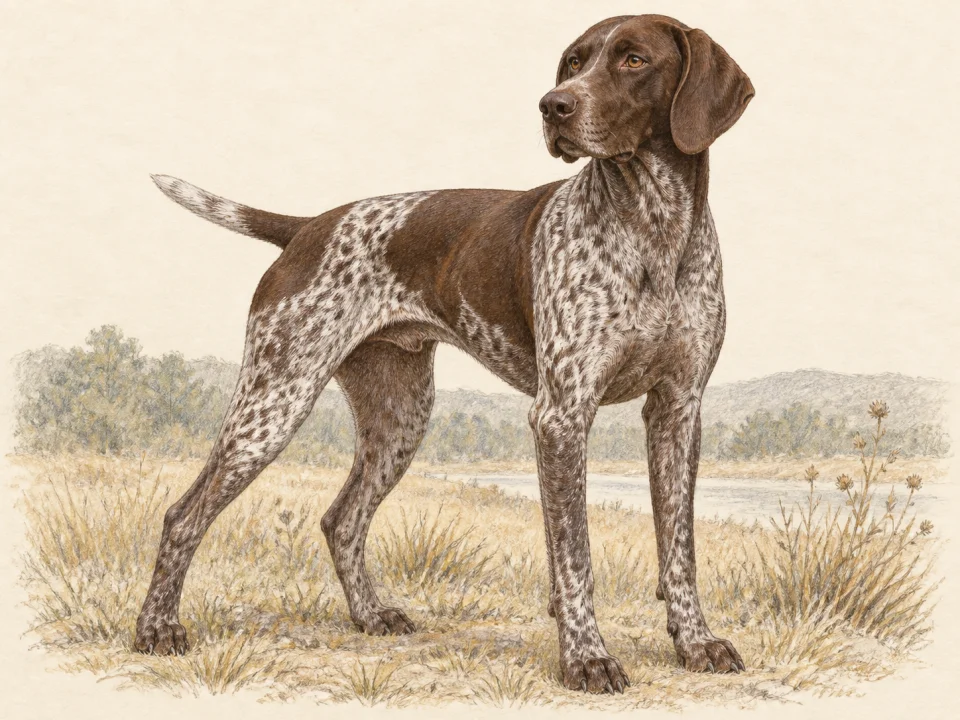
Before choosing a GSP, walk through an ordinary weekday
AKC describes an energetic gundog with strong prey drive, suited to active owners and positive training. Use an ordinary working day, rather than a holiday hiking itinerary, to test whether your plans fit. Write down who can take the dog out, where activity can happen safely and what the backup is when that person is unavailable. Separate exercise from learning: access to a large field does not teach a reliable response around birds. Include supervised practice in secure settings and ask an instructor for help with skills that are not transferring outdoors. Choose activity appropriate to the individual’s age and health with veterinary guidance; a breed’s endurance is not a reason to keep increasing distance until the dog is exhausted. There is also a small but useful housekeeping distinction: a short coat still sheds. AKC notes that these hairs can lodge in fabrics. A washable cover on the usual resting spot and a place to keep grooming tools are practical preparations; minimal coat length does not mean no cleanup.[1]
A cone-degeneration report answers a specific eye-health question
UC Davis identifies a CNGB3 variant associated with cone degeneration in German Shorthaired Pointers. This inherited condition affects vision in daylight, and bright light may be uncomfortable even when low-light vision is preserved. A dog struggling in bright conditions needs veterinary assessment, not a home test that repeatedly exposes it to distress. The laboratory’s DNA test covers particular known variants; a clear result is not a clearance for every eye disorder. When collecting breeder records, keep the named DNA result separate from the dated ophthalmologist report. AKC lists both types of assessment for this breed, alongside joint and cardiac screening. For a veterinary appointment, a useful observation note records when a change was noticed, the lighting and any difficulty navigating, without attempting to diagnose its cause. Take existing reports along so the veterinarian can decide which examinations are needed.[2]
Frequently asked questions
Will a German Shorthaired Pointer shed despite its short coat?
Yes. AKC describes shedding and short hairs that can become embedded in fabrics. Coat length alone is not a useful promise of a hair-free home.
Source [1]Does a clear cone-degeneration DNA result mean all eye diseases are ruled out?
No. UC Davis limits the test to specified CNGB3 variants. Keep the result alongside clinical eye records and discuss visual changes with a veterinarian regardless of the DNA result.
Source [2]FAQ sources
- American Kennel Club — German Shorthaired Pointer ↗FAQ reference 1
- UC Davis Veterinary Genetics Laboratory — Cone Degeneration ↗FAQ reference 2
Sources & methodology
Breed-level measurements and comparison scores provide context. They do not predict an individual dog's health, behaviour or suitability. Open the original publisher pages below to verify the facts and compare any later updates.
- American Kennel Club — German Shorthaired Pointer ↗Reference 1 · reviewed 2026-09-27
- UC Davis Veterinary Genetics Laboratory — Cone Degeneration ↗Reference 2 · reviewed 2026-09-27
Make it about your dog
Build a profile around your dog's age, experiences and everyday needs.
Meet your dog →Explore local care