
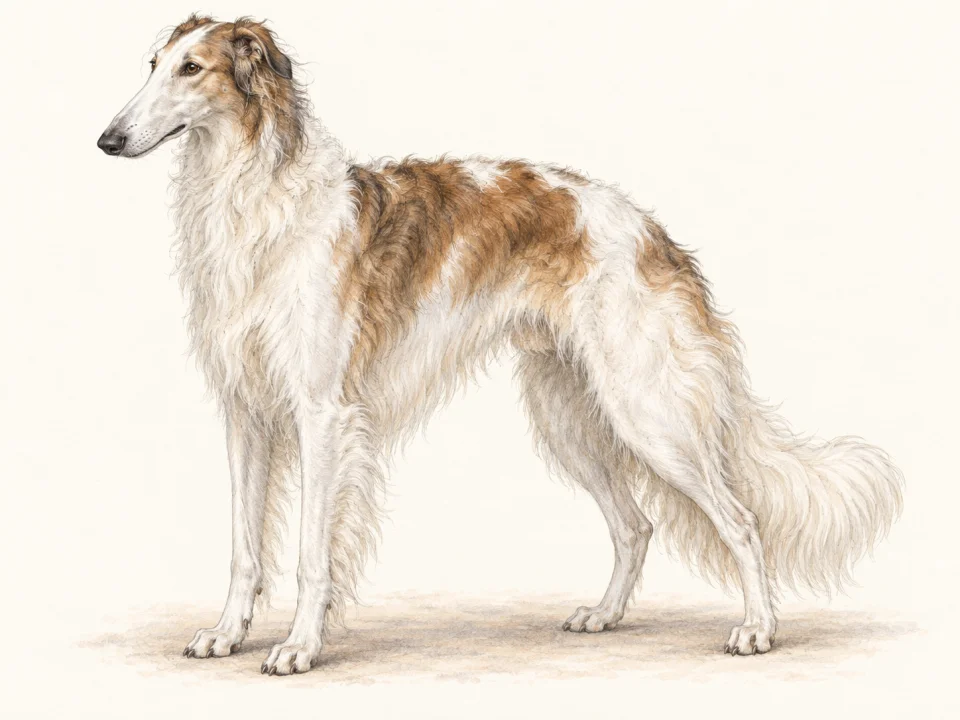
Read the height figures as lower references
AKC lists males at 28 inches and above, females at 26 inches and above, with weight ranges of 75–105 and 60–85 pounds respectively. Those height figures are not maximums. Measure travel and resting spaces for the actual dog, and consider how an injured adult would be assisted. A narrow-looking outline does not make every transport arrangement suitable.[1]
A calm room companion is still a pursuit hound
A running animal can trigger chasing even when the dog is normally quiet beside the family. Use a leash on outings and secure enclosure for free running. Check gates before release and do not treat an open field as equivalent to a fenced area. Recall practice is worthwhile, but cannot be used as a guarantee that every sudden pursuit will stop.[1]
Provide activity with room for recovery
Daily suitable walks and controlled activity support the athletic dog beneath the long coat. Adjust the plan to development, condition and health rather than copying a fit adult’s performance. A safe opportunity to move should also allow the handler to observe comfort afterward. If the dog changes its gait or becomes reluctant, investigate rather than assuming the breed’s reserved manner explains everything.[1]
Make training patient and interactions considerate
Borzoi can be affectionate while independently minded. Teach a clear practical cue in a quiet place, reward it and add difficulty gradually. Avoid rough play that the individual does not welcome, and supervise children rather than equating gentleness with unlimited tolerance. A protected resting space and a predictable greeting routine let the dog participate without being required to accept every interaction.[1]
Look through the silky coat every day or two
AKC recommends brushing every day or two, with more frequent work during the heavier seasonal shed. Check furnishings and equipment contact areas for developing tangles instead of smoothing only the outer surface. Use appropriate tools gently and ask for help with painful knots. Nails, teeth and ears need attention too, even when the coat is the most visible care task.[1]
Ask what each health report covers
The lifespan reference is 9–14 years. AKC’s recommended panel lists cardiac, eye and thyroid evaluations plus SOD1A degenerative myelopathy DNA testing. Request identifiable dated results and review wider family history. A normal result for one condition is not proof of complete health. Discuss individual veterinary care and activity planning separately from the breed’s reputation for speed or elegance.[1]
Frequently asked questions
Is 28 inches the maximum height of a male Borzoi?
No. The cited AKC reference says 28 inches and above for males, and 26 inches and above for females. Measure the individual when planning equipment and space.
Source [1]Can a calm Borzoi still chase a running cat?
Yes. Quiet behavior at home does not remove the sighthound pursuit response. Use secure containment and supervised management rather than relying on temperament labels.
Source [1]How often should a Borzoi be brushed?
The source recommends every day or two, with additional attention during heavier shedding. Check long furnishings and areas that rub against equipment.
Source [1]Does a good recall make an unfenced field safe?
Do not assume so. A sudden moving animal can create a different challenge from a lesson. Keep the dog leashed or within a secure enclosure.
Source [1]FAQ sources
- American Kennel Club — Borzoi breed and care guidance ↗FAQ reference 1
Sources & methodology
Breed-level measurements and comparison scores provide context. They do not predict an individual dog's health, behaviour or suitability. Open the original publisher pages below to verify the facts and compare any later updates.
- American Kennel Club — Borzoi breed and care guidance ↗Reference 1 · reviewed 2026-09-27
Make it about your dog
Build a profile around your dog's age, experiences and everyday needs.
Meet your dog →Explore local care