
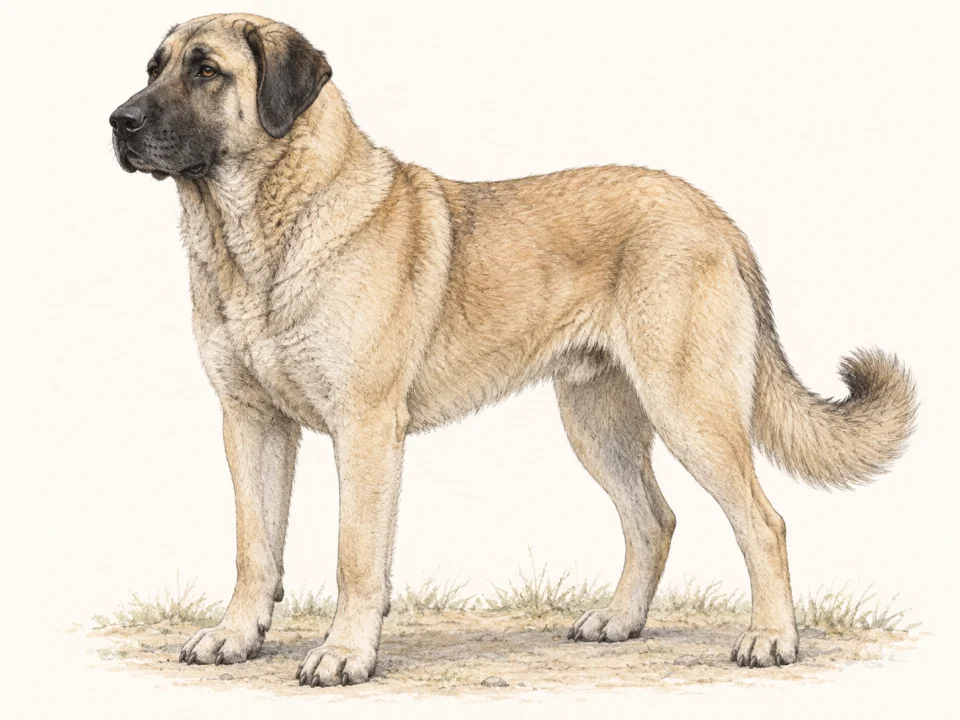
Size makes an access plan essential
AKC references males at 29 inches and 110–150 pounds, females at 27 inches and 80–120 pounds. Consider gates, transport and who can safely manage the adult before choosing a puppy. A large resting space is only one requirement; also plan how visitors, carers and service workers enter without unexpectedly sharing an uncontrolled space with the dog.[1]
Guarding is not the same job as herding
Anatolians were developed to protect a flock and make decisions independently, rather than continually move animals in response to a handler. That distinction affects training expectations. Practise useful cooperation in calm conditions and maintain physical management when distractions are strong. Do not assume intelligence means instant compliance with repeated instructions, or that a guardian will automatically recognize every invited stranger.[1]
Do not intensify an existing protective instinct
The AKC guidance explicitly advises against protection or guard-dog training for this breed. Focus instead on calm observation, manageable greetings and safe separation when needed. Reward attention to the handler and give the dog a quiet alternative during busy arrivals. If guarding responses become difficult to manage, obtain qualified professional help rather than deliberately rehearsing stronger defensive behavior.[1]
A secure boundary is a continuing responsibility
Use a strong enclosure with secure gates and keep the dog leashed outside it. Inspect entry points regularly, including those used by deliveries or household members in a hurry. A dog that has stayed near home previously has not demonstrated permanent off-leash reliability. Write a simple handover routine for carers so containment does not depend on one person’s habits.[1]
Moderate activity still needs structure and coat care
Plan regular suitable walks and supervised activity, adjusted to age and health. The short-looking coat can conceal a substantial undercoat: weekly brushing is the usual baseline, with more thorough removal of loose hair during seasonal shedding. Combine grooming with calm paw and nail handling. A clean outline alone does not show whether the skin beneath the coat is comfortable.[1]
Review health records without assuming hardiness is proof
AKC lists an 11–13 year lifespan reference and hip and elbow evaluations in the recommended panel. Ask for dated results identifying the dogs tested, and discuss the individual’s wider history with your veterinarian. A breed developed for demanding work still needs routine care. Use screening to answer specific questions rather than presenting it as a promise against future disease.[1]
Frequently asked questions
Is an Anatolian Shepherd primarily a herding dog?
Its traditional role is livestock guarding, including independent decisions about protecting a flock. That differs from moving livestock under frequent handler direction.
Source [1]Should an Anatolian receive protection training?
The cited AKC guidance says it should not. Concentrate on cooperative handling, calm social experience and safe management rather than intensifying protective responses.
Source [1]Can an Anatolian be trusted off leash because it stays near its territory?
Do not rely on that assumption. Use secure boundaries at home and a leash outside them, even after previous outings have gone well.
Source [1]How large does an Anatolian Shepherd Dog become?
AKC references males at 29 inches and 110–150 pounds, females at 27 inches and 80–120 pounds. Measure and assess the individual rather than feeding toward the largest number.
Source [1]FAQ sources
Sources & methodology
Breed-level measurements and comparison scores provide context. They do not predict an individual dog's health, behaviour or suitability. Open the original publisher pages below to verify the facts and compare any later updates.
- American Kennel Club — Anatolian Shepherd Dog breed and care guidance ↗Reference 1 · reviewed 2026-09-27
Make it about your dog
Build a profile around your dog's age, experiences and everyday needs.
Meet your dog →Explore local care