
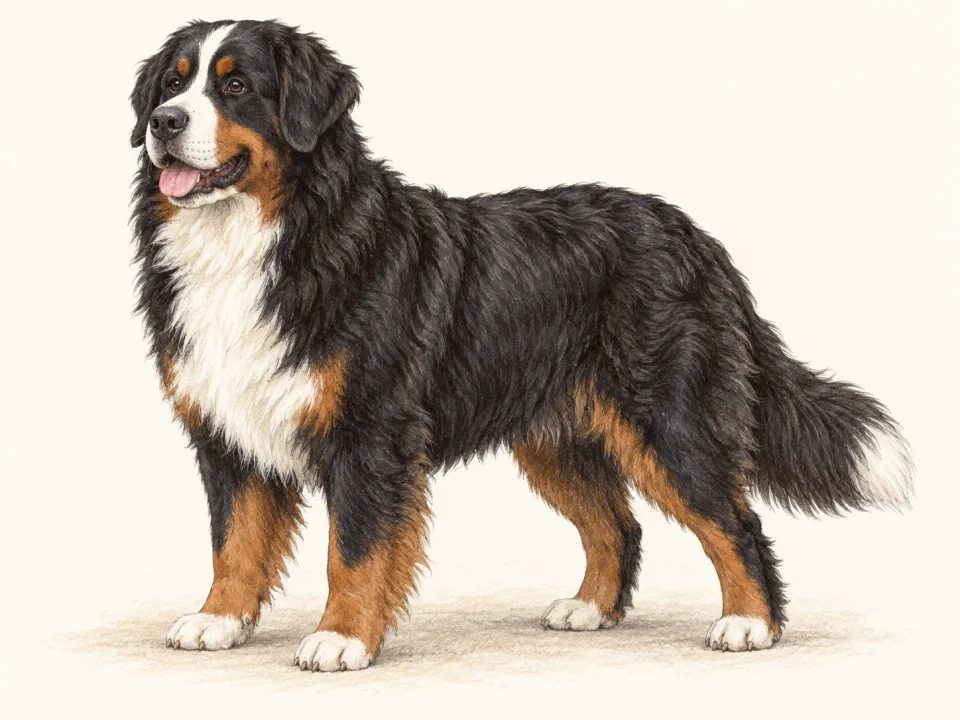
Prepare for the full adult size
AKC references males at 25–27.5 inches and 80–115 pounds, females at 23–26 inches and 70–95 pounds. Consider transport, doorways and a plan to assist an injured adult before bringing home a puppy. A gentle manner does not make the dog light enough for every carer to lift. Choose equipment from actual measurements and assess condition separately from the heavy coat.[1]
Teach cooperative handling while tasks are easy
Practise standing for a brief check, waiting at doors and moving calmly on leash using short reward-based lessons. Keep cues consistent between family members and increase distractions gradually. A large enthusiastic greeting can knock someone off balance without any unfriendly intent. Supervise children and give visitors a predictable arrival routine rather than relying entirely on the breed’s affectionate reputation.[1]
Keep moderate exercise individual and sustainable
Regular suitable activity with the household can include walks and other shared outings. Match distance and intensity to development, health and conditions rather than copying an athletic adult’s routine for a puppy. The breed’s historical draft work does not mean an unconditioned dog should start pulling loads. Seek qualified guidance before adding demanding activities and observe comfort and recovery afterward.[1]
Expect the undercoat to change the cleaning workload
Weekly brushing is the AKC baseline, increasing to daily attention during heavier seasonal shedding. Work through the woolly undercoat and check for tangles rather than only smoothing the long outer hair. After outdoor activity, inspect feet and areas under equipment. A tidy tricolor outline is not proof that the skin beneath it is comfortable or free of trapped debris.[1]
Plan companionship along with practical care
Berners generally want involvement with their people. Account for ordinary workdays, not just weekends, and arrange help when long absences would otherwise leave the dog without suitable contact. Practise comfortable separations gradually. A yard can support supervised activity but should not replace household life or serve as the whole response when the dog needs engagement.[1]
Discuss the shorter lifespan reference honestly
AKC lists 7–10 years. Its panel includes hip, elbow, cardiac and eye evaluations, plus degenerative myelopathy testing for listed variants and an AKC DNA profile. Ask what each record establishes; an identity profile is not a universal disease clearance. Request family history and veterinary interpretation, recognizing that no panel predicts an individual lifespan or excludes every serious illness.[1]
Frequently asked questions
How long do Bernese Mountain Dogs usually live?
AKC lists 7–10 years as a breed reference. It is not an individual prediction; discuss family health history and actual screening records when making a decision.
Source [1]Does an AKC DNA profile mean a Berner is cleared of all inherited disease?
No. An identity profile and condition-specific testing answer different questions. Ask what each report covers and have uncertain results explained by a veterinarian.
Source [1]How often should a Bernese Mountain Dog be brushed?
The cited guidance recommends weekly brushing, increasing to daily during heavy seasonal shedding. Check the undercoat rather than only the visible outer hair.
Source [1]Does the breed’s carting history mean a puppy should pull loads?
No. Development, condition and training matter. Seek qualified guidance before load-bearing work rather than using historical ability as a puppy exercise prescription.
Source [1]FAQ sources
Sources & methodology
Breed-level measurements and comparison scores provide context. They do not predict an individual dog's health, behaviour or suitability. Open the original publisher pages below to verify the facts and compare any later updates.
- American Kennel Club — Bernese Mountain Dog breed and care guidance ↗Reference 1 · reviewed 2026-09-27
Make it about your dog
Build a profile around your dog's age, experiences and everyday needs.
Meet your dog →Explore local care