
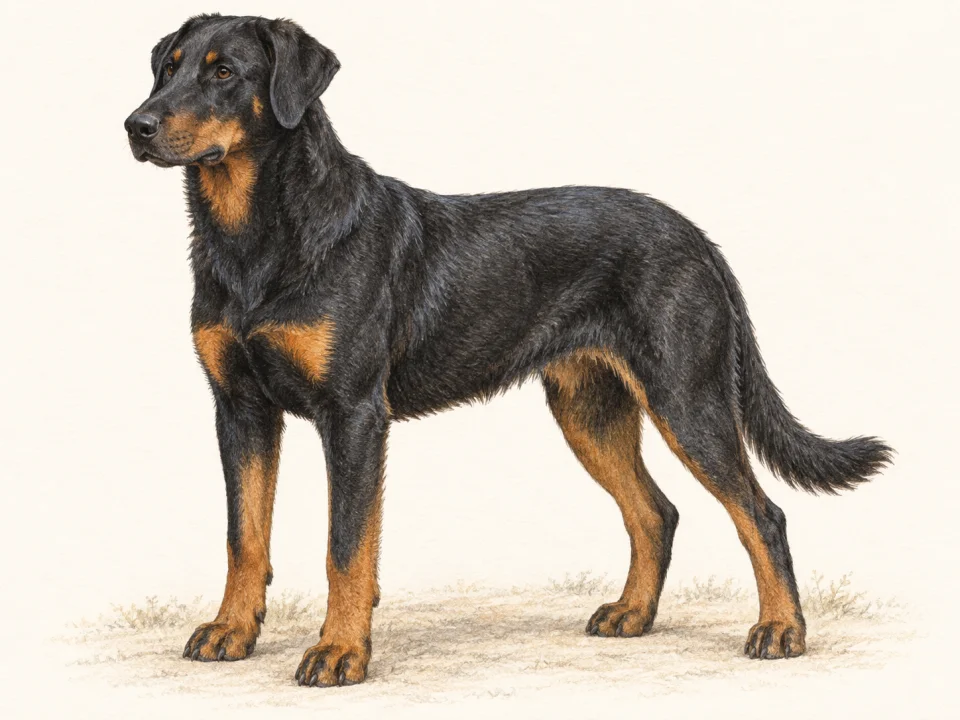
An athletic herder needs a household job description
AKC describes a powerful, active herding breed. Write down the activities you can reliably offer and who will supervise them, then compare that plan with the individual dog’s current routine. Include rest and travel time, not only ambitious weekend outings. Ask the breeder or rescue which aspects of your timetable would be the hardest adjustment for this particular dog.[1]
Reserve is not a demand for forced greetings
The breed standard distinguishes confidence from timidity while allowing reserve with strangers. Before a meeting, tell the visitor how the dog will be managed and where they can wait. Record whether the dog can observe calmly at a comfortable distance. If you need help interpreting its response, seek an appropriate professional rather than trying to prove friendliness through close contact.[1]
Make polite arrivals a shared task
AKC notes that exuberant jumping and mouthing may need attention during training. Ask a reward-based trainer for an arrival exercise every adult can follow. Choose a calm starting situation, agree on the reward and decide when to pause. Keep visitors out of the teaching role until the household understands the routine; inconsistent reactions make it harder to see what the dog has learned.[1]
A short coat can still leave plenty of hair
The Beauceron has a double coat with pronounced seasonal shedding. Prepare a grooming place that is easy to clean and a schedule someone can actually maintain. Keep the brush used and the dog’s handling preferences in the care notes. Compare changes with that dog’s usual coat rather than assuming that any new patch or discomfort is explained by the season.[1]
Include the rear dewclaws in handling checks
AKC specifically reminds owners to attend to the rear double dewclaws during nail care. Ask a groomer or veterinarian to show their location and an appropriate handling technique. Add this to the written handover so a replacement carer does not overlook them. If a nail is damaged or handling becomes painful, obtain professional advice instead of pressing ahead to finish the session.[1]
Review the routine with observations
For a week, note one successful transition each day: leaving the house, returning from an outing or settling while people work. Record the setting and help required. Take that record to a trainer if one transition repeatedly causes difficulty. This gives the professional a concrete starting point and helps the household choose a practical next step instead of applying broad temperament labels.[1]
Frequently asked questions
What is Beauceron temperament supposed to be like?
The AKC breed standard describes a self-assured dog that can be reserved with unfamiliar people. A standard describes an ideal; it does not establish the behavior of a particular dog.
Source [1]Does reserved mean a Beauceron must greet every visitor?
No. Plan introductions around what the individual can comfortably manage. Ask the current handler how visitors are introduced, and agree on a separate resting area before a busy gathering.
Source [1]Is shyness required by the Beauceron standard?
No. The standard distinguishes reserve from timidity. If a dog is fearful, investigate its individual circumstances with qualified support rather than dismissing the concern as inevitable breed behavior.
Source [1]How should I compare two Beaucerons?
Observe equivalent everyday situations with each handler’s guidance. Record what happened and what assistance was needed, keeping documented observations separate from broad temperament labels.
Source [1]FAQ sources
- American Kennel Club — Beauceron breed standard ↗FAQ reference 1
Sources & methodology
Breed-level measurements and comparison scores provide context. They do not predict an individual dog's health, behaviour or suitability. Open the original publisher pages below to verify the facts and compare any later updates.
- American Kennel Club — Beauceron breed and care guidance ↗Reference 1 · reviewed 2026-09-26
Make it about your dog
Build a profile around your dog's age, experiences and everyday needs.
Meet your dog →Explore local care