
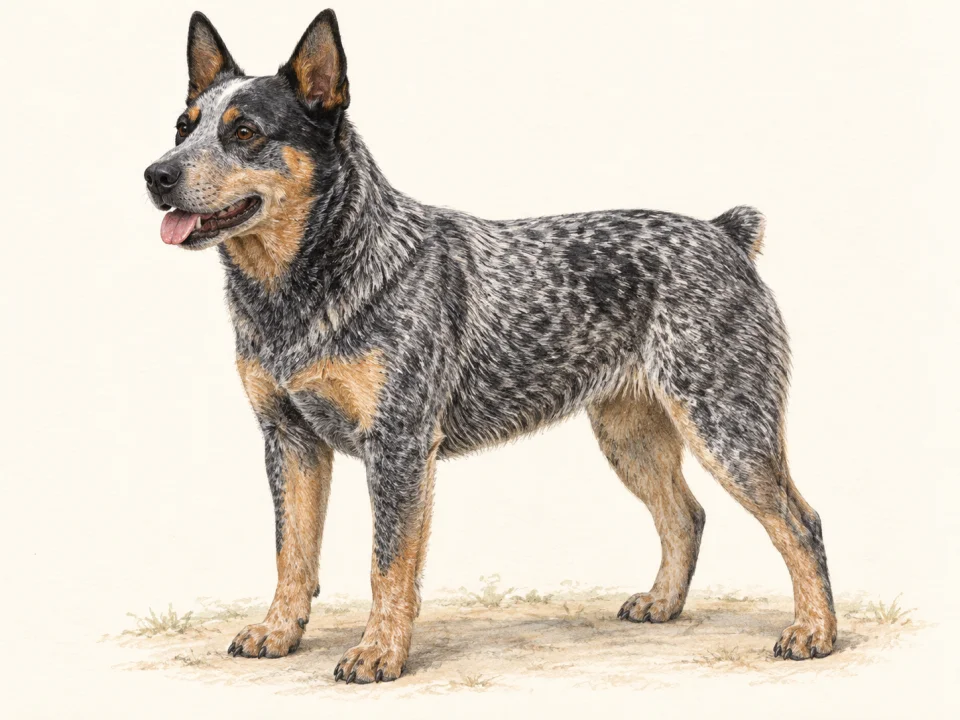
A Stumpy is not defined by tail removal
The breed has its own structure and identity, with a natural bobtail as a characteristic. Some puppies can also be born with long tails. Do not identify a dog solely from tail length or assume a short-tailed Australian Cattle Dog must be a Stumpy. Check reliable records and the individual’s history when comparing these separate breeds or considering a puppy.[1]
Make room for a leggy working dog
AKC lists males at 18–20 inches and 38–45 pounds, females at 17–19 inches and 32–35 pounds. Its fairly square outline differs from simply imagining another cattle dog without a tail. Use individual measurements for harnesses and travel space. A compact body does not mean the dog needs little engagement or that the highest weight figure is a desirable target.[1]
Provide a task as well as a place to run
The source describes high energy and stamina developed for cattle work. Plan appropriate daily exercise, a secure activity area and mental challenges with a person. A searching game or carefully taught skill can add purpose beyond physical movement. Match demands to age and condition; traditional working endurance does not mean every pet should be pushed to perform all day.[1]
Use rewards to make the household routine clear
The breed can respond well to reward-based teaching and problem-solving tasks. Start with practical actions such as waiting for a gate to open and returning attention when called. Keep cues consistent across carers and add distractions in stages. If the dog struggles, change the setup before asking again, rather than assuming persistence means it understands but has chosen to refuse.[1]
Respect variation around unfamiliar people
The AKC guidance describes temperaments ranging from friendly to wary with strangers. Let the individual observe at a comfortable distance and avoid forcing contact. Prepare a calm arrival routine for guests and a secure resting alternative. Watchfulness should not be encouraged into an uncontrolled response; early manageable experience and clear boundaries are more useful than testing how protective the dog might become.[1]
Do not overlook hearing and eye records
AKC lists a lifespan of 12–15 years. Its formal screening panel is empty, but the health discussion calls for joint and eye screening and BAER hearing testing of puppies. Ask which assessments were completed and obtain identifiable results. Weekly brushing and nail care are comparatively straightforward, but simple grooming does not reduce the importance of documented health checks.[1]
Frequently asked questions
Is a Stumpy Tail Cattle Dog an Australian Cattle Dog with a docked tail?
No. It is a distinct breed with a characteristic natural bobtail and structural differences. Some Stumpy puppies are also born with long tails.
Source [1]Does a long tail exclude a puppy from being a Stumpy?
Not by itself. The cited AKC description notes that long-tailed puppies can occur. Use records and broader breed identity rather than tail length alone.
Source [1]Which hearing assessment should I ask about?
Ask for BAER testing results for the puppy. The source also discusses joint and eye screening, despite an empty formal recommended-test panel.
Source [1]Is this a low-energy alternative to the Australian Cattle Dog?
No. The source describes very high energy and stamina. It needs appropriate daily activity, secure space and mental engagement, not just a smaller household footprint.
Source [1]FAQ sources
Sources & methodology
Breed-level measurements and comparison scores provide context. They do not predict an individual dog's health, behaviour or suitability. Open the original publisher pages below to verify the facts and compare any later updates.
- American Kennel Club — Australian Stumpy Tail Cattle Dog breed and care guidance ↗Reference 1 · reviewed 2026-09-27
Make it about your dog
Build a profile around your dog's age, experiences and everyday needs.
Meet your dog →Explore local care