
Friendly does not mean silent on a scent trail
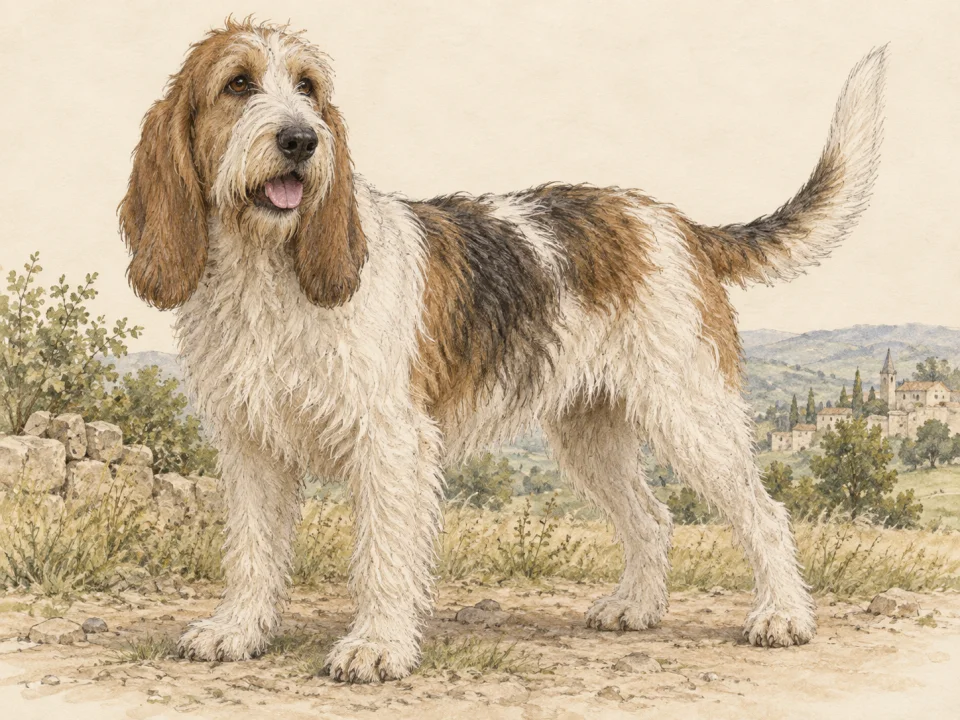
The AKC standard describes an outgoing pack hound that uses its voice freely when trailing. That matters if you are choosing a dog for a home with close neighbors: a relaxed greeting does not tell you how the same dog responds to an interesting scent outside. Ask to observe ordinary outdoor activity, and discuss vocal behavior with the breeder or rescue. Plan where a scent-focused walk can happen with secure handling and how gates will be managed. Practice attention and recall in controlled settings without making access to an unfenced area the test of whether training has worked. The breed’s hunting background makes a nose-led outing a more informative ownership consideration than its shaggy face alone. Also distinguish the outline from an exaggerated low body: the standard describes a longer-than-tall, well-balanced dog with straight legs.[2]
Keep the long ears and rough coat on the care list
AKC recommends weekly work with a slicker brush and comb, regular nail care and ear checks. Ask a groomer to demonstrate how to reach through the coat comfortably and handle the long ears without tugging. A practical after-walk routine is to inspect the dog before putting the tools away, noting any debris or areas the dog resists having touched. Do not repeatedly force a comb through a painful tangle. Seek help with tight matting, and veterinary advice for ear discomfort or a persistent change. The informal appearance should make the dog look natural, not hide neglected care. Exercise planning needs the same attention to the individual: hunting stamina is not evidence that an older dog cannot slow down. Adjust outings for health and comfort instead of expecting every age to tolerate the same route.[1]
What the dated club health letter actually recommends
The club’s June 2016 letter recommends hip and eye clearances before breeding. It also says some breeders undertake heart, patella and thyroid assessments. That wording should not be converted into a claim that every dog has passed all five assessments. Request each parent’s reports with identity, dates and findings, and ask the club or veterinarian about current guidance because the letter is historical. For an imported dog, ask for help interpreting the named assessment scheme rather than treating unfamiliar paperwork as either automatically invalid or automatically reassuring. The purpose is to understand the evidence for this family, not to replace it with a general statement that the breed is healthy.[3]
Frequently asked questions
Is a Grand Basset Griffon Vendéen necessarily quiet because it is friendly?
No. Its AKC standard describes both a friendly pack temperament and free use of its voice on a trail. Discuss the individual’s outdoor vocal behavior when assessing your home’s noise constraints.
Source [1]Does the 2016 club health letter prove a puppy’s parents had heart and thyroid testing?
No. It describes such testing by some breeders, not individual results. Ask for the actual parental reports and confirm current recommendations.
Source [2]FAQ sources
- AKC Official Standard — Grand Basset Griffon Vendéen ↗FAQ reference 1
- GBGV Club of America — Health Statement, June 2016 ↗FAQ reference 2
Sources & methodology
Breed-level measurements and comparison scores provide context. They do not predict an individual dog's health, behaviour or suitability. Open the original publisher pages below to verify the facts and compare any later updates.
- American Kennel Club — Grand Basset Griffon Vendéen ↗Reference 1 · reviewed 2026-09-27
- AKC Official Standard — Grand Basset Griffon Vendéen ↗Reference 2 · reviewed 2026-09-27
- GBGV Club of America — Health Statement, June 2016 ↗Reference 3 · reviewed 2026-09-27
Make it about your dog
Build a profile around your dog's age, experiences and everyday needs.
Meet your dog →Explore local care